

Construction firms adjust to ‘new normal’ of higher material costs after Middle East conflict
Summarized and contextualized by DistantNews.
At a glance
News
Named sources
Context piece
- Construction firms in Singapore face a "new normal" of elevated material costs following the Middle East conflict.
- Prices for concrete, cement, and steel remain high, squeezing profit margins and leading to expectations of higher tender prices.
- While ongoing projects see limited delays, experts warn that sustained high costs may impact future affordability for homebuyers.
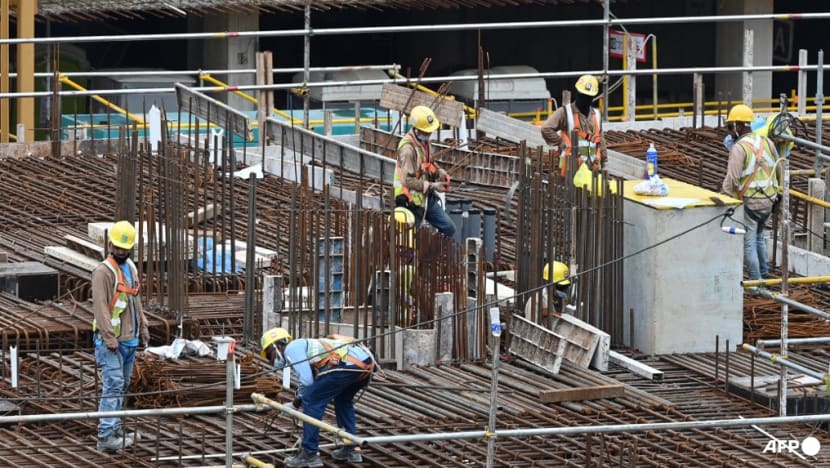
Singapore's construction sector is grappling with a "new normal" characterized by persistently high fuel and material costs, months after the Middle East conflict disrupted global supply chains. Industry players report that soaring expenses are significantly squeezing profit margins and driving expectations of increased tender prices for upcoming projects.
Key construction materials, including concrete, cement, reinforcement bars, and bitumen, continue to command elevated prices even as supply chains have stabilized. Official data from the Singapore Department of Statistics confirms this trend. For example, high tensile steel reinforcement bars (16-32mm diameter) cost S$704 per tonne in May, a roughly 10 percent increase from February's S$637.10 when the Middle East conflict escalated. Similarly, ready-mixed concrete prices rose from S$130 per cubic meter in February to S$145.60 in May, an increase of just over 10 percent.
The main impact for us is that our profit margin is being eroded.
"The main impact for us is that our profit margin is being eroded," said Bruce Peng, executive director at Right Construction. He noted that companies are heavily dependent on suppliers for certain materials, leaving limited options to mitigate price increases. To cope, some firms are negotiating with suppliers and investing in measures like battery storage systems and electric machinery to reduce diesel consumption on worksites. Peng anticipates that material prices are unlikely to return to pre-war levels due to ongoing inflation.
While the impact on current projects appears manageable, with fewer than one in ten projects experiencing delays according to the Micro Builders Association Singapore, the long-term outlook for tender prices is upward. Experts caution that developers and contractors may struggle to absorb rising costs indefinitely, potentially leading to higher prices for homebuyers if expenses remain elevated. The association's chief assessor, Chua Tai Kee, noted that delays are currently measured in weeks rather than the year-plus disruptions seen during the COVID-19 pandemic.
It's like weeks to a month. It's not like last time, during COVID-19, where the delay could be a year or one-and-a-half years.
DistantNews Editorial
Originally published by CNA. Summarized and contextualized by our editorial team with added local perspective. Read our editorial standards.
More Stories



From Our Blog

What Gets Lost (and Found) When News Is Translated

The Critical Role of Diaspora Media in Global News

What Travellers Should Know About Countries with Restricted Press

A Digital Nomad's Guide to Following Local News

How the Same Story Looks Different in Different Countries
