


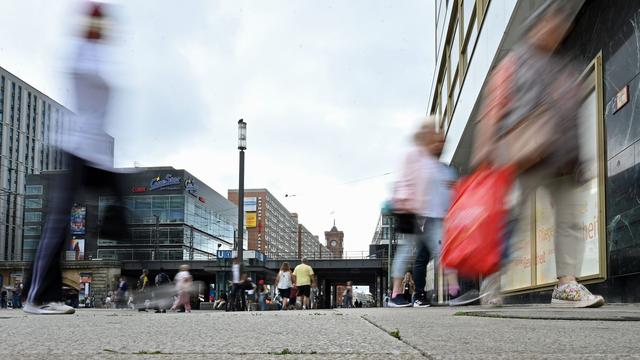
Consumption Slump in Germany: Frugal Customers, Many Worries: Retail Trade in Crisis
Translated from German, summarized and contextualized by DistantNews.
At a glance
News
Sources not specified
Context piece
- German retailers face a crisis as consumer spending remains low due to economic uncertainty and high prices.
- A survey shows 79% of retailers identify customer reluctance to spend as their biggest challenge.
- Consumers' purchasing power has been impacted by a 37% average increase in food prices since 2020, despite some wage increases.
Germany's retail sector is grappling with a severe crisis, primarily driven by hesitant consumers who are holding onto their money amid widespread economic concerns. A recent survey by the German Retail Association (HDE) reveals that a staggering 79 percent of retailers cite customer reluctance to spend as their most pressing challenge.
HDE President Alexander von Preen attributes this purchasing hesitancy to a lack of consumer confidence in the future. Current consumer sentiment mirrors that of the second COVID-19 lockdown, with the situation described as "even more dramatic" than in the previous year. The association believes that an end to international crises and tax relief could significantly boost consumer morale.
The situation is still more dramatic than it was in the rather modest previous year.
The lingering effects of inflation are a major factor, with a Roland Berger study indicating that Germans are particularly critical of the economic situation compared to international counterparts. Food prices alone have surged by an average of 37 percent since 2020, according to the Federal Statistical Office. While wage increases have helped offset some purchasing power losses, a majority of Germans still feel financially worse off than five years ago, leading to widespread consumption cutbacks.
This downturn disproportionately affects brick-and-mortar stores, whose revenues are projected to stagnate in 2026. In contrast, online retail is expected to see robust growth of 3.5 percent. The internet's convenience, wider selection, competitive pricing, and ease of comparison have fundamentally altered consumer habits, with online sales now accounting for roughly one-seventh of the German retail market.
The biggest concern of people in this country is the economic situation.
DistantNews Editorial
Originally published by Die Zeit in German. Translated, summarized, and contextualized by our editorial team with added local perspective. Read our editorial standards.
More Stories


From Our Blog

What Gets Lost (and Found) When News Is Translated

How the Same Story Looks Different in Different Countries

The Critical Role of Diaspora Media in Global News

What Travellers Should Know About Countries with Restricted Press

A Digital Nomad's Guide to Following Local News
