


Convenience Store Use Shows Generational Divide: Report
Translated from Korean, summarized and contextualized by DistantNews.
At a glance
News
Documents & data
New plan
- A L.POINT Trend Report analyzed 1 year of transaction data to understand convenience store usage across generations.
- 20-somethings use convenience stores as 'content spaces' for character goods and new products, showing a 'purpose-driven consumption' tendency.
- Those over 60 view convenience stores as 'nearby supermarkets' for groceries and daily necessities, spending more per visit than younger customers.
Convenience stores are evolving into distinct spaces catering to different generational needs, according to a new report by L.POINT. Analysis of one year of transaction data reveals that while younger consumers seek out unique products and character merchandise, older generations utilize these stores as convenient neighborhood markets for essential items.
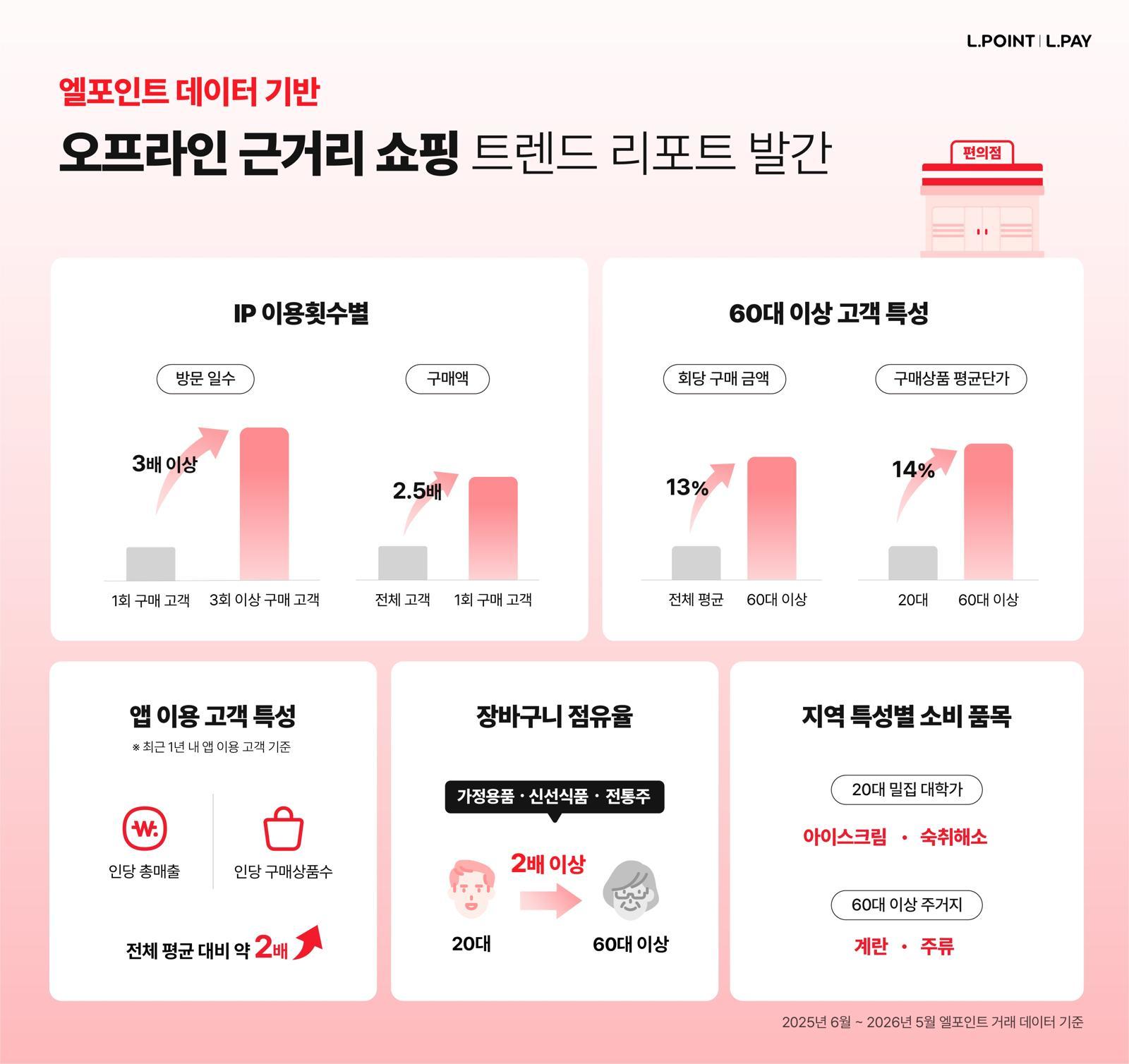
The 'L.POINT Trend Report,' based on transaction data from June 2023 to May 2024, highlights a significant generational divide in how South Koreans shop at convenience stores. For individuals in their 20s, these stores are increasingly becoming 'content spaces.' They exhibit a 'purpose-driven consumption' behavior, specifically visiting to purchase intellectual property (IP) related merchandise or exclusive new products. The report found that customers who repeatedly purchased IP goods three or more times visited stores over three times more often than those who made only one purchase, indicating a strong 'lock-in' effect driving repeat visits.
Convenience stores are increasingly becoming 'content spaces' for younger consumers.
In contrast, consumers aged 60 and above perceive convenience stores primarily as 'nearby supermarkets.' They use these establishments to supplement their grocery shopping, purchasing items like fresh produce and daily necessities. This demographic spends 13% more per visit on average compared to the overall average customer. Furthermore, their basket share for categories such as fresh food, household goods, and traditional liquors was more than double that of customers in their 20s.
Consumers aged 60 and above perceive convenience stores primarily as 'nearby supermarkets.'
Location also plays a role in shaping consumer habits. Stores in university areas, with a high population of 20-somethings, see a higher proportion of sales for items like hangover remedies and ice cream. Conversely, stores in residential areas predominantly populated by individuals over 60 show a greater share of sales for groceries like eggs and alcoholic beverages, reflecting a stronger 'grocery shopping' orientation.
L.POINT stated that it will continue to leverage its vast data resources to provide meaningful insights into market trends. This analysis underscores the dynamic nature of retail and the importance of understanding diverse consumer behaviors to effectively serve different demographics.
We will continue to leverage our vast data resources to provide meaningful insights into market trends.
DistantNews Editorial
Originally published by Dong-A Ilbo in Korean. Translated, summarized, and contextualized by our editorial team with added local perspective. Read our editorial standards.
More Stories


From Our Blog

What Gets Lost (and Found) When News Is Translated

The Critical Role of Diaspora Media in Global News

What Travellers Should Know About Countries with Restricted Press

A Digital Nomad's Guide to Following Local News

How the Same Story Looks Different in Different Countries
