


Cooling Poverty: Millions Unprotected from Extreme Heat Amidst Rising Temperatures
Translated from German, summarized and contextualized by DistantNews.
At a glance
Analysis
Sources not specified
Context piece
- Around 600 million people in the Global South suffer from "cooling poverty," lacking access to air conditioning amid rising global temperatures.
- Air conditioners consume significant energy, contributing to greenhouse gas emissions and exacerbating climate change.
- The article highlights that while ACs offer relief, solutions like shading and insulation are crucial for reducing cooling needs and mitigating environmental impact.
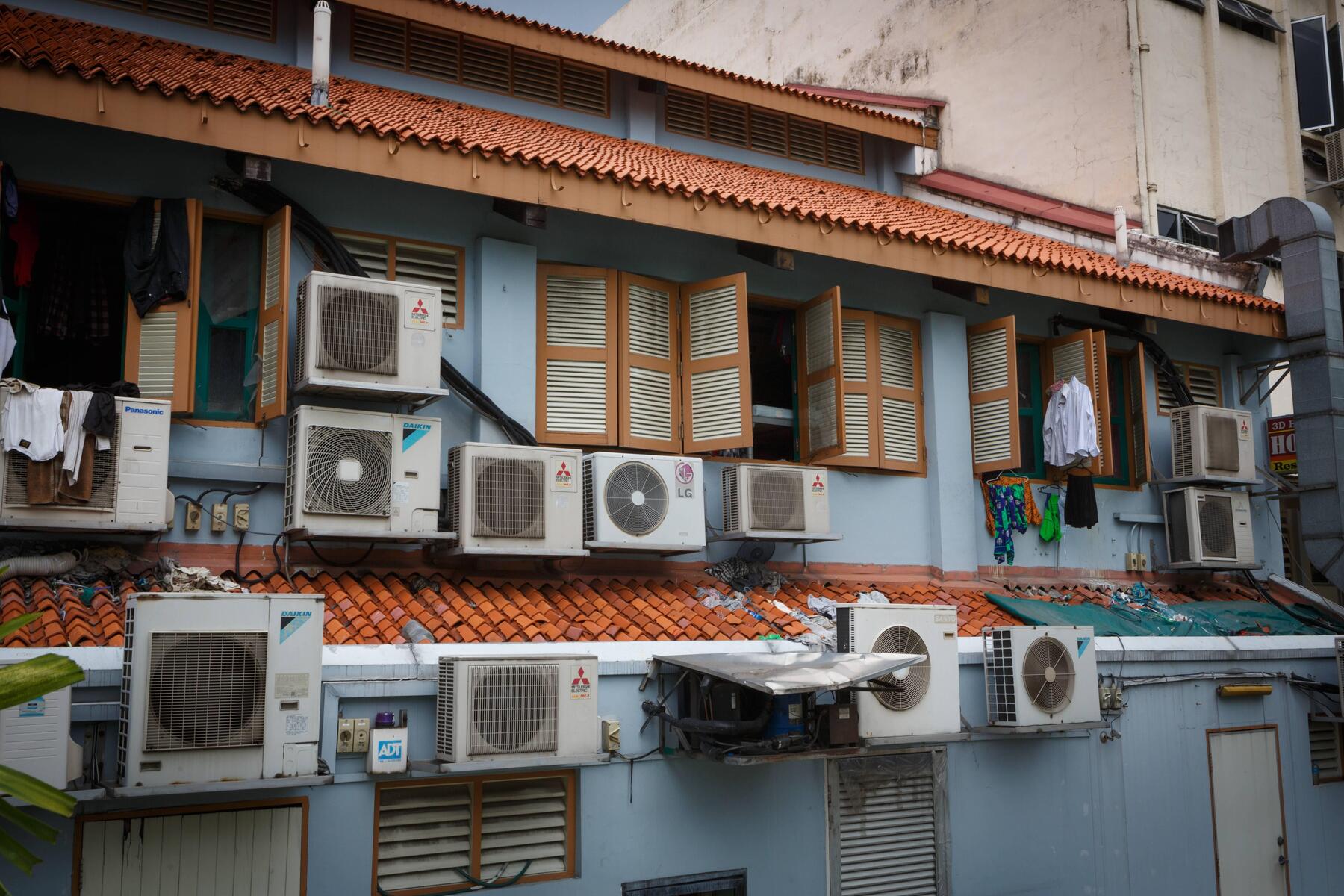
As global temperatures climb, a growing crisis known as "cooling poverty" is leaving hundreds of millions vulnerable. Approximately 600 million people, primarily in the Global South, lack access to essential cooling devices, facing severe consequences for their health, education, and livelihoods. This lack of access is particularly acute in urban areas, where two-thirds of those affected reside.
The proliferation of air conditioning units, while providing relief from heatwaves, comes at a significant environmental cost. Globally, 1.6 billion cooling units consume nearly five percent of total electricity and emit over a billion tons of CO2 equivalents annually. The International Energy Agency (IEA) projects air conditioning to be the fastest-growing sector in global electricity consumption, with a four percent annual increase expected by 2025. This surge is driven by both intensifying heatwaves due to climate change and rising prosperity in developing nations, leading to a projected ninefold increase in AC units in Southeast Asia by 2040.
However, for many, air conditioning remains an unaffordable luxury. Giacomo Falchetta's research highlights that factors beyond climate, such as education and employment conditions, significantly influence vulnerability to extreme heat. While ACs are effective, they are not a complete solution. The IEA suggests that improved building design, including shading and insulation, could reduce cooling demand by up to 80 percent. This underscores the need for a multi-faceted approach that combines technological solutions with sustainable urban planning to combat the dual challenges of extreme heat and energy consumption.
Kältearmut
DistantNews Editorial
Originally published by Die Presse in German. Translated, summarized, and contextualized by our editorial team with added local perspective. Read our editorial standards.
More Stories


From Our Blog

What Gets Lost (and Found) When News Is Translated

The Critical Role of Diaspora Media in Global News

What Travellers Should Know About Countries with Restricted Press

A Digital Nomad's Guide to Following Local News

How the Same Story Looks Different in Different Countries
