

Cosmic 'Anomaly' in Perseus Cluster: Supernova Explosions Rewrite Galaxy History
Translated from Greek, summarized and contextualized by DistantNews.
TLDR
- Astronomers have revised models of massive stars and their explosive deaths after new observations of the Perseus Cluster.
- Data from the Hitomi telescope revealed discrepancies in the predicted amounts of silicon and sulfur compared to argon and calcium.
- This research helps reconstruct the history of supernova explosions over the past 10 billion years, offering insights into galaxy evolution.
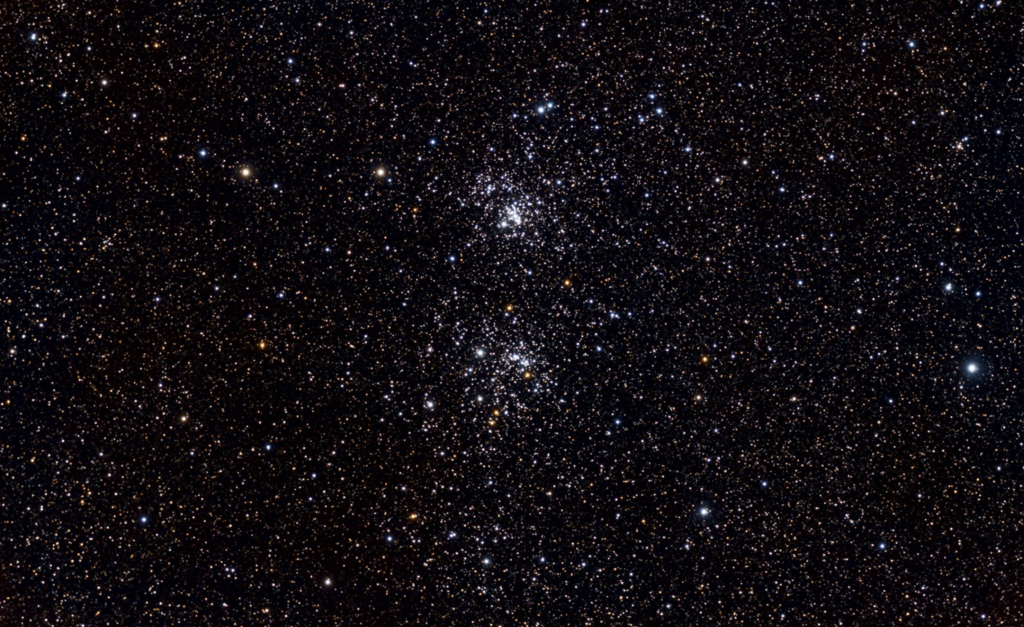
The Perseus Cluster, a colossal collection of over a thousand galaxies, continues to be a source of cosmic wonder and scientific inquiry. Recent findings, detailed in The Astrophysical Journal, challenge existing astrophysical models.
Researchers, including Dr. Shing-Chi Leung from SUNY Polytechnic Institute and Dr. Ken’ichi Nomoto from the University of Tokyo, analyzed data from the Hitomi telescope. Their work suggests that current models of massive stars and their supernova explosions may be inaccurate. Specifically, the observed ratios of elements like silicon, sulfur, argon, and calcium within the cluster's hot gas do not align with theoretical predictions.
This discrepancy points to a need for revised models of stellar evolution. The research team is developing new, more precise models that account for a wider range of stellar masses and metallicities. These updated models are crucial for understanding how successive generations of supernovae enrich space with heavy elements, thereby influencing the formation of new stars and the overall evolution of galaxies over billions of years.
This ongoing research not only deepens our understanding of the universe's history but also highlights the vital role of international collaboration and the contributions of emerging scientists. The work done by students Seth Walther and Henry Yerdon underscores the importance of hands-on research experience in advancing astrophysical knowledge.
I really enjoyed the opportunity to participate in undergraduate research in physics.
DistantNews Editorial
Originally published by Ta Nea in Greek. Translated, summarized, and contextualized by our editorial team with added local perspective. Read our editorial standards.
More Stories

From Our Blog

What Gets Lost (and Found) When News Is Translated

The Critical Role of Diaspora Media in Global News

What Travellers Should Know About Countries with Restricted Press

A Digital Nomad's Guide to Following Local News

How the Same Story Looks Different in Different Countries
