

Cotija cheese artisans fight to preserve tradition amid generational disinterest
Translated from Spanish, summarized and contextualized by DistantNews.
At a glance
In-depth
Named sources
Context piece
- Producers of the world-renowned Cotija cheese in Michoacán, Mexico, are struggling to preserve their artisanal tradition.
- New generations show little interest in the craft, and producers have been denied an official designation of origin for nearly 20 years.
- Despite these challenges, producers market their cheese under the collective brand "Queso Cotija: región de origen," maintaining its global reputation.
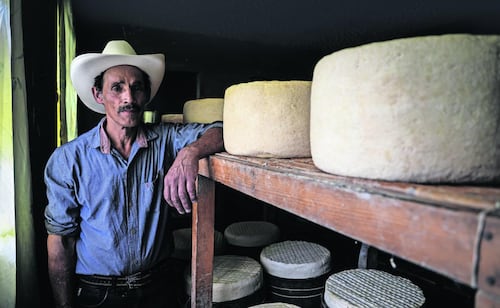
In the heart of Michoacán, Mexico, the tradition of crafting Cotija cheese, celebrated globally for its quality, faces an uncertain future. Fewer than 20 families continue this meticulous artisanal process, a labor of love that demands at least 12 hours of daily work to produce a single 20-kilogram wheel.
This cheese has no chemicals; it's pure rennet for the milk and salt.
Javier Vargas Barajas, a third-generation cheesemaker, opens his workshop to reveal the dedication behind each gram. His day begins at 5 a.m. with milking the native cattle, a crucial step as only milk from free-roaming, local breeds can yield authentic Cotija. Producing a 20-kilo cheese requires about 200 liters of milk, sourced from nearly 30 cows.
Vargas emphasizes that the cheese's signature quality comes from a purely artisanal technique, using only natural rennet and salt, with no chemical additives. "Every detail is done as it comes, but it's a full day's work. It's a 24-hour job," he explains while kneading the curd. He laments the declining interest among younger generations, a stark contrast to the passion that once fueled this demanding craft.
Every detail is done as it comes, but it's a full day's work. It's a 24-hour job.
He fondly recalls his father's era, when production and transport were even more arduous. "Back then, when my father made his cheese, we would help him, and he would bring his cheese from the ranch on pack animals to Cotija, taking the whole day to get here to sell it," Vargas remembers. Today, while they have achieved a collective brand, "Queso Cotija: región de origen," the fight to formally secure the designation of origin continues, a battle that has spanned nearly two decades.
Back then, when my father made his cheese, we would help him, and he would bring his cheese from the ranch on pack animals to Cotija, taking the whole day to get here to sell it.
DistantNews Editorial
Originally published by El Universal in Spanish. Translated, summarized, and contextualized by our editorial team with added local perspective. Read our editorial standards.
More Stories


From Our Blog

What Press Freedom Means for the News You Read

What Gets Lost (and Found) When News Is Translated

The Critical Role of Diaspora Media in Global News

What Travellers Should Know About Countries with Restricted Press

A Digital Nomad's Guide to Following Local News
