


Cuba's Difficult Economic Turn in 2026
Translated from Spanish, summarized and contextualized by DistantNews.
At a glance
News
Sources not specified
Context piece
- Cuba introduced 176 economic reforms to partially liberalize its state-controlled economy, aiming to boost private enterprise.
- Reforms allow private companies to exceed 100 workers, permit multiple business ownership, and create SMEs in agriculture.
- Experts question the extent of the reforms, noting the government's aim to preserve socialist models and state control.
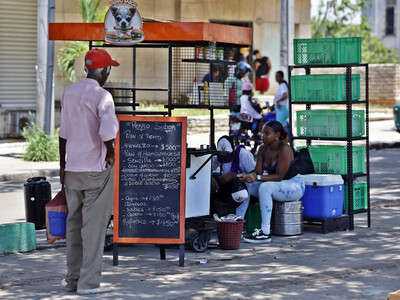
Cuba has launched one of its most extensive economic reform programs in years, introducing 176 measures designed to partially liberalize and decentralize an economy struggling with shortages of foreign currency, fuel, investment, and production. The government is now more clearly backing the private sector, though it maintains its decades-long political and economic control.
the quality that is different about the 2026 reforms is that they seem to place Cuba's private sector as the pivot factor for the crisis.
The reforms permit private companies to grow beyond the current 100-worker limit, allow individuals to own more than one company, and enable the creation of small and medium-sized private enterprises in agriculture, according to the EFE agency. New opportunities are opening in sectors previously reserved for the state, such as private banking, hotel management, vehicle rentals, passenger transport, and specific tourism services.
a strategic priority for the nation
This shift is significant for an economy that has been organized around state dominance for over six decades. Cuban economist Daniel Torralbas believes the reforms of 2026 "seem to place Cuba's private sector as the pivot factor for the crisis." However, the key question remains: how far is the Cuban government willing to go?
advancing socialist construction
President Miguel Díaz-Canel insists the opening does not mean abandoning the socialist model. He has defined the reforms as a "strategic priority for the nation" aimed at "advancing socialist construction." This formulation highlights the fundamental contradiction: Havana needs to unleash private productive forces while trying to preserve the state's economic dominance. Experts warn about this ambiguity, questioning the ultimate weight of private enterprise and which activities will remain under state control.
not a radical shift
DistantNews Editorial
Originally published by Diario Libre in Spanish. Translated, summarized, and contextualized by our editorial team with added local perspective. Read our editorial standards.
More Stories



From Our Blog

What Gets Lost (and Found) When News Is Translated

The Critical Role of Diaspora Media in Global News

What Travellers Should Know About Countries with Restricted Press

A Digital Nomad's Guide to Following Local News

How the Same Story Looks Different in Different Countries
