

Cuba vs. Trump: Díaz-Canel's harsh response to sanctions on his family
Translated from Greek, summarized and contextualized by DistantNews.
At a glance
News
Sources not specified
New plan
- Cuban President Miguel Díaz-Canel condemned new U.S. sanctions targeting him, his family, and other individuals and entities.
- He described the sanctions as "threatening" and an "imperialist attack" aimed at strengthening the embargo and increasing the risk of conflict.
- The U.S. Treasury Department imposed sanctions on Díaz-Canel, his wife, his stepson, and relatives of former President Raúl Castro.
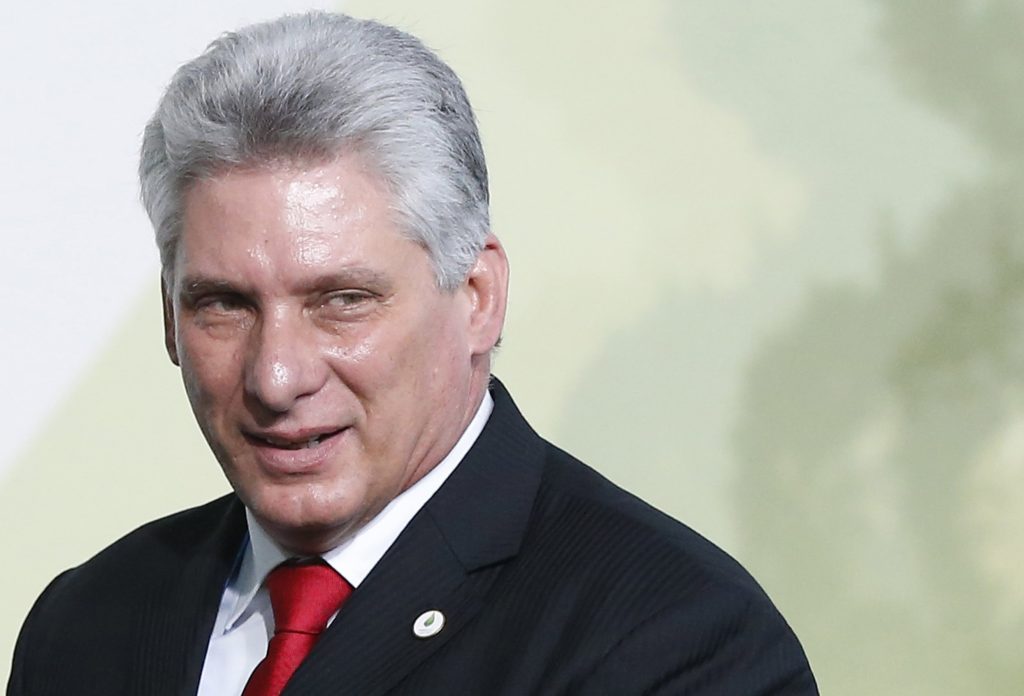
Cuban President Miguel Díaz-Canel issued a strong condemnation of new U.S. sanctions targeting him, his wife, his stepson, and other Cuban individuals and entities. He labeled the U.S. actions as "threatening" and an "imperialist attack," asserting that Cuba will resist.
Díaz-Canel argued that the "illegal" new sanctions aim to reinforce the U.S. embargo, in place since 1962, and increase the likelihood of a "military conflict between Cuba and the U.S." Cuba's Foreign Minister, Bruno Rodríguez, also criticized the sanctions, viewing them as further evidence of U.S. interventionist plans and attempts to portray Cuba as a threat to American national security.
Cuba will resist the imperialist attack it is suffering.
The sanctions, announced by the U.S. Treasury Department, also target relatives of former President Raúl Castro, including his son Alejandro Castro Espín and grandson Raúl Alejandro Castro. These measures signal a continuation of escalating pressure on Havana. U.S. President Trump has repeatedly characterized Cuba, located 150 kilometers from Florida, as an "exceptional" threat to U.S. national security and has threatened to "take control" of the island.
These new sanctions also affect Cuba's Ministry of Defense, the Committees for the Defense of the Revolution (CDR), and other organizations. The measures come amid a worsening of tensions between Washington and Havana this year, including a de facto oil blockade and previous waves of sanctions against Cuban institutions and leaders.
This is further proof of the U.S. plan for intervention and the attempt to present Cuba as a threat to U.S. national security.
DistantNews Editorial
Originally published by Ta Nea in Greek. Translated, summarized, and contextualized by our editorial team with added local perspective. Read our editorial standards.
More Stories
From Our Blog

What Gets Lost (and Found) When News Is Translated

The Critical Role of Diaspora Media in Global News

What Travellers Should Know About Countries with Restricted Press

A Digital Nomad's Guide to Following Local News

How the Same Story Looks Different in Different Countries
