


Cuban Lives Cut Short as Healthcare System Flatlines Amidst Crisis
Translated from English, summarized and contextualized by DistantNews.
At a glance
News
Named sources
Context piece
- Cuba's once-vaunted healthcare system is collapsing under the weight of US sanctions, energy shortages, and aging equipment.
- Patients face long waits for essential diagnostics and treatments, with cancer survival rates plummeting.
- Shortages of medicine, equipment, and staff are forcing medical professionals to make difficult choices and work with outdated technology.
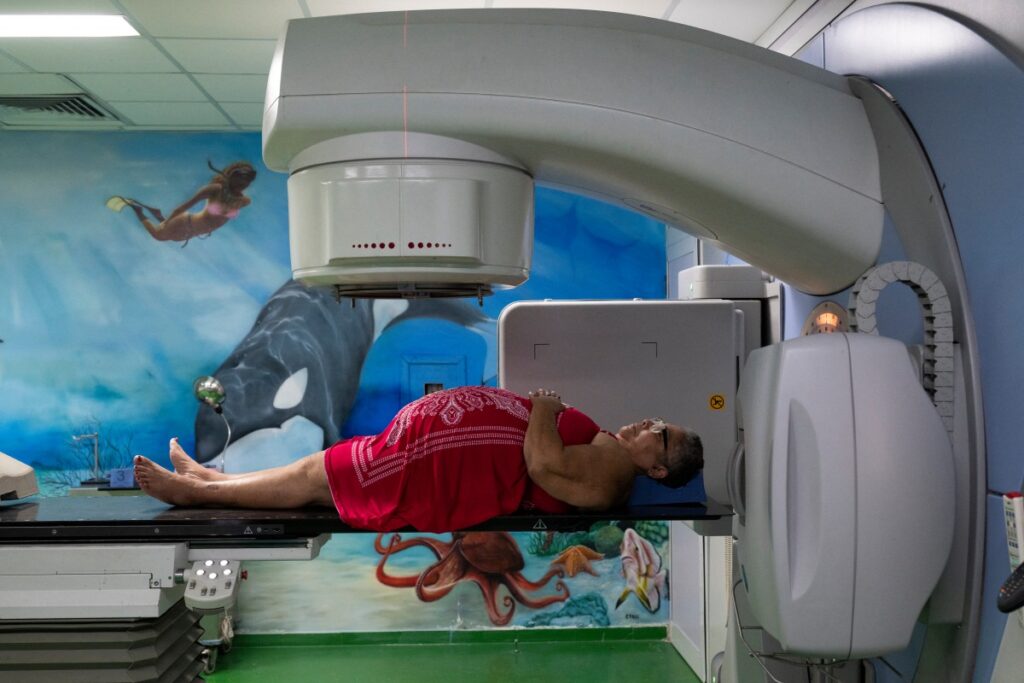
Cuba's revolutionary healthcare system, long hailed as a symbol of socialist achievement, is now critically ill, struggling with a perfect storm of US sanctions, energy crises, and crumbling infrastructure. Patients like Rosa Valentina Perez, a 64-year-old cancer survivor, are left in agonizing limbo, waiting weeks for essential diagnostic scans due to a severe shortage of functioning equipment.
Perez urgently needs a CT scan to determine if her cancer has spread to her spine, but Havana's only working CT scanner is at the city's neurology hospital, and its waitlist is prohibitively long. "You can't imagine what it's like to have this pain, to know that your life span is being diminished, and to hear them say: 'Let's see when we can do that scan,'" she told AFP, embodying the despair gripping many.
You can’t imagine what it’s like to have this pain, to know that your life span is being diminished, and to hear them say: ‘Let’s see when we can do that scan.’
The system's decline is starkly illustrated by the National Institute of Oncology and Radiobiology (INOR), where the waitlist for radiotherapy exceeds 1,200 patients. Institute director Luis Eduardo Martin revealed that 80 percent of diagnostic and treatment equipment is obsolete or broken. "We administer medication without at times being able to verify they are having the effect we expected… because we don't have the reagents or the equipment to monitor them," he stated, highlighting the compromised quality of care.
We administer medication without at times being able to verify they are having the effect we expect… because we don’t have the reagents or the equipment to monitor them.
Children are bearing a particularly heavy burden. The government-reported childhood cancer survival rate has dropped from 85 percent pre-crisis to 65 percent currently. Mariuska Forteza, head of INOR's pediatric oncology unit, described the frustration of being unable to provide life-saving treatments due to a lack of equipment and fuel for transporting samples. "It's very frustrating to know you can save the child, achieve a better survival rate, and you can't do it because your hands are tied," she said.
Despite these dire circumstances, technicians like Alexis Amado Dominguez continue to perform heroic, albeit makeshift, repairs on aging machinery, often working through the night to enable patient treatments. The crisis extends to cardiovascular care as well, further straining the once-proud medical infrastructure.
It’s very frustrating to know you can save the child, achieve a better survival rate, and you can’t do it because your hands are tied.
DistantNews Editorial
Originally published by Jamaica Observer in English. Translated, summarized, and contextualized by our editorial team with added local perspective. Read our editorial standards.
More Stories

From Our Blog

What Gets Lost (and Found) When News Is Translated

The Critical Role of Diaspora Media in Global News

What Travellers Should Know About Countries with Restricted Press

A Digital Nomad's Guide to Following Local News

How the Same Story Looks Different in Different Countries
