

Çukurören's registered flavor: Planting begins amid cement factory threat to 162-year agricultural heritage
Translated from Turkish, summarized and contextualized by DistantNews.
At a glance
News
Named sources
Context piece
- Farmers in Çukurören village are continuing the 162-year-old tradition of cultivating the Çukurören pepper using heirloom seeds.
- The cultivation process, from germination to harvest, is entirely managed by the villagers, who dry the peppers for sale.
- A nearby cement factory is negatively impacting crop yields and water resources, causing farmers to reduce cultivation.
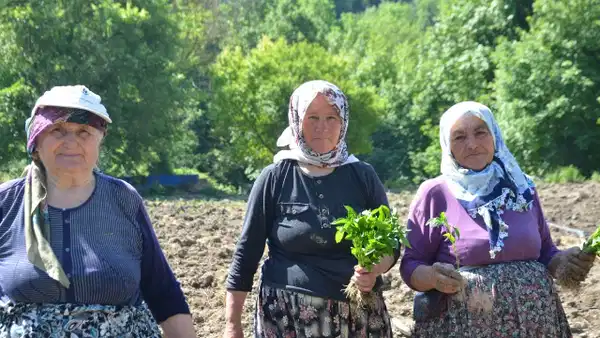
In Çukurören village, the cultivation of the Çukurören pepper, a tradition spanning 162 years, is underway. Farmers meticulously follow ancestral methods, nurturing the pepper from seed to harvest. They begin by germinating heirloom seeds in early March, transplanting the seedlings to fields, and allowing them to mature. The peppers are then harvested, strung onto ropes, and naturally dried on balconies and walls, transforming the village into a vibrant red landscape.
Our Çukurören pepper's characteristic is its beautiful aroma, which stems from its soil.
Village head Muhittin Dündar emphasized the pepper's unique aroma, attributing it to the local soil. "Our Çukurören pepper's characteristic is its beautiful aroma, which stems from its soil," he stated. The harvest typically occurs in September and October. Last year, due to water scarcity and unfavorable weather, cultivation was limited to 100 decares, yielding approximately 2 tons per decare. The peppers are distributed across Turkey, with significant markets in İzmir and other Aegean cities, as well as Istanbul, Eskişehir, and Bursa.
However, the agricultural heritage faces a threat from the Safi Cement factory operating in the region. Dündar explained that the factory's operations negatively affect both water resources and crop yields. "The cement factory here is harmful to our water, and the dust and smoke emanating from it also impact us," he said. He noted a decline in harvest quantities and quality since the factory's establishment, leading some farmers to reconsider growing the pepper. "The yield has decreased, and production has also reduced. Because it has lowered the yield, we don't want to grow much pepper here anymore," Dündar added.
The cement factory here is harmful to our water, and the dust and smoke emanating from it also impact us.
Villagers like Emine Eren described the labor-intensive process, which begins in February and continues until August. They meticulously weed, water, and cultivate the plants, often working together in a communal effort known as "imece." After harvesting and drying, the peppers are sold to buyers or brought to market. Despite the challenges, the community remains dedicated to preserving this time-honored agricultural practice.
The yield has decreased, and production has also reduced. Because it has lowered the yield, we don't want to grow much pepper here anymore.
DistantNews Editorial
Originally published by Cumhuriyet in Turkish. Translated, summarized, and contextualized by our editorial team with added local perspective. Read our editorial standards.
More Stories
From Our Blog

What Gets Lost (and Found) When News Is Translated

The Critical Role of Diaspora Media in Global News

What Travellers Should Know About Countries with Restricted Press

A Digital Nomad's Guide to Following Local News

How the Same Story Looks Different in Different Countries
