


Customs blame N34tn duty waivers for revenue losses
Summarized and contextualized by DistantNews.
At a glance
News
Sources not specified
Context piece
- Nigeria Customs Service Comptroller-General Bashir Adeniyi stated that N34 trillion in Import Duty Exemption Certificate (IDEC) approvals in 2025 significantly reduced revenue.
- Adeniyi explained that while 60% of these waivers were for military hardware due to security challenges, other exemptions included CNG, electric vehicles, and medical supplies.
- The Senate Committee on Finance is investigating revenue-generating agencies, threatening sanctions against those who failed to honor invitations.
The Comptroller-General of the Nigeria Customs Service, Bashir Adeniyi, revealed that the value of Import Duty Exemption Certificate (IDEC) approvals granted by the Federal Government in 2025 reached N34 trillion. He warned that these fiscal incentives have substantially hampered the service's revenue-generating capacity.
IDEC approvals reached about ₦34 trillion in 2025, 60 per cent of which was rightly done by the government related to military hardware procurements, which attracted duty exemptions because of Nigeria’s prevailing security challenges.
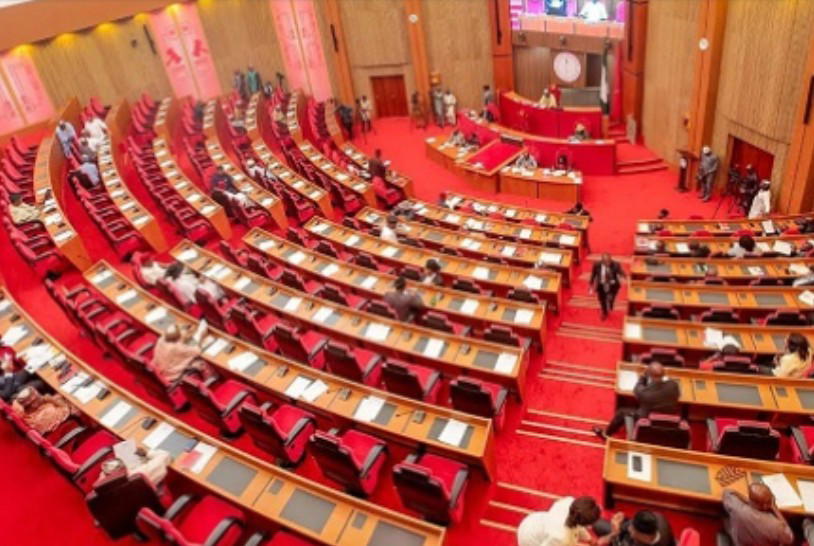
Adeniyi made these disclosures during an investigative hearing by the Senate Committee on Finance, which is examining revenue-generating agencies. He noted that while government fiscal policies can positively or negatively impact revenue performance, the IDEC policy, introduced in March 2020, has been a major factor affecting Customs revenue. He stated that the service could have achieved higher collections if not for these government-approved duty waivers and other policy interventions.
Approximately 60% of the N34 trillion in IDEC approvals were related to military hardware procurements, granted due to Nigeria's prevailing security challenges. Other government-backed waivers included exemptions for the importation of Compressed Natural Gas (CNG), electric and hybrid vehicles, healthcare equipment, medical supplies, industrial machinery, and food import intervention programs.
Other government-backed waivers included importation of Compressed Natural Gas (CNG), electric and hybrid vehicles, healthcare equipment and medical supplies, industrial machinery and manufacturing inputs, and food import intervention programmes.
While acknowledging the broader economic and social objectives of duty waivers, Adeniyi urged the Federal Government to strengthen monitoring mechanisms. This is to ensure that beneficiaries of these waivers deliver the expected outcomes, such as lower prices, increased industrial production, and improved healthcare access.
fiscal policy should not be assessed solely on revenue generation, saying that duty waivers also serve broader economic and social objectives.
The Senate Committee on Finance also threatened sanctions against several agencies, including the Nigerian Civil Aviation Authority and the Small and Medium Enterprises Development Agency of Nigeria, for failing to attend the hearing. The hearing also highlighted disagreements over alleged non-remittance of operating surpluses by some government agencies.
Nevertheless, urged the Federal Government to strengthen monitoring mechanisms to ensure beneficiaries of the waivers deliver the expected outcomes, including lower prices, increased industrial production and improved access to healthcare.
DistantNews Editorial
Originally published by The Punch. Summarized and contextualized by our editorial team with added local perspective. Read our editorial standards.
More Stories

From Our Blog

How the Same Story Looks Different in Different Countries

What Gets Lost (and Found) When News Is Translated

The Critical Role of Diaspora Media in Global News

What Travellers Should Know About Countries with Restricted Press

A Digital Nomad's Guide to Following Local News
