


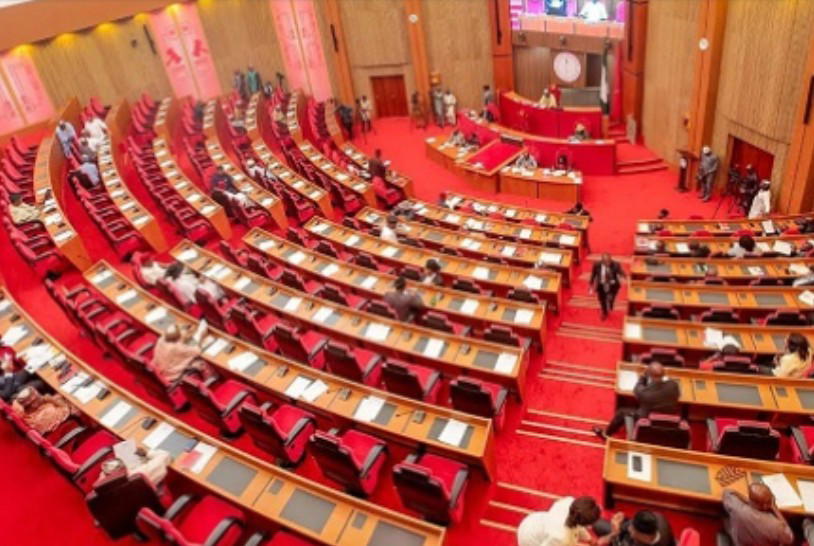
Senate probes ₦34tn import duty waivers, threatens sanctions for defaulting MDAs
Summarized and contextualized by DistantNews.
At a glance
News
Sources not specified
Under investigation
- The Nigerian Senate is investigating ₦34 trillion in import duty waivers granted between March 2020 and December 2025, threatening sanctions for non-compliant Ministries, Departments, and Agencies (MDAs).
- The Nigeria Customs Service defended the waivers, stating nearly 60% were for military hardware, with others covering CNG vehicles, medical equipment, and industrial inputs, aimed at supporting national security and economic growth.
- The Senate Committee on Finance is also probing unremitted operating surpluses, summoning the NNPCL GCEO and demanding updated audited accounts from the Customs Service within one week.
Nigeria's Senate is taking a firm stance on fiscal accountability, threatening sanctions against Ministries, Departments, and Agencies (MDAs) that have failed to honor invitations for its ongoing investigation into internally generated revenue and operating surplus remittances. The Senate Committee on Finance warned that agencies like the Nigerian Civil Aviation Authority (NCAA), Small and Medium Enterprises Development Agency of Nigeria (SMEDAN), Industrial Training Fund (ITF), and Federal Medical Centre (FMC), Jabi, could face legislative action for non-compliance.
The Senate has threatened to sanction several Ministries, Departments and Agencies (MDAs) for failing to honour invitations to its ongoing investigation into the remittance of internally generated revenue and operating surplus into the Consolidated Revenue Fund (CRF).
This probe is part of a broader investigation into the Federal Government's issuance of Import Duty Exemption Certificates (IDECs), valued at approximately ₦34 trillion between March 2020 and December 2025. Committee Chairman Senator Sani Musa emphasized the investigation's aim: to ensure accountability in public resource management and evaluate whether fiscal incentives have achieved their intended economic objectives. Persistent defaulters might even be reported to President Bola Tinubu for administrative action.
Appearing before the committee, the Comptroller-General of the Nigeria Customs Service (NCS), Bashir Adewale Adeniyi, defended the duty waivers. He disclosed that nearly 60% of the ₦34 trillion in waivers were allocated to military hardware imports, crucial for strengthening Nigeria's security. Other beneficiaries included imports for Compressed Natural Gas (CNG) vehicles, electric and hybrid vehicles, medical equipment, industrial machinery, manufacturing inputs, and food commodities under government intervention programs.
IDEC approvals reached about ₦34 trillion in 2025, about 60 per cent of which related to military hardware procurements that attracted duty exemptions because of Nigeria’s prevailing security challenges.
Adeniyi argued that these waivers are deliberate fiscal policy tools designed to foster national security, economic growth, and social development, rather than solely to reduce government revenue. He stressed that fiscal policy should be assessed not just on revenue forgone but also on its contribution to industrial development, healthcare, reduced production costs, and national security. He did, however, recommend enhanced monitoring mechanisms to ensure waiver recipients fulfill their expected contributions, such as lowering consumer prices and boosting local production.
fiscal policy should not be assessed solely on the basis of revenue forgone but also on its contribution to industrial development, healthcare delivery, lower production costs and national security.
DistantNews Editorial
Originally published by Vanguard. Summarized and contextualized by our editorial team with added local perspective. Read our editorial standards.
More Stories



From Our Blog

How the Same Story Looks Different in Different Countries

What Gets Lost (and Found) When News Is Translated

The Critical Role of Diaspora Media in Global News

What Travellers Should Know About Countries with Restricted Press

A Digital Nomad's Guide to Following Local News
