


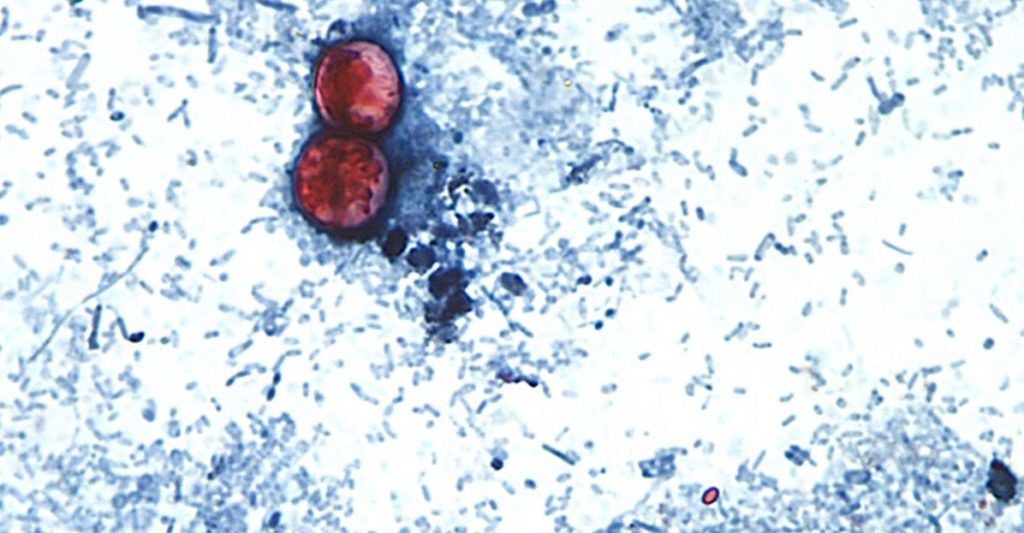
Cyclospora outbreak linked to sewage contamination in food supply
Translated from English, summarized and contextualized by DistantNews.
At a glance
News
Sources not specified
Outcome reported
- A nationwide Cyclospora outbreak is likely caused by sewage contamination in the food supply, according to experts.
- The parasite, found only in humans, replicates in the intestines and is excreted in feces, which can then contaminate water used for irrigation.
- This outbreak has sickened over 22,000 people and caused two deaths in Michigan.
A widespread Cyclospora outbreak, which has sickened over 22,000 people and led to two deaths in Michigan, is highly likely the result of sewage contamination in the food supply, according to scientific researchers and public health officials. The parasite's lifecycle creates a self-perpetuating cycle of infection.
The nationwide cyclospora outbreak is very likely a result of sewage contamination in the food supply, according to scientific researchers and public health officials.
Cyclospora exists solely in humans, where it multiplies in the intestinal tract, causing severe diarrhea. The organism releases oocysts in human feces, which typically enter sewage systems. While sewage is treated in many areas, the treatment may not always eliminate or kill these oocysts. The treated water is then released into waterways and can be used to irrigate crops.
Cyclospora is found only in humans, where it replicates in the intestinal tract, causing severe diarrhea.
Warm temperatures allow the oocysts to mature in the environment within about a week. When a person consumes contaminated food or water, they become infected, releasing more oocysts into sewage systems. This process, particularly the use of treated sewage for crop irrigation, is common in regions with limited water resources. Researchers monitor sewage for pathogens like Cyclospora to assess community disease levels and evaluate the effectiveness of sewage treatment processes.
Using treated sewage to irrigate crops is common in many places, especially where groundwater and surface water are in short supply.
Detecting Cyclospora oocysts in sewage, water, or food is challenging, even with modern laboratory methods. Low levels of oocysts, though still capable of causing illness, can be difficult to detect reliably. Studies globally have found Cyclospora oocysts in up to 25% of sewage samples, but the concentration levels vary, making it difficult to gauge the exact prevalence.
It is not easy to measure cyclospora oocysts in sewage, contaminated water or food.
DistantNews Editorial
Originally published by PBS NewsHour in English. Translated, summarized, and contextualized by our editorial team with added local perspective. Read our editorial standards.
More Stories


From Our Blog

How the Same Story Looks Different in Different Countries

What Gets Lost (and Found) When News Is Translated

The Critical Role of Diaspora Media in Global News

What Travellers Should Know About Countries with Restricted Press

A Digital Nomad's Guide to Following Local News
