

Cyclospora Outbreak: Step-by-Step Guide to Disinfecting Lettuce to Prevent Illness
Translated from Spanish, summarized and contextualized by DistantNews.
At a glance
News
Named sources
Context piece
- Health authorities in the U.S. issued an alert for a Cyclospora outbreak causing intestinal infections.
- The parasite, Cyclospora cayetanensis, is typically contracted through contaminated food or water, particularly fruits and vegetables exposed to fecal matter.
- While Mexican authorities found no evidence of the parasite in lettuce samples, a guide is provided on how to properly disinfect lettuce and other vegetables.
Health authorities in the United States have issued an alert regarding an outbreak of Cyclospora, an intestinal infection caused by the microscopic parasite Cyclospora cayetanensis. This parasite can lead to explosive diarrhea and is primarily contracted by consuming contaminated water or food, especially fruits and vegetables that may have been exposed to microscopic fecal residues during production or handling.
The contagion of this parasite usually occurs when consuming contaminated water or food, mainly fruits and vegetables that were exposed to microscopic fecal residues during their production or handling.
Concerns arose in Mexico when a report suggested the outbreak was linked to lettuce originating from Mexico. However, the Federal Commission for the Protection against Sanitary Risks (Cofepris) stated on July 23 that no evidence of the parasite was found in samples collected in Mexico and the United States. Despite this, public uncertainty persists, prompting a guide on disinfecting lettuce and other vegetables.
Although Mexican authorities rule out an outbreak, maintaining proper food hygiene remains one of the main recommendations to reduce the risk of contracting cyclosporiasis and other foodborne illnesses.
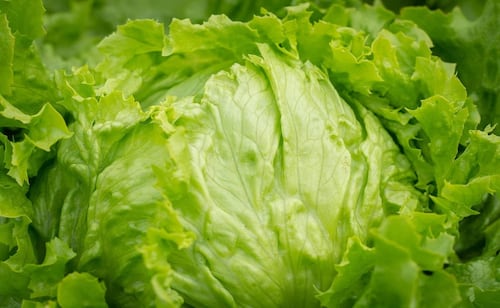
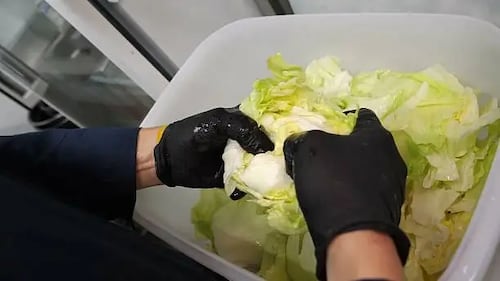
The most effective method for cleaning leafy greens like lettuce and spinach involves rinsing them directly under running potable water. It is also recommended to remove outer leaves that may be damaged, as this helps eliminate soil and microorganisms on the surface. Before handling any food, thorough handwashing with soap and water for at least 20 seconds is advised, along with disinfecting preparation surfaces and utensils.
The leaves should be rubbed gently with your hands while under running water. Specialists indicate that it is not recommended to leave them to soak, as microorganisms present on one leaf can disperse to the rest of the contents of the container.
Specialists suggest gently rubbing the leaves by hand while under running water, cautioning against soaking the vegetables. Soaking could potentially spread any microorganisms present on one leaf to the rest of the produce in the container. After rinsing, vegetables should be drained in a clean container or dried with fresh paper towels. For an additional layer of disinfection, a sanitizing solution can be used, following the manufacturer's instructions. For instance, a recommended dilution for chlorine-based solutions is 1 ml per liter of water, according to biochemical engineer Rafa Carbajal.
the recommended measure is 1 ml per liter of water.
DistantNews Editorial
Originally published by El Universal in Spanish. Translated, summarized, and contextualized by our editorial team with added local perspective. Read our editorial standards.
More Stories


From Our Blog

What Press Freedom Means for the News You Read

What Gets Lost (and Found) When News Is Translated

The Critical Role of Diaspora Media in Global News

What Travellers Should Know About Countries with Restricted Press

A Digital Nomad's Guide to Following Local News
