

Czech military strategy document warns Russia could launch surprise NATO attack
Translated from Croatian and summarized by DistantNews. Read the original for the full story.
At a glance
Analysis
Documents & data
Ongoing story
- An internal Czech Defence Ministry document names Russia and China as the largest threats to Europe’s security order, with Russia identified as the Czech Republic’s biggest security threat.
- The document warns that a future attack on a NATO member could come without warning and highlights sabotage, disinformation and cyber espionage.
- Prague is considering ways to expand national defence participation, including a possible return of compulsory military service, amid disagreements over defence spending.
“The greatest threat to the security of the Czech Republic comes from Russia,” an internal Defence Ministry strategy document says, offering an unusually direct assessment of the country’s security outlook.
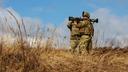
The document covers defence planning through 2045 and warns that a future attack on a NATO member could happen without warning. Czech authorities are therefore preparing for the possibility of a large-scale military conflict in Europe and want to adapt the country’s defence capabilities over the long term.
The threat described in the document extends beyond a conventional invasion. Russia and China could also intensify sabotage, disinformation and cyber espionage, it says. Czech authorities are examining scenarios that would increase the number of people able to take part in defending the country.
One option is a return to compulsory military service. Citizens currently serve voluntarily in peacetime, but the government could consider an appropriate form of civic participation in national defence and military service if necessary.
The greatest threat to the security of the Czech Republic comes from Russia.
The Czech military currently has between 28,000 and 30,000 professional soldiers and about 4,000 to 5,000 active reservists. The plan calls for roughly 30,000 professional soldiers by 2030 and 10,000 active reservists.
Petr Mlejnek, a former head of the Czech intelligence service, supports the document’s assessment. “The assumption that an adversary does not strictly distinguish between war and peace is correct. In my view, much more fundamental conclusions should be drawn from this,” he said.
The strategy is expected to reach the government, led by Prime Minister Andrej Babiš, in the autumn. Funding has already caused disagreement. Military leaders want higher defence spending, while the government reportedly plans to keep it at about 2.1% of GDP in 2028 and 2029.
The assumption that an adversary does not strictly distinguish between war and peace is correct. In my view, much more fundamental conclusions should be drawn from this.
About this summary
Originally published by Večernji List in Croatian. Translated, summarized, and contextualized automatically by DistantNews, with a note on how the source frames the story. Not individually reviewed before publishing. How this works.
More Stories

From Our Blog

What Gets Lost (and Found) When News Is Translated

The Critical Role of Diaspora Media in Global News

What Travellers Should Know About Countries with Restricted Press

A Digital Nomad's Guide to Following Local News

How the Same Story Looks Different in Different Countries
