


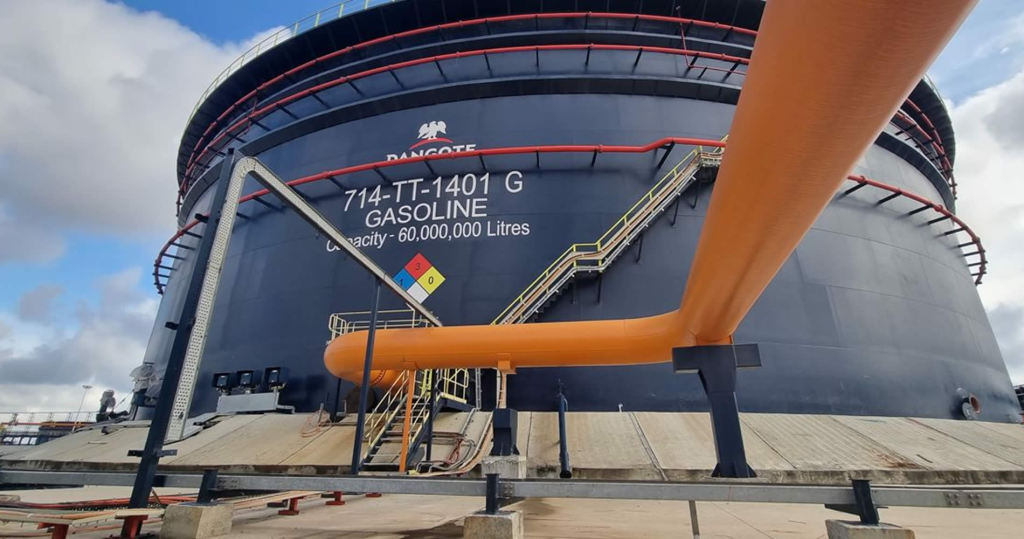
Dangote Refinery shields Nigeria from global fuel price shocks, S&P says
Translated from English, summarized and contextualized by DistantNews.
At a glance
News
Named sources
Context piece
- Nigeria's domestic fuel prices remain stable despite rising international costs, thanks to the Dangote Refinery.
- Importers face challenges due to higher global product values, increased freight rates, and tightening supply, making Nigerian imports uneconomical.
- The Dangote Refinery has significantly reduced its ex-depot prices for PMS, AGO, and Jet A1 fuel since May, demonstrating the strategic importance of domestic refining capacity.
Nigeria's fuel market is insulated from global price shocks by the Dangote Petroleum Refinery, which maintains stable domestic prices despite rising international gasoline costs, higher freight rates, and tightening global supply. This situation is causing concern among importers who are struggling to pass on increased international expenses to consumers.
Market intelligence from S&P Global Commodity Insights indicates that gasoline prices in Nigeria are effectively capped by Dangote's prices. Traders report that while gasoline in Ghana commands higher premiums, Nigerian specification cargoes are constrained because the Dangote Refinery has kept its coastal sales prices unchanged. This has closed the arbitrage opportunity, making fuel imports into Nigeria uneconomical.
The refinery's stability comes amid a sharp increase in global freight rates, with the cost of transporting clean petroleum products from Northwest Europe to West Africa rising significantly. Additionally, diesel markets have tightened due to reduced Russian supplies, further escalating import costs across West Africa.
gasoline prices in Nigeria are effectively being “capped by Dangote prices”, limiting the ability of importers to pass on higher international costs to the domestic market.
Despite these global pressures, the Dangote Refinery has continued its policy of price moderation. Since late May, it has reduced ex-depot prices for Premium Motor Spirit (PMS) by over N200 per liter, Automotive Gas Oil (AGO) by N300 per liter, and Jet A1 aviation fuel by N520 per liter. The refinery emphasizes that its pricing is based on actual crude procurement costs, which are determined weeks or months in advance under commercial contracts, rather than daily fluctuations in international Brent prices.
Industry analysts view these developments as further validation of the strategic importance of domestic refining capacity in insulating Nigeria from volatile international energy markets. The refinery's consistent price reductions, even while processing crude purchased at higher international prices, highlight its role in stabilizing the domestic fuel supply and protecting consumers.
Lomé values have risen above Dangote sales prices, which has shut the arbitrage.
DistantNews Editorial
Originally published by Vanguard in English. Translated, summarized, and contextualized by our editorial team with added local perspective. Read our editorial standards.
More Stories


From Our Blog

How the Same Story Looks Different in Different Countries

What Gets Lost (and Found) When News Is Translated

The Critical Role of Diaspora Media in Global News

What Travellers Should Know About Countries with Restricted Press

A Digital Nomad's Guide to Following Local News
