


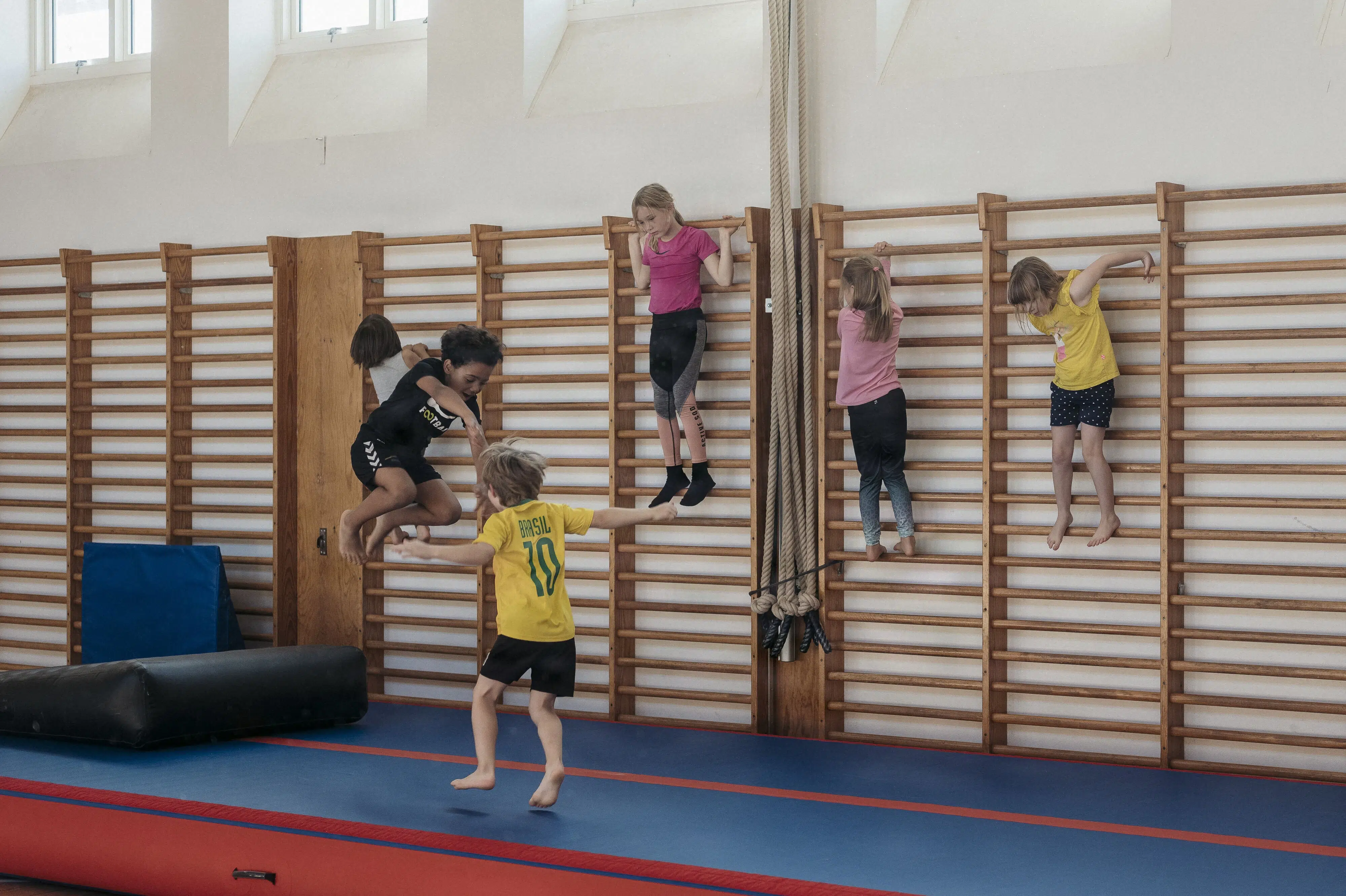
Danish girls' enjoyment of PE plummets in puberty, study finds
Translated from Danish, summarized and contextualized by DistantNews.
At a glance
News
Official statement
Context piece
- A Danish study reveals a significant drop in girls' enjoyment of physical education between ages 12-14 compared to younger ages and boys.
- While 74% of 6-8-year-old girls enjoy PE, only half of 12-14-year-olds do, compared to 71.7% of boys in the older group.
- Researchers and educators suggest puberty, body image concerns, and cultural factors contribute to this decline, emphasizing the need for varied and inclusive PE instruction.
A new study in Denmark highlights a concerning trend: girls' enthusiasm for physical education classes significantly wanes as they enter puberty. While a strong majority of young girls, 74%, report enjoying PE between the ages of six and eight, this figure plummets to just 50% for girls aged 12 to 14.
In contrast, boys in the same 12-14 age group maintain a higher level of engagement, with 71.7% expressing positive feelings towards the subject. This disparity suggests that the transition into adolescence brings unique challenges for girls regarding physical activity in a school setting.
I can well recognize the problem. It depends enormously on the children and how active they are in club life. It's about puberty and something physical, but it's also something cultural.
Educators like Malene Vissing Tønder, a PE teacher and board member for Dansk Skoleidræt (Danish School Sports), recognize this issue. She attributes the decline to a combination of factors, including the influence of organized sports participation, the physical changes of puberty, and broader societal and cultural expectations surrounding girls' bodies and activity levels.
We know from research that the positive and negative experiences one has with sports and movement as a child can have significance for one's relationship with physical activity later in life.
Michael Lejbach Bertelsen, a researcher at the Center for Research in Sports, Health, and Civil Society at the University of Southern Denmark, underscores the long-term implications. He explains that positive or negative experiences with sports and movement during childhood can shape an individual's lifelong relationship with physical activity. This makes the school environment particularly crucial for fostering a sustained interest.
The study, based on questionnaires from nearly 55,000 children nationwide, also indicates that while most students enjoy PE, a small percentage actively dislike it. Tønder stresses the responsibility of PE teachers to create diverse and accommodating lessons that cater to both genders, with a particular focus on making girls feel comfortable and empowered to participate. She emphasizes the role of female teachers in modeling active and athletic identities for young girls, thereby helping to create a more inclusive space within the PE curriculum.
I am enormously aware of showing that being a woman also means being able to sweat and play sports. It is a larger societal and cultural debate that also flows into the subject of physical education because we work physically.
DistantNews Editorial
Originally published by Berlingske in Danish. Translated, summarized, and contextualized by our editorial team with added local perspective. Read our editorial standards.
More Stories



From Our Blog

What Gets Lost (and Found) When News Is Translated

The Critical Role of Diaspora Media in Global News

What Travellers Should Know About Countries with Restricted Press

A Digital Nomad's Guide to Following Local News

How the Same Story Looks Different in Different Countries
