

Danube runs dry: Historic low waters reveal sunken ship and WWII bomb
Translated from Greek, summarized and contextualized by DistantNews.
At a glance
News
Sources not specified
Context piece
- Europe's major Danube River has reached historically low levels due to prolonged drought and heatwaves, disrupting shipping and raising environmental concerns.
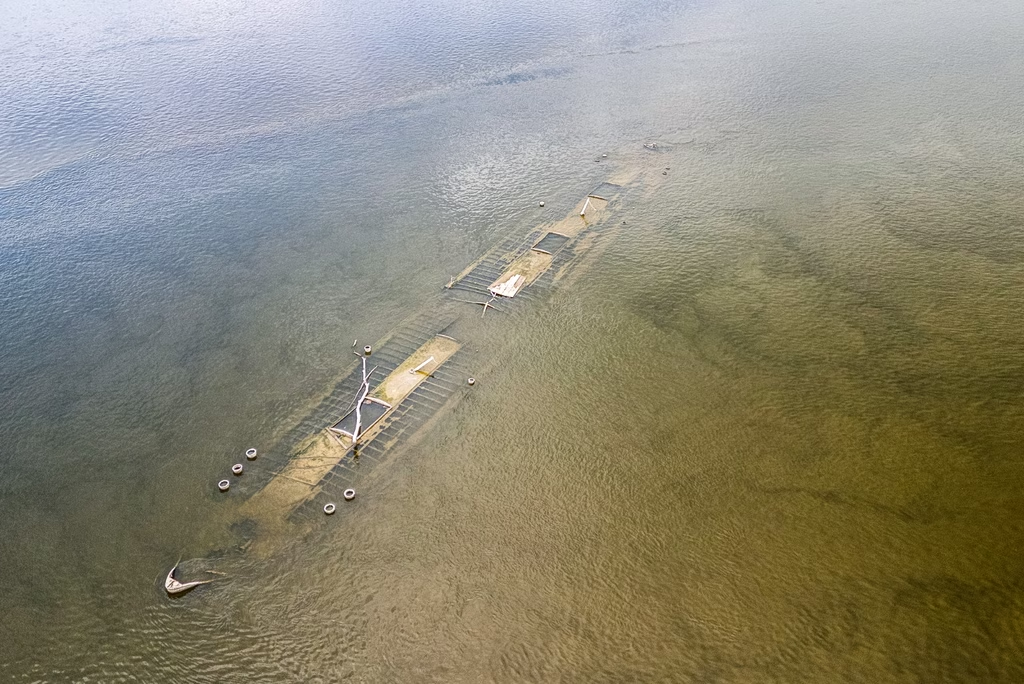
- In Serbia and Croatia, the receding waters have exposed a sunken ship and a World War II bomb, while dozens of boats sit in mud in Novi Sad.
- Experts warn of long-term impacts on river ecosystems, with low water levels attributed to limited rainfall, increased water consumption, and reduced Alpine ice melt.
The Danube River, a vital artery for Europe, is experiencing historically low water levels across Serbia, Hungary, Croatia, and Romania. Prolonged heatwaves and drought have dramatically reduced its flow, causing significant problems for navigation and sparking environmental worries.
This is a natural disaster.
In Novi Sad, Serbia, dozens of boats are stranded in thick mud as the river recedes. Residents express deep concern, with one retiree calling the situation a "natural disaster." The low water levels are already impacting trade, shipping, and tourism along the Danube, as well as the connected Tisza and Sava rivers.
Experts warn that the persistent decline in water levels could have long-lasting negative effects on fish and other riverine organisms. Fishermen and magazine editors point to limited rainfall and increased water consumption as key factors, describing the situation as "worryingly low."
The level is extremely low, worryingly low.
Croatia has seen dramatic revelations as the receding waters uncovered a cargo ship that sank in 1937 and a World War II bomb near the town of Lovas. Local fishermen state they have never seen the Danube this low, with measurements confirming unprecedented levels. The situation is attributed to a combination of factors, including water retention by hydroelectric plants, severe drought, lack of rain, and reduced snowmelt from the Alps.
I don't remember the Danube ever being lower than it is today. The ship behind us clearly proves it.
The crisis is not confined to Serbia and Croatia. Hungary and Romania are also reporting historically low levels, highlighting the widespread impact of the ongoing heat and dry spell across a significant portion of the river's course.
I don't remember the Danube ever being lower than it is today.
DistantNews Editorial
Originally published by Ta Nea in Greek. Translated, summarized, and contextualized by our editorial team with added local perspective. Read our editorial standards.
More Stories


From Our Blog

What Gets Lost (and Found) When News Is Translated

The Critical Role of Diaspora Media in Global News

What Travellers Should Know About Countries with Restricted Press

A Digital Nomad's Guide to Following Local News

How the Same Story Looks Different in Different Countries
