


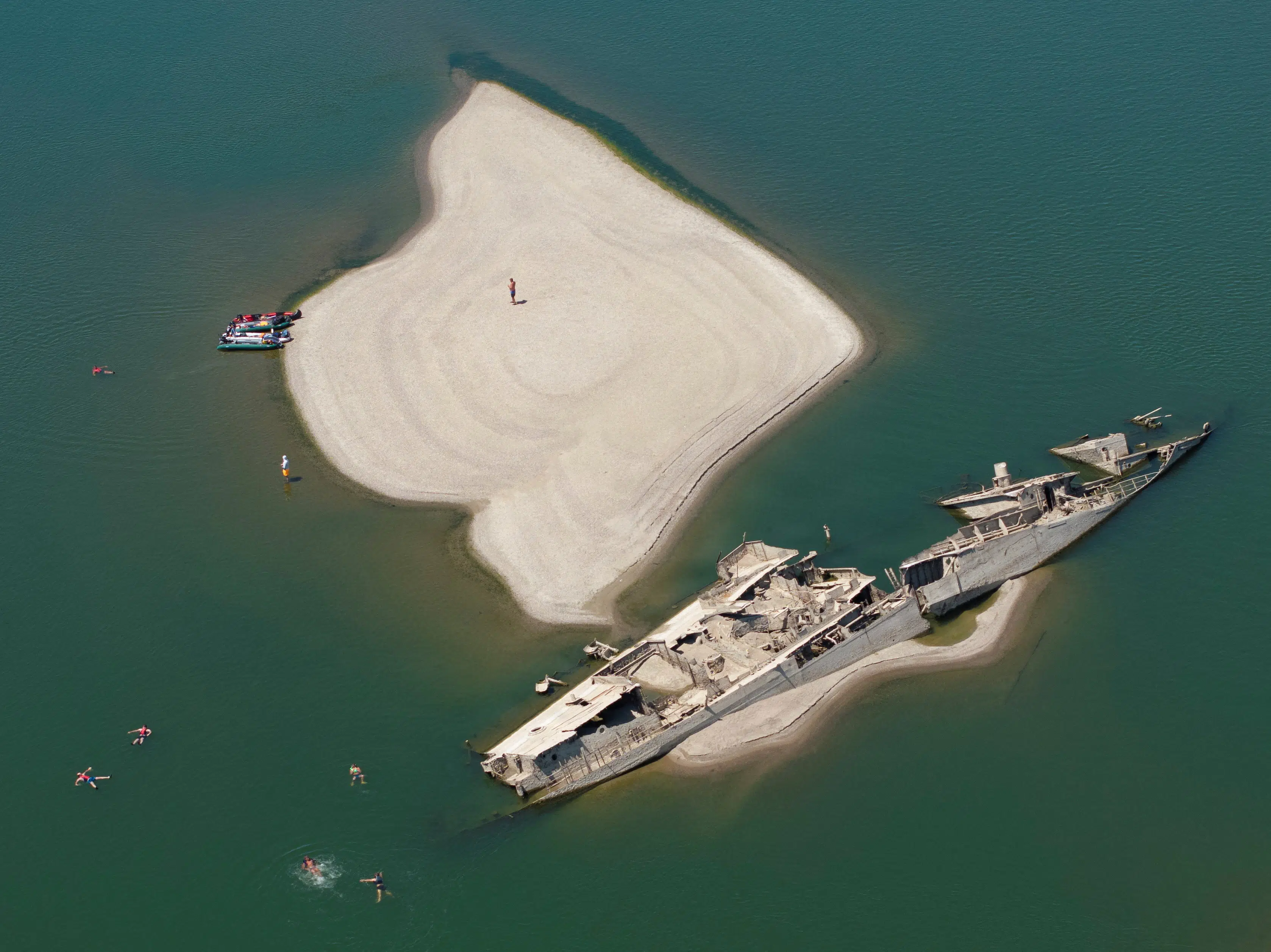
Danube water levels critical: Hungary expects power shortage
Translated from Danish, summarized and contextualized by DistantNews.
At a glance
News
Sources not specified
Context piece
- The water level in the Danube River has reached a critical low, causing navigational problems and potential energy shortages.
- A tourist ship carrying 186 passengers ran aground on the Danube in Bulgaria due to the low water levels.
- Hungary anticipates a shortage of electricity, likely linked to the reduced capacity of Danube-dependent power generation or transportation issues.
The Danube River, a vital artery for Central Europe, is experiencing critically low water levels, leading to significant disruptions and concerns about energy supply.
In Bulgaria, authorities recently had to assist a tourist ship carrying 186 people that ran aground in the middle of the Danube, which forms part of the border between Bulgaria and Romania. This incident highlights the severe navigational challenges posed by the receding waters.
Further upstream, Hungary is bracing for potential electricity shortages. While the article does not explicitly detail the connection, critically low river levels on the Danube can impact hydroelectric power generation and the transportation of essential resources like coal and fuel, both crucial for energy production. The reduced flow could hamper the operation of power plants reliant on river water for cooling or limit the capacity to transport fuel supplies.
The situation underscores the interconnectedness of environmental conditions, infrastructure, and economic stability. The low water levels on the Danube are not just an environmental issue but a growing concern for regional energy security and commerce.
DistantNews Editorial
Originally published by Berlingske in Danish. Translated, summarized, and contextualized by our editorial team with added local perspective. Read our editorial standards.
More Stories

From Our Blog

What Gets Lost (and Found) When News Is Translated

The Critical Role of Diaspora Media in Global News

What Travellers Should Know About Countries with Restricted Press

A Digital Nomad's Guide to Following Local News

How the Same Story Looks Different in Different Countries
