

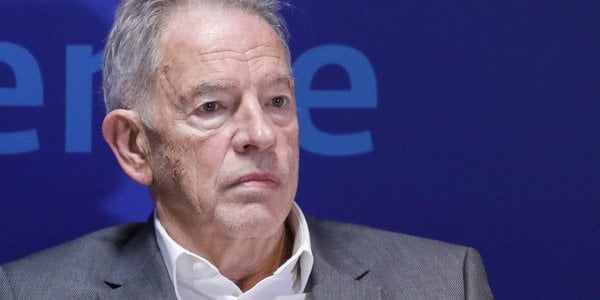
Dariusz Rosati: Difficult Polish-Ukrainian relations expected for years
Translated from Polish, summarized and contextualized by DistantNews.
At a glance
News
Named sources
Context piece
- Polish-Ukrainian relations face several difficult years ahead due to unresolved historical issues and a lack of political will for reconciliation, according to former Foreign Minister Dariusz Rosati.
- Rosati cited Ukrainian President Volodymyr Zelenskyy's decision to name a military unit after the UPA and Poland's response as examples of decisions driven by domestic political calculations.
- He warned of rising anti-Ukrainian sentiment in Poland and suggested that Russia is exploiting social media to sow discord, while emphasizing Poland's leverage in Ukraine's EU accession process.
Polish-Ukrainian relations are heading for several years of difficulty, marked by mutual distrust and grievances, predicts former Polish Foreign Minister Dariusz Rosati. He believes that while the relationship is not doomed to failure, citing the historical reconciliation between France and Germany as an example, it requires goodwill and respect for historical truth from both sides.
We will have very difficult relations with Ukraine, full of mutual distrust and pretensions, for at least the next few years.
Rosati observed that such goodwill is currently lacking on the Ukrainian side, which is in a state of war and focused on building national strength. He suggested that while acknowledging difficult history is important, concrete discussions are best postponed until after the war. He acknowledged that this could lead to a rise in anti-Ukrainian sentiment in Poland, a scenario he considers "quite probable."
The former minister attributed the strained relations to a series of "fatal decisions" by both sides. He criticized Ukrainian President Volodymyr Zelenskyy's decision to name a military unit after the "Heroes of the UPA," calling it a harmful and unnecessary move aimed at appeasing the nationalist right amid political tensions and corruption scandals in Kyiv. Rosati also faulted the Polish Presidential Office for a response calculated to support the far-right, anti-Ukrainian faction.
History cannot dictate the present and the future.
Rosati expressed pessimism about the current political leadership in both countries, stating that neither Polish President Karol Nawrocki's circle nor the Ukrainian political class is capable of reaching an understanding. He anticipates "very difficult relations, full of mutual distrust and pretensions" for at least the next few years, though he hopes to be proven wrong.
External enemies deliberately fuel narratives, for example about the 'Ukrainization of Poland,' to hinder integration and provoke internal conflicts.
He also pointed to Russia's role in exacerbating tensions, suggesting that Moscow uses social media, the erosion of authority, and disregard for facts to spread conspiracy theories and "stupefy people." Rosati warned that external enemies are deliberately fueling narratives like the "Ukrainization of Poland" to hinder integration and provoke internal conflicts. Despite these challenges, Rosati noted that Poland holds significant leverage, particularly concerning Ukraine's EU accession, stating that no decision regarding negotiations or membership will be made without Poland's consent.
Let's try to face historical truth, let's have respect for that truth and build good relations on that.
DistantNews Editorial
Originally published by Rzeczpospolita in Polish. Translated, summarized, and contextualized by our editorial team with added local perspective. Read our editorial standards.
More Stories


From Our Blog

What Gets Lost (and Found) When News Is Translated

The Critical Role of Diaspora Media in Global News

What Travellers Should Know About Countries with Restricted Press

A Digital Nomad's Guide to Following Local News

How the Same Story Looks Different in Different Countries
