


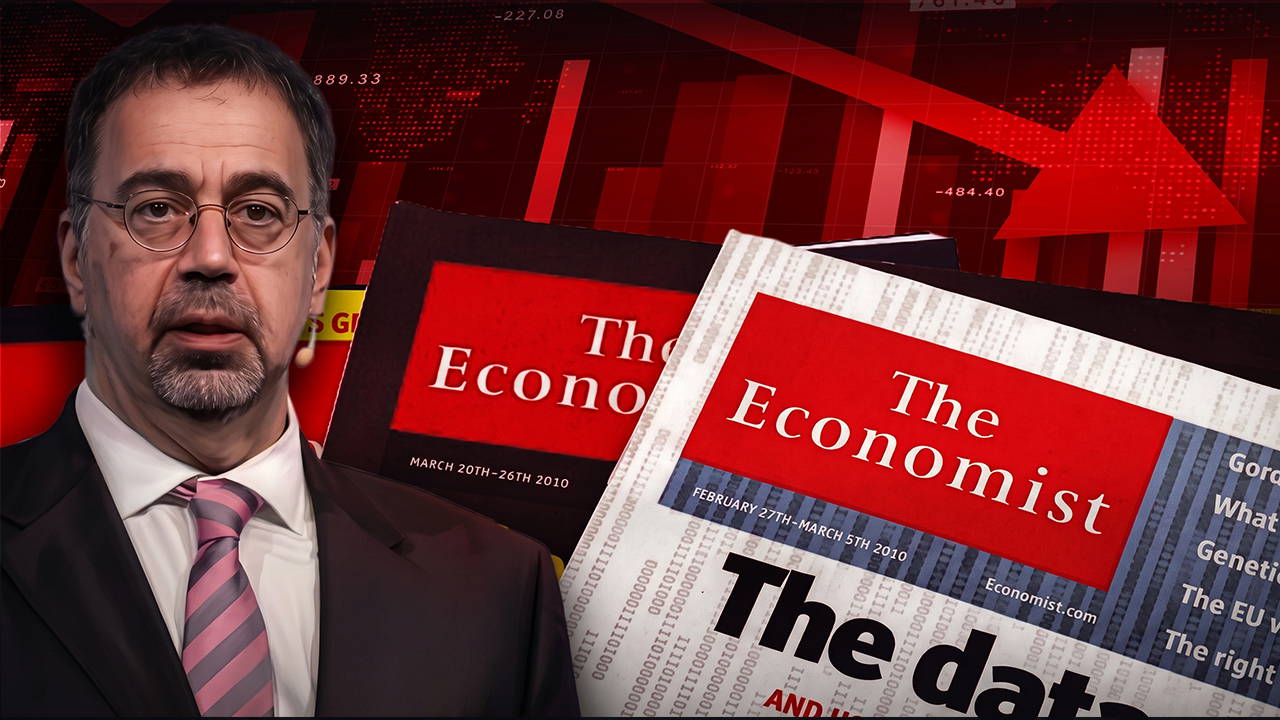
Daron Acemoğlu sharply rebukes The Economist over 'smear campaign'
Translated from Turkish, summarized and contextualized by DistantNews.
At a glance
News
Official statement
Context piece
- Nobel laureate economist Daron Acemoğlu has accused The Economist of launching a smear campaign against him.
- Acemoğlu claims the magazine's critical article, published as his new book was released, was a deliberate attempt to discredit his work.
- He argues The Economist's critique of his institutional theory and recent studies on AI and birth rates is flawed and based on weak claims.
Nobel Prize-winning economist Daron Acemoğlu has escalated his dispute with The Economist, accusing the publication of orchestrating a "smear campaign" and "character assassination" against him. The controversy ignited after The Economist published an article on August 17th, titled "The world's most influential economist is strangely unconvincing." Acemoğlu contends that the timing of this article, coinciding with the release of his new book, "What Happened to Liberal Democracy?", is no coincidence.
If this is the best you can do in the face of 33 years of work, then 'strangely unconvincing' is your critique.
The Economist's article reviewed Acemoğlu's 33-year academic career, his influential institutional theory, and his public impact. While acknowledging his significant research, the magazine questioned his academic influence and challenged the validity of data used in his 2001 work on colonial-era mortality rates, which underpinned his Nobel Prize. The publication also suggested that his institutional theory creates an "endless loop" and fails to adequately explain exceptions like China. Furthermore, The Economist criticized his recent analyses on low birth rates and artificial intelligence as potentially risky or incomplete.
Acemoğlu strongly refutes these criticisms, dismissing them as lacking academic rigor and instead characterizing them as a targeted attack. He believes The Economist is attempting to distort the core message of his new book to promote its own AI policies. In a letter responding to the article, Acemoğlu stated that the magazine presented weak and disconnected claims rather than engaging in a constructive debate.
The article's timing, coinciding with the release of my new book, is not a coincidence. The Economist is attempting to distort my book's main message to promote its own AI policies.
He concluded his response by directly addressing the magazine's critique: "If this is the best you can do in the face of 33 years of work, then 'strangely unconvincing' is your critique." Acemoğlu's sharp rebuttal underscores a significant clash between a prominent academic and a leading financial publication over economic theory, research methodology, and the interpretation of global trends.
The Economist brought together weak and disconnected claims instead of conducting a constructive debate.
DistantNews Editorial
Originally published by Cumhuriyet in Turkish. Translated, summarized, and contextualized by our editorial team with added local perspective. Read our editorial standards.
More Stories



From Our Blog

What Gets Lost (and Found) When News Is Translated

The Critical Role of Diaspora Media in Global News

What Travellers Should Know About Countries with Restricted Press

A Digital Nomad's Guide to Following Local News

How the Same Story Looks Different in Different Countries
