


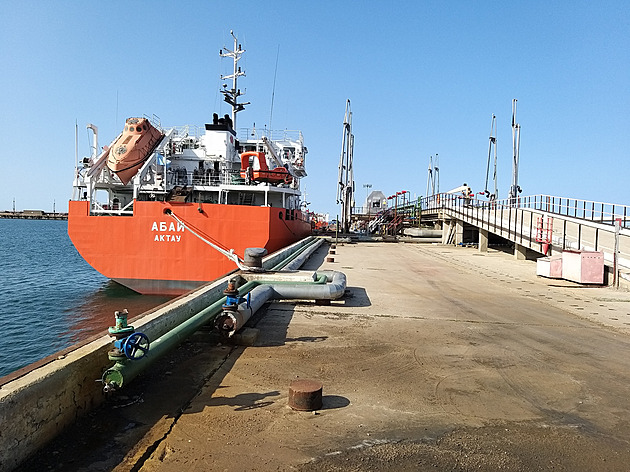
De-Hormuzification of Trade: Middle Corridor Through Asia Strengthens, But Won't Be a Replacement
Translated from Czech, summarized and contextualized by DistantNews.
At a glance
News
Sources not specified
Context piece
- The Trans-Caspian International Transport Route (TITR), also known as the Middle Corridor, is gaining importance as a trade link between Asia and Europe.
- This route bypasses Russia and offers a land-based alternative to the Suez Canal, drawing attention amid disruptions in the Strait of Hormuz.
- While the Middle Corridor strengthens Eurasian trade, it has limitations and functions more as a supplementary route than a complete replacement for existing supply chains.
As global attention focuses on the Strait of Hormuz, Eurasian trade is increasingly rerouting through land-based alternatives. The Trans-Caspian International Transport Route (TITR), or Middle Corridor, serves as a vital trade and freight connection linking Southeast Asia and China with Europe. This strategic pathway circumvents Russia to the south, providing a land-based alternative to the maritime route through the Suez Canal.
The TITR's growing prominence highlights a shift in global logistics, driven by geopolitical tensions and supply chain vulnerabilities. Its ability to offer a more direct and potentially faster connection between East and West makes it an attractive option for businesses seeking to diversify their shipping strategies. The route's development is seen as a significant step in enhancing connectivity across Eurasia.
However, the Middle Corridor is not without its challenges. Its capacity and efficiency are still developing, and it faces logistical hurdles related to infrastructure and transit times across multiple countries. Consequently, it is viewed more as a complementary route that enhances existing trade flows rather than a complete substitute for established maritime or other land-based networks. Its role is to bolster, not replace, current supply chain solutions.
DistantNews Editorial
Originally published by iDNES in Czech. Translated, summarized, and contextualized by our editorial team with added local perspective. Read our editorial standards.
More Stories

From Our Blog

What Gets Lost (and Found) When News Is Translated

The Critical Role of Diaspora Media in Global News

What Travellers Should Know About Countries with Restricted Press

A Digital Nomad's Guide to Following Local News

How the Same Story Looks Different in Different Countries
