


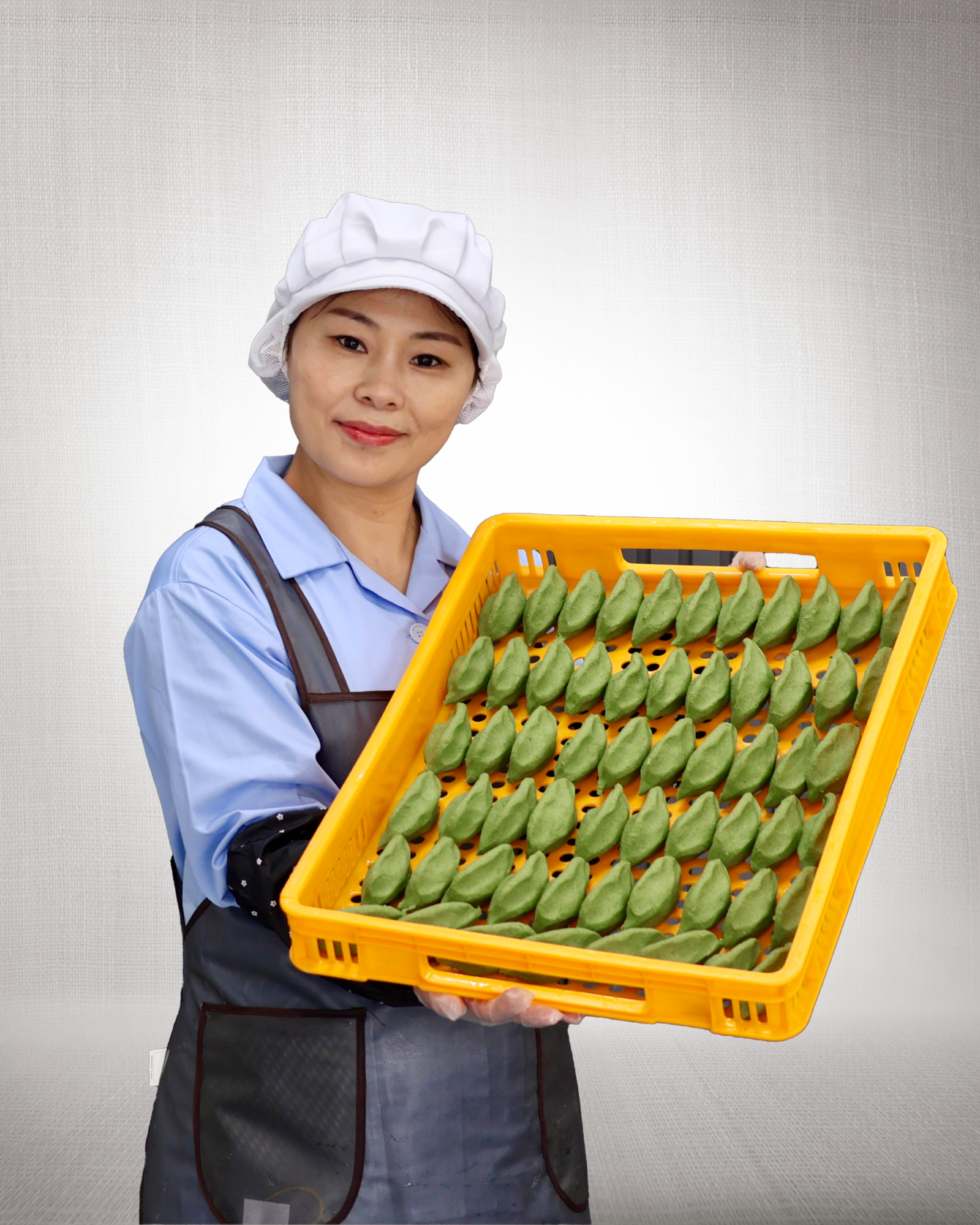
Defector builds 1.1 billion won business with ramie rice cakes in South Korea
Translated from Korean, summarized and contextualized by DistantNews.
At a glance
In-depth
Sources not specified
Context piece
- Park Eun-sook, a defector from North Korea, has achieved significant business success in South Korea, earning 1.1 billion won in sales.
- She founded Haoreum Food, specializing in "mosi" (ramie) rice cakes, and has opened 11 franchise stores.
- Park received a presidential commendation for her successful settlement and contributions to integrating North Korean defectors into society.
Park Eun-sook, a defector from North Korea, has built a thriving business in South Korea, achieving 1.1 billion won in sales with her "mosi" (ramie) rice cakes. After 18 years in South Korea, she founded Haoreum Food, which now boasts 11 franchise stores. Her success was recognized with a presidential commendation at the third North Korean Defectors' Day ceremony in Goyang, Gyeonggi Province.
The commendation cited her successful self-reliance in farming and food processing, and her contributions as an advisor to the Peaceful Unification Advisory Council, where she helped reflect the voices of North Korean defectors in policy. However, these formal achievements only hint at the difficult journey she undertook to reach this point.
Park's life has been marked by hardship, starting from her childhood in Chongjin, North Korea. Born in 1979, her family's fortunes declined when her father, a military officer, became ill. Her early memories are of hunger, as food rations became scarce in Chongjin. Her mother took up street vending to support the family, often leaving Park and her siblings waiting for her return.
In her youth, Park faced extreme poverty, even being unable to afford a school uniform. The family's situation worsened, forcing them to move to a remote mountain area when she was 17. There, she attended school an hour and a half away, her days filled with studying and foraging for food. After graduating, she worked in a foreign currency-earning enterprise, cultivating poppies for opium production, a practice encouraged by the North Korean regime at the time.
At 19, Park volunteered for a construction project on the Pyongyang-Nampo highway, hoping to join the Workers' Party. This project, completed in 2000, involved over 50,000 young people hauling stones and working in harsh conditions for two years. They endured meager rations of corn and salted radish soup, lived in unheated semi-caves, and had only one bath per week in muddy ditches. Despite the grueling labor and widespread disease, Park persevered, driven by the hope of a better future.
DistantNews Editorial
Originally published by Dong-A Ilbo in Korean. Translated, summarized, and contextualized by our editorial team with added local perspective. Read our editorial standards.
More Stories



From Our Blog

What Gets Lost (and Found) When News Is Translated

The Critical Role of Diaspora Media in Global News

What Travellers Should Know About Countries with Restricted Press

A Digital Nomad's Guide to Following Local News

How the Same Story Looks Different in Different Countries
