


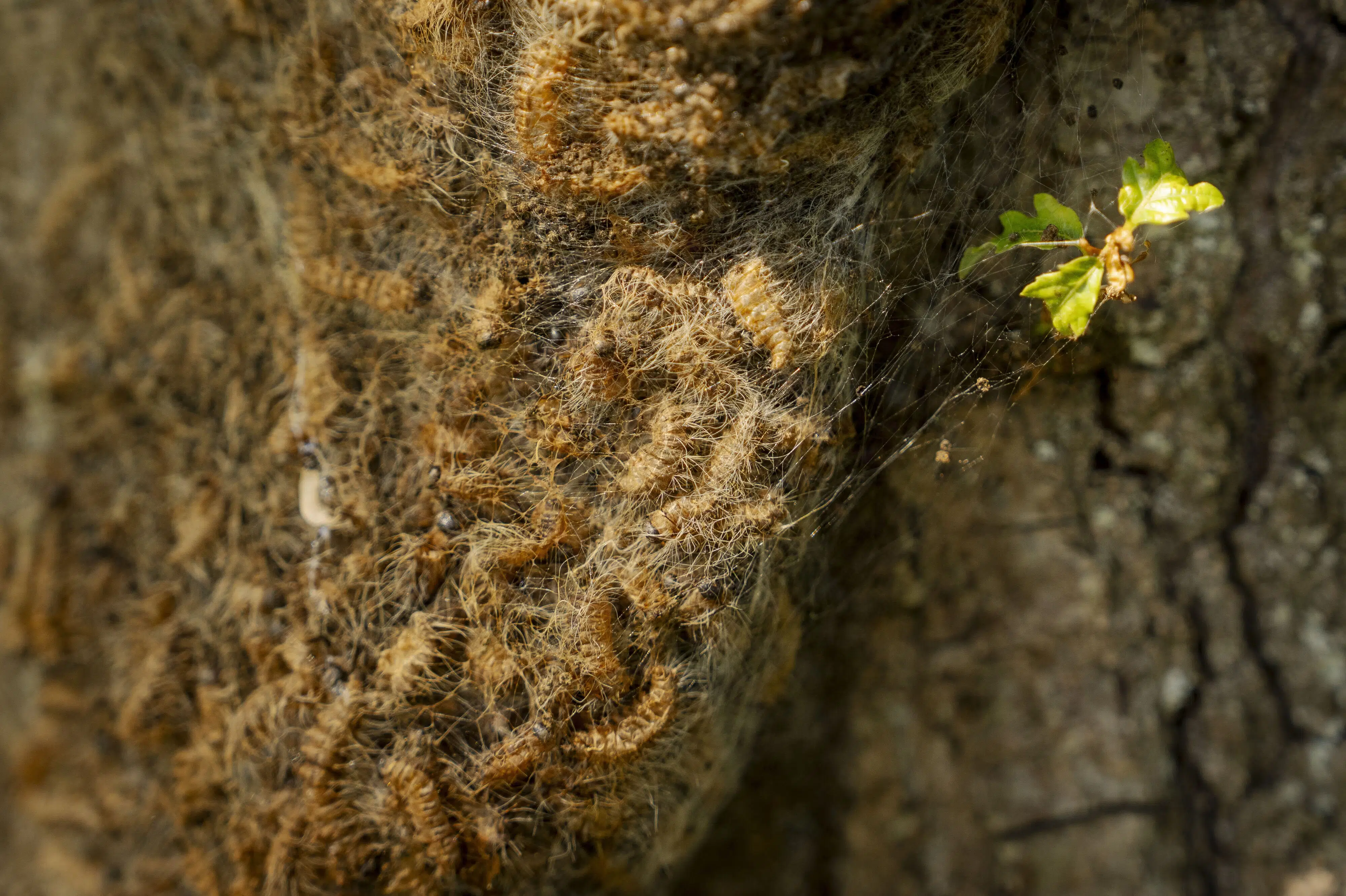
Denmark battles 'hell caterpillar' outbreak as climate change fuels spread
Translated from Danish, summarized and contextualized by DistantNews.
At a glance
News
Sources not specified
Context piece
- Denmark is experiencing an outbreak of the oak processionary moth, a pest also known as the "hell caterpillar," which is spreading due to warmer temperatures linked to climate change.
- A researcher advises against felling oak trees, emphasizing that early detection and rapid response are crucial for limiting the moth's spread, akin to managing a forest fire.
- Residents are urged to help monitor for the caterpillars and report sightings to authorities to aid in early intervention.
Denmark is grappling with an infestation of the oak processionary moth, a pest that has become a growing problem across Europe. Warmer temperatures, attributed to climate change, are facilitating its northward spread, allowing it to establish itself in Denmark.
It has spread quite a bit in the last 50 years, particularly in Southern European countries. The spread is most likely due to climate change and warmer temperatures.
Samuel Cushman, a researcher in species distribution at the University of Southern Denmark, warns against drastic measures like felling oak trees in affected areas, stating such actions would harm nature and are not the solution. He likens the situation to a forest fire, stressing the importance of early detection and swift action to contain outbreaks while they are still small and localized.
Imagine you have a forest fire. It's about discovering the spread and handling it as quickly as possible. Once it has spread to a large and widespread area, it can no longer be controlled.
Cushman encourages the public to actively participate in monitoring efforts by reporting any sightings of the caterpillars to the authorities through existing platforms. This collective vigilance is seen as key to managing the spread effectively. The moth's larvae possess around 60,000 "stinging hairs" that can cause severe itching, rashes, and allergic reactions upon contact, making early containment vital for public health.
It's about reacting quickly while the outbreaks are still small and local.
DistantNews Editorial
Originally published by Berlingske in Danish. Translated, summarized, and contextualized by our editorial team with added local perspective. Read our editorial standards.
More Stories



From Our Blog

What Gets Lost (and Found) When News Is Translated

The Critical Role of Diaspora Media in Global News

What Travellers Should Know About Countries with Restricted Press

A Digital Nomad's Guide to Following Local News

How the Same Story Looks Different in Different Countries
