

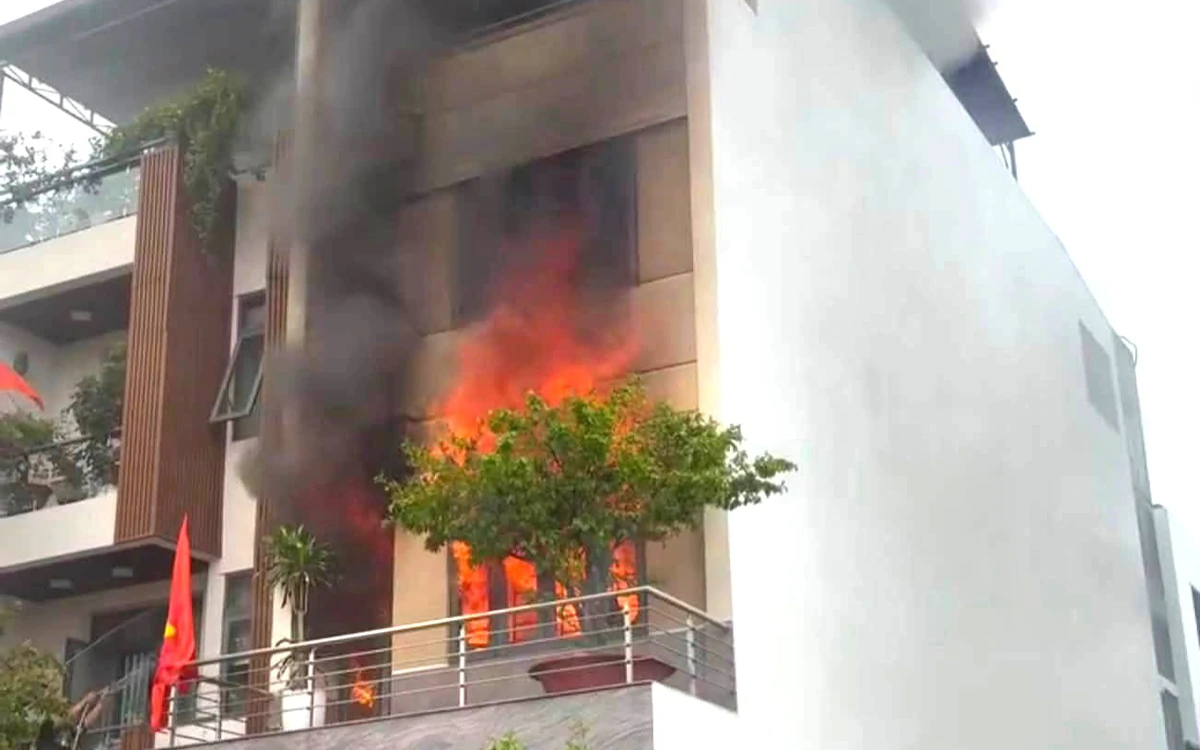

Deputy public security minister says fire-alert transmission devices are inexpensive to install
Translated from Vietnamese and summarized by DistantNews. Read the original for the full story.
At a glance
News
Named sources
Ongoing story
- Vietnam’s government proposed removing pre-approval inspections for fire-safety acceptance and replacing them with post-inspection oversight.
- Lawmakers called for clear legal responsibilities for project owners, building owners and vehicle operators, particularly in high-rise and densely occupied buildings.
- Deputy Minister Le Van Tuyen said fire-alert transmission devices were inexpensive to install and had worked effectively in a Bac Ninh pilot.
Installing equipment that transmits fire alerts would not require a large budget, Deputy Public Security Minister Le Van Tuyen told Vietnam’s Standing Committee of the National Assembly.
The committee was reviewing a draft bill amending laws on weapons, explosives and support tools, as well as fire prevention, firefighting, rescue and emergency response. The government proposal would remove the procedure for inspecting fire-safety acceptance before a project enters use. Authorities would instead conduct post-inspection checks alongside reviews of whether investors and facility owners comply with fire-safety acceptance rules.
The draft would also remove pre-market licensing for firefighting and rescue equipment, along with fire-resistant materials and components. Those products would be managed under laws governing product and goods quality.
The cost of installing fire-alert transmission devices is not large.
The National Assembly’s review body called for clearer responsibilities for heads of facilities, household owners and vehicle owners. It also said buildings and vehicles already in operation must continue meeting the fire-safety standards and technical regulations applied to them. The body requested explicit legal duties for investors, building owners and vehicle owners, as well as competency standards for independent assessment organizations.
Lawmakers proposed a post-inspection system that shares electronic data and classifies facilities by risk. National Assembly Vice Chairwoman Nguyen Thi Thanh asked the government to scrutinize the shift from pre-approval inspections, saying the new mechanism must work clearly in practice. She said reducing administrative procedures should not weaken state oversight, and urged authorities to focus inspections on facilities with higher fire and explosion risks.
Nguyen Dac Vinh, chairman of the National Assembly’s Culture and Social Affairs Committee, expressed concern about densely occupied and high-rise apartment buildings. He said such buildings require maximum safety because fixing problems after construction would be difficult.
This change does not mean abandoning management. It replaces it with another governance mechanism that is more effective and more convenient for society, and it is absolutely not a relaxation of the state’s role.
About this summary
Originally published by Tuổi Trẻ in Vietnamese. Translated, summarized, and contextualized automatically by DistantNews, with a note on how the source frames the story. Not individually reviewed before publishing. How this works.
More Stories

From Our Blog

News in Translation: What Gets Lost, and How We Keep the Framing

Diaspora Media: How Communities Abroad Follow Home

Traveling Where the Press Is Not Free: How to Read the News There

The Digital Nomad's Guide to Local News

The Same Story, Different Countries: How Coverage Changes at the Border
