


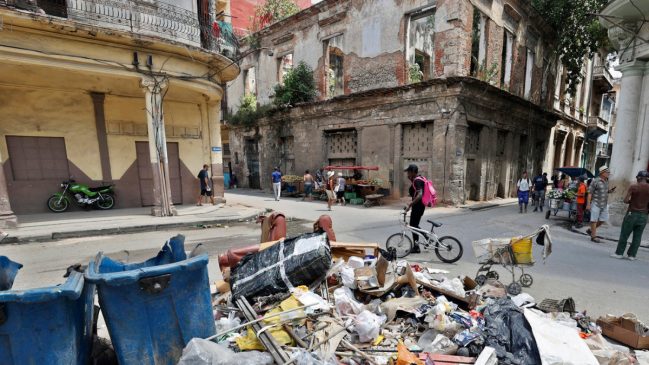
 Image: EFE (referencial)
Díaz-Canel Acknowledges Critical Potable Water Supply Situation in Havana
Translated from Spanish and summarized by DistantNews. Read the original for the full story.
At a glance
News
Official statement
Ongoing story
- Cuban President Miguel Díaz-Canel acknowledged a critical potable water shortage in Havana, exacerbated by prolonged power outages.
- Díaz-Canel visited a key water source, urging swift resolution of supply issues and prioritizing infrastructure maintenance, particularly water pumps.
- The situation is described as one of the most critical for the city, impacting nearly two million residents due to electricity deficits and aging infrastructure.
Cuban President Miguel Díaz-Canel has publicly acknowledged the severe crisis affecting Havana's potable water supply, directly linking the shortages to the island's ongoing electricity problems.
During a visit to the strategic Paso Seco water source, Díaz-Canel emphasized the urgency of resolving the supply issues, particularly in light of persistent and prolonged blackouts. He convened with members of the Council of Ministers to review the current strategy for addressing the crisis, highlighting that this is "one of the most critical issues for a city of almost two million people."
resolving the supply problem as soon as possible
The report from the Presidency stressed the importance of prioritizing the recovery, maintenance, and rescue of resources at the water source, with a specific focus on the engines needed for water pumping. The situation underscores the fragility of Havana's infrastructure, where the deficit in electricity directly impacts the ability to provide essential services like clean water to its large population.
This is one of the most critical issues for a city where almost two million people live
About this summary
Originally published by Cooperativa in Spanish. Translated, summarized, and contextualized automatically by DistantNews, with a note on how the source frames the story. Not individually reviewed before publishing. How this works.
More Stories


From Our Blog

What Gets Lost (and Found) When News Is Translated

The Critical Role of Diaspora Media in Global News

What Travellers Should Know About Countries with Restricted Press

A Digital Nomad's Guide to Following Local News

How the Same Story Looks Different in Different Countries
