


Dinosaur-Era Pterosaur Footprints in Jinju Show Dramatic Chase Scene
Translated from Korean, summarized and contextualized by DistantNews.
TLDR
- An international research team identified a new species of large pterosaur footprint, Jinjuichnus procerus, in South Korea's Jinju Formation.
- The fossil shows a large pterosaur chasing a small animal, providing the first direct fossil evidence of pterosaurs hunting on land.
- This discovery, published in Scientific Reports, offers significant academic value for understanding ancient animal behavior.
A remarkable discovery has emerged from the ancient strata of Jinju, South Korea, offering a vivid glimpse into the predatory behavior of pterosaurs.
An international team of researchers, including Dr. Jong-yun Jeong from the University of Texas at Austin and Professor Kyungsoo Kim from Jinju National University of Education, has identified a new species of large pterosaur footprint, named Jinjuichnus procerus. This finding, dating back approximately 106.5 million years to the Cretaceous period, is not just another fossil find; it provides the first direct fossil evidence of pterosaurs actively hunting on land.
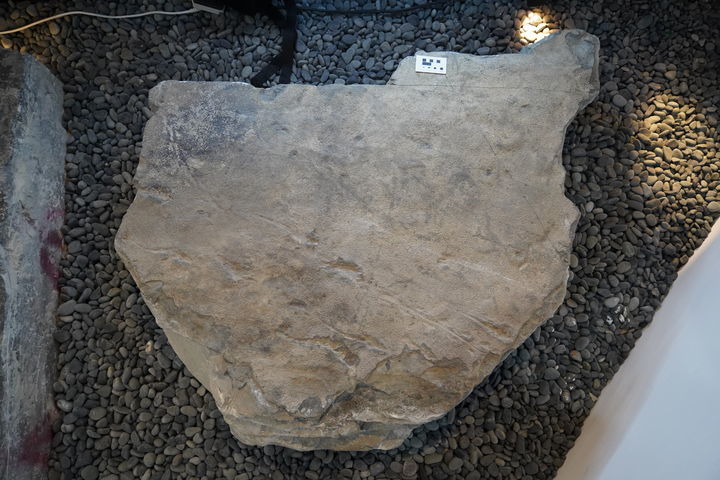
The discovery of footprints of a new species of large pterosaur, Jinjuichnus procerus, in the Jinju Formation (about 106.5 million years ago) in Jinju, Gyeongnam.
The fossil impression clearly depicts a large pterosaur in pursuit of a small vertebrate, likely a salamander or lizard. The smaller animal's tracks show a sudden change in direction and increased speed, indicating flight from a predator. The pterosaur's tracks follow the same trajectory, with analysis suggesting the pterosaur was walking at a relatively fast pace of about 0.8 meters per second. While the possibility of the tracks being made at different times exists, their similar depth and preservation suggest they were formed in close temporal proximity.
This could be the first ichnological evidence showing that pterosaurs hunted and interacted with vertebrates on land.
This discovery is particularly significant because it supports the long-held hypothesis that certain pterosaurs, particularly those similar to theネオアズダキーア (Neoazhdarchia) family, were terrestrial predators. Unlike their aerial counterparts, these pterosaurs are believed to have walked on land, using their long legs and necks to hunt, much like modern storks or cranes. Until now, direct fossil evidence of such hunting behavior has been elusive.
The implications of Jinjuichnus procerus extend beyond simply confirming a hypothesis. It offers invaluable insights into the paleoecology and behavioral dynamics of ancient ecosystems. This finding, published in the prestigious journal Scientific Reports, underscores the rich paleontological heritage of the Jinju region and its contribution to our understanding of prehistoric life. The fossils are now on display at the Jinju Pterosaur Footprint Exhibition Hall, allowing the public to witness this extraordinary piece of natural history.
It holds significant academic value in interpreting the behavioral relationships of ancient animal communities.
DistantNews Editorial
Originally published by Dong-A Ilbo in Korean. Translated, summarized, and contextualized by our editorial team with added local perspective. Read our editorial standards.
More Stories



From Our Blog

What Gets Lost (and Found) When News Is Translated

The Critical Role of Diaspora Media in Global News

What Travellers Should Know About Countries with Restricted Press

A Digital Nomad's Guide to Following Local News

How the Same Story Looks Different in Different Countries
