

Dinosaur skeleton sells for over $50 million, setting new record
Translated from Finnish, summarized and contextualized by DistantNews.
At a glance
News
Named sources
Outcome reported
- A Tyrannosaurus rex skeleton, nicknamed Gus, sold for over $50 million at a New York auction, becoming the most expensive fossil ever sold.
- The fossil, discovered in 2021, is 61% complete by bone count and approximately 75-80% by mass, with a well-preserved skull.
- Paleontologists express concern that the high prices are making fossils inaccessible for scientific research, as private ownership prevents study.
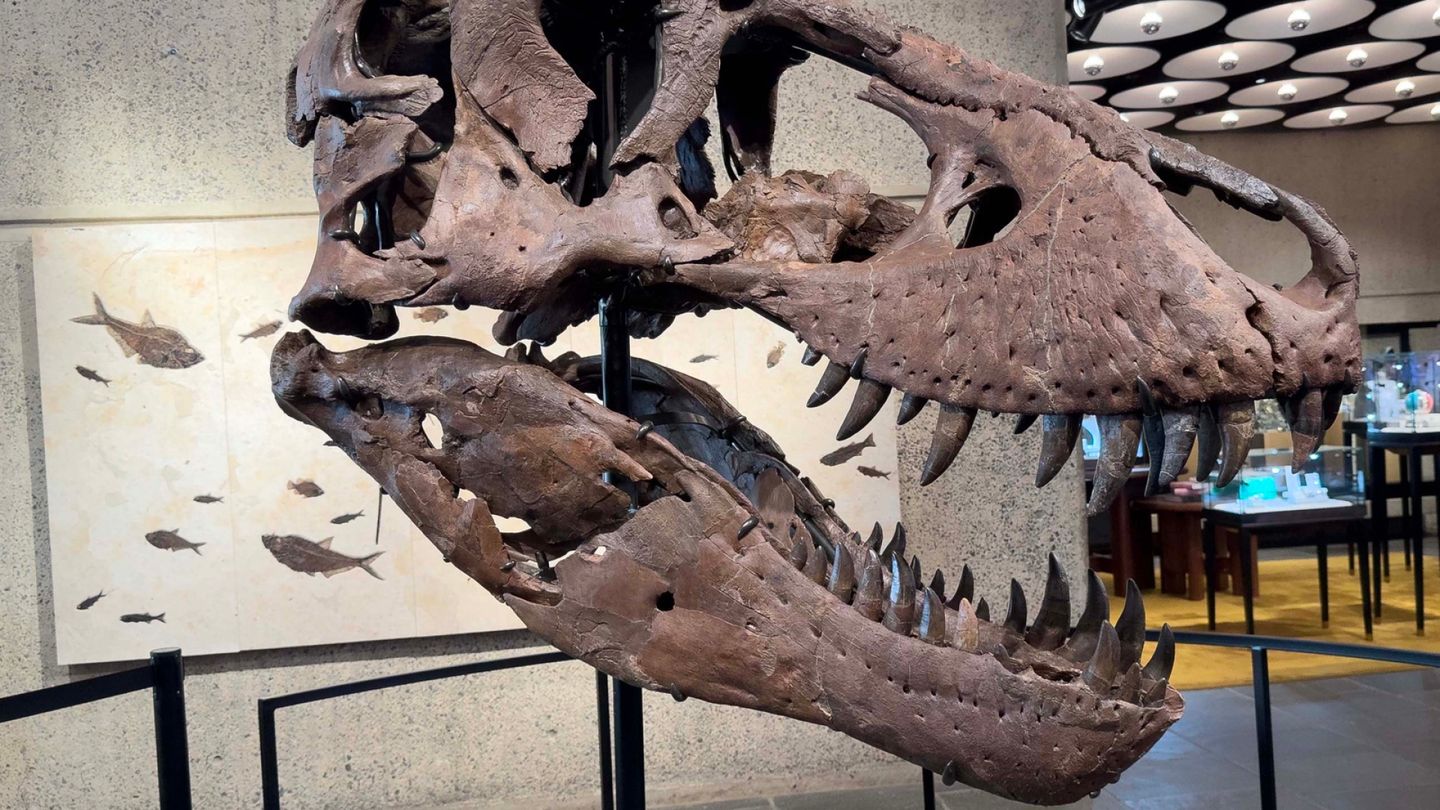
A Tyrannosaurus rex skeleton, known as "Gus," fetched a record-breaking price of over $50 million at a Sotheby's auction in New York, making it the most expensive fossil ever sold. Discovered in 2021 on land owned by Gary "Gus" Licking, the fossilized remains represent one of the largest T. rex specimens ever found, measuring 11 meters long and 3.8 meters high.
A fossil that is not in a recognized museum collection cannot be studied. It is lost to research.
The nearly 67-million-year-old fossil is remarkably complete, with 61% of its bones intact and 75-80% of its mass preserved. The skull alone is about 82% complete, and the presence of both legs is a rare feature. This specimen's completeness and condition contributed to its unprecedented auction price.
Fossils have been bought and sold for hundreds of years, but prices are increasingly out of reach for museums, which is detrimental to science.
However, the sale has sparked concern among paleontologists. Professor Richard Butler of the University of Birmingham noted that fossils in private collections cannot be studied, effectively losing their scientific value. He stated that while fossils have been traded for centuries, escalating prices are pushing them beyond the reach of museums and researchers, hindering scientific progress. Paleontologist Thomas Carr echoed these concerns, highlighting that museum loans, while a partial solution, are problematic as owners can withdraw specimens at any time, disrupting ongoing research.
Museum loans are problematic because the owner may withdraw their fossils at any time.
DistantNews Editorial
Originally published by Helsingin Sanomat in Finnish. Translated, summarized, and contextualized by our editorial team with added local perspective. Read our editorial standards.
More Stories



From Our Blog

What Gets Lost (and Found) When News Is Translated

The Critical Role of Diaspora Media in Global News

What Travellers Should Know About Countries with Restricted Press

A Digital Nomad's Guide to Following Local News

How the Same Story Looks Different in Different Countries
