

Disorderly yen moves risk destabilizing global markets, raising US borrowing costs: Treasury Secretary
Translated from English and summarized by DistantNews. Read the original for the full story.
At a glance
News
Named sources
Context piece
- U.S. Treasury Secretary Scott Bessent stated that disorderly yen movements could destabilize global markets and raise borrowing costs for Americans.
- Bessent explained that the U.S. conducted a joint currency intervention with Japan to prevent such instability.
- The Treasury used its Exchange Stabilization Fund (ESF) for the intervention, a tool previously employed to stabilize markets in Argentina.
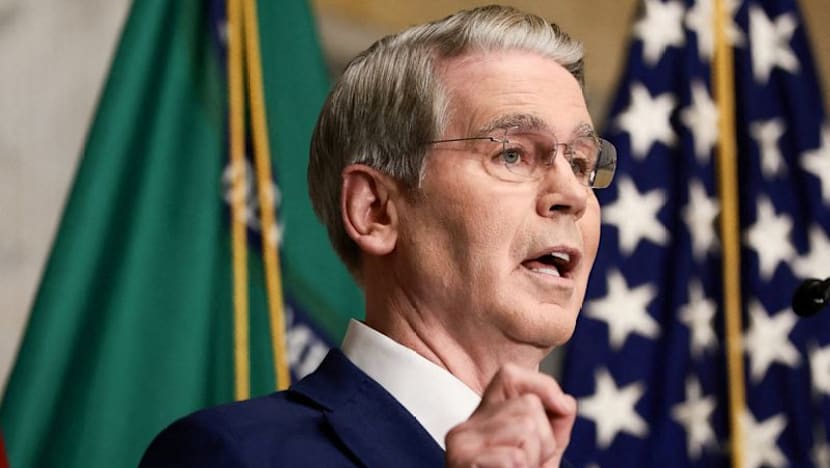
U.S. Treasury Secretary Scott Bessent has issued a stark warning regarding the potential consequences of volatile yen movements, stating that such disorderly shifts could trigger "forced unwinds" of market positions, ultimately destabilizing global financial markets. This instability, he explained, risks increasing borrowing costs for American households and businesses.
forced unwinds
Bessent's comments, made in a letter responding to Senator Elizabeth Warren, addressed the rationale behind Washington's recent joint currency intervention with Tokyo. The U.S. and Japan carried out a rare joint yen-buying intervention on July 31, signaling a concerted effort to prevent a sharp depreciation of the yen and Japanese government bonds from negatively impacting global markets.
Despite the intervention, the yen has resumed its weakening trend against the dollar, fluctuating around the 160-per-dollar mark. This level is widely considered a threshold that increases the likelihood of further intervention. The Treasury explained that the intervention involved exchanging foreign-currency assets held within its Exchange Stabilization Fund (ESF) for yen.
The same principle was at work in Argentina, where Treasury used the Exchange Stabilization Fund to stabilize Argentina in a moment of acute, short-term illiquidity and to prevent the problem from becoming a broader regional crisis
Bessent drew a parallel to the ESF's previous use in Argentina, where it was employed to stabilize the peso during a period of acute illiquidity and prevent a broader regional crisis. He defended the decision to intervene, emphasizing that "the best-managed crisis is the one that never happens," underscoring the proactive approach taken to counter disorderly declines in the yen. The ESF serves as an emergency reserve managed by the U.S. Treasury to stabilize foreign-exchange and domestic financial markets.
The best-managed crisis is the one that never happens
About this summary
Originally published by CNA in English. Translated, summarized, and contextualized automatically by DistantNews, with a note on how the source frames the story. Not individually reviewed before publishing. How this works.
More Stories



From Our Blog

What Gets Lost (and Found) When News Is Translated

The Critical Role of Diaspora Media in Global News

What Travellers Should Know About Countries with Restricted Press

A Digital Nomad's Guide to Following Local News

How the Same Story Looks Different in Different Countries
