


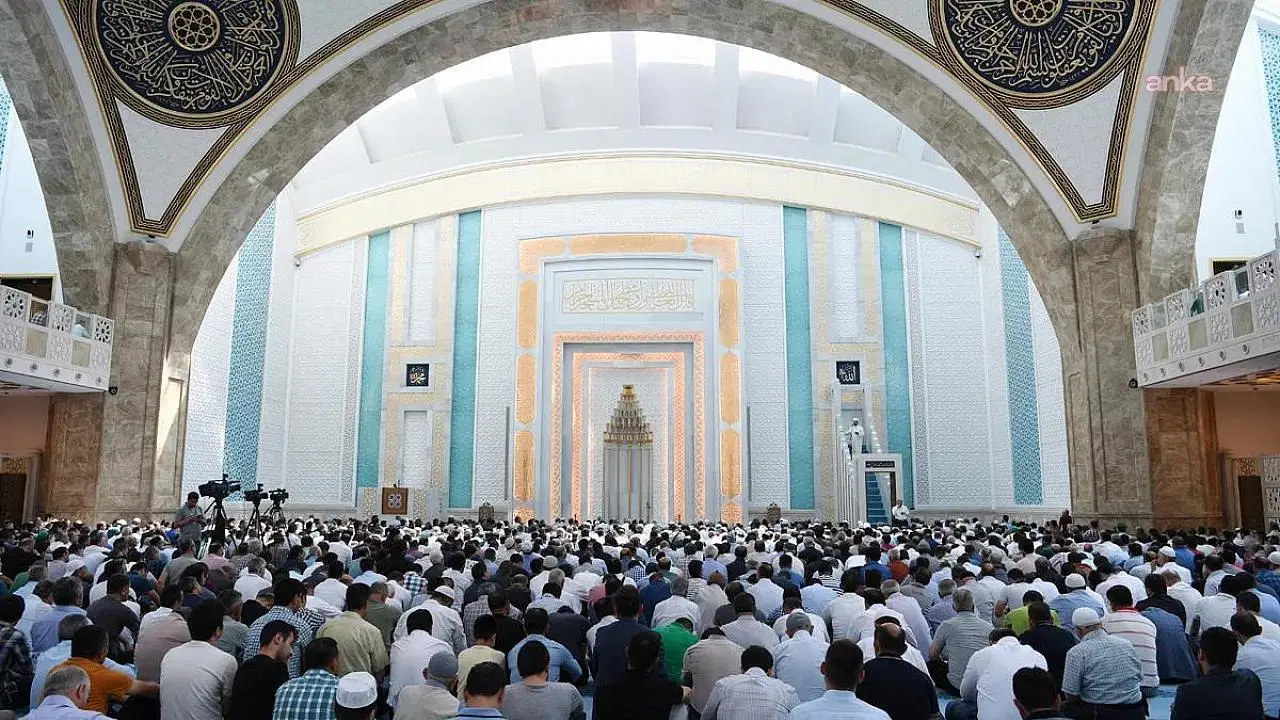
Diyanet's Friday Sermon Focuses on Chastity and Modest Dress for Muslims
Translated from Turkish, summarized and contextualized by DistantNews.
At a glance
News
Named sources
Context piece
- Turkey's Directorate of Religious Affairs (Diyanet) issued a Friday sermon emphasizing that all Muslims must protect their chastity and pay attention to their attire.
- The sermon highlighted that Islamic principles guide Muslims toward God's pleasure and distinguish between right and wrong, covering aspects from marriage and trade to personal conduct.
- It warned against extravagance and waste, citing examples like discarding bread and excessive water use as exceeding permissible limits, and cautioned against a societal environment where illicit acts are normalized.
Turkey's Directorate of Religious Affairs (Diyanet) has issued a Friday sermon titled 'Awareness of Halal and Haram,' urging all Muslims to adhere to divine guidelines and maintain moral integrity. The sermon emphasized that Islamic principles serve as divine measures leading to God's satisfaction and act as guides distinguishing between right and wrong, delineating the boundaries of what is permissible and forbidden.
Muslim men, tell them to lower their gaze and guard their chastity. And tell the believing women to lower their gaze and guard their chastity.
The sermon underscored that all commands and prohibitions prescribed by Islam are designed to preserve human dignity, ensure the safety of future generations, and maintain societal peace. It noted that while God has permitted marriage for the continuation of the lineage and forbidden adultery, which destroys society, He has also permitted honest trade and earning through hard work to establish order and justice. Conversely, practices that destroy blessings, such as usury, cheating in measures, concealing product defects, and generally deceiving people, are forbidden.
Therefore, every Muslim man and woman should protect their chastity, pay attention to their clothing, and stay away from behaviors that undermine human dignity.
Beyond dietary considerations, the sermon stressed that awareness of halal and haram extends to personal conduct. It quoted verses from the Quran, instructing both believing men and women to lower their gaze and guard their chastity. The message urged all Muslims, men and women, to protect their modesty, be mindful of their clothing, and abstain from behaviors that undermine human dignity. It is incumbent upon Muslims to understand that modesty, chastity, and morality are meaningful when they converge, requiring attention to privacy boundaries in both social and digital spaces, and guarding one's tongue from falsehood and eyes from the forbidden.
While millions of people in different parts of the world are in need of a piece of bread, a drop of water, and extravagance is forbidden to us, the discarding of tons of bread in our country and the irresponsible use of our water are signs that the boundary of halal and haram has been crossed.
The sermon also addressed the issue of extravagance, identifying it as a major obstacle to the sense of sharing and the equitable distribution of blessings. It pointed out that in a country where tons of bread are thrown away and water is used irresponsibly, while millions globally struggle for basic necessities, such actions signify a transgression of halal and haram boundaries. Finally, the sermon cautioned against living in an era where illicit gains are pursued without concern for their source, and where forbidden acts are encouraged, and illegitimate speech and behavior are normalized, warning against the dangers of coveting wealth from forbidden sources, harming lives, honor, public property, and engaging in bribery, usury, theft, alcohol, drugs, and gambling.
We are facing the difficulties of a time when what is halal is despised, what is haram is encouraged, and illegitimate speech and behavior are considered reasonable.
DistantNews Editorial
Originally published by Cumhuriyet in Turkish. Translated, summarized, and contextualized by our editorial team with added local perspective. Read our editorial standards.
More Stories


From Our Blog

What Gets Lost (and Found) When News Is Translated

The Critical Role of Diaspora Media in Global News

What Travellers Should Know About Countries with Restricted Press

A Digital Nomad's Guide to Following Local News

How the Same Story Looks Different in Different Countries
