


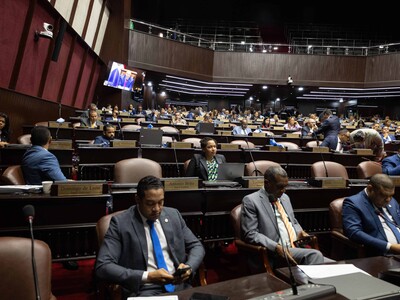
Dominican Congress considers creating two new provinces
Translated from Spanish, summarized and contextualized by DistantNews.
At a glance
News
Named sources
New plan
- Two legislative initiatives propose creating new provinces in the Dominican Republic.
- One bill seeks to make Las Matas de Farfán a province named Santa Lucía, while another aims to create Matías Ramón Mella province from Santo Domingo.
- Proponents cite population growth and administrative needs as reasons for the proposed divisions.
The Dominican Republic's Congress is considering two proposals to establish new provinces, reflecting growing administrative and representation demands. One initiative, put forth by Senator Félix Bautista, aims to elevate the municipality of Las Matas de Farfán to provincial status, to be named Santa Lucía. This new province would encompass the municipalities of Las Matas de Farfán, El Cercado, and Vallejuelo, with Las Matas de Farfán serving as the provincial capital. The project suggests that provincial authorities would be elected in 2028. Bautista argues that Las Matas de Farfán possesses the necessary conditions, including territorial extension, agricultural and livestock production, tourism potential, and a population of 48,179 according to the 2022 census, to justify its elevation.
The second proposal, introduced by Deputy Abelardo Rutinel and supported by 51 other legislators, seeks to create the province of Matías Ramón Mella by dividing the current province of Santo Domingo. This new province would include Santo Domingo Norte, Santo Domingo Oeste, Pedro Brand, Los Alcarrizos, and La Victoria, with Santo Domingo Oeste designated as the capital. The proponents highlight significant demographic and urban transformations in Santo Domingo province since its creation in 2001, arguing that its vast territory hinders efficient public service delivery. They also point to the long distances residents in municipalities like Santo Domingo Oeste and Los Alcarrizos must travel to reach the provincial capital.
DistantNews Editorial
Originally published by Diario Libre in Spanish. Translated, summarized, and contextualized by our editorial team with added local perspective. Read our editorial standards.
More Stories

From Our Blog

What Gets Lost (and Found) When News Is Translated

The Critical Role of Diaspora Media in Global News

What Travellers Should Know About Countries with Restricted Press

A Digital Nomad's Guide to Following Local News

How the Same Story Looks Different in Different Countries
