

Dominican Republic launches Tilorí Binational Market construction as part of 'Frontera Fuerte' strategy
Translated from Spanish, summarized and contextualized by DistantNews.
At a glance
News
Sources not specified
New plan
- The Dominican government has begun construction of the Tilorí Binational Market as part of the "Frontera Fuerte" strategy.
- The project aims to organize and modernize informal cross-border trade between the Dominican Republic and Haiti.
- The initiative also includes reconstructing a road crossing and building border control posts to enhance security and development.
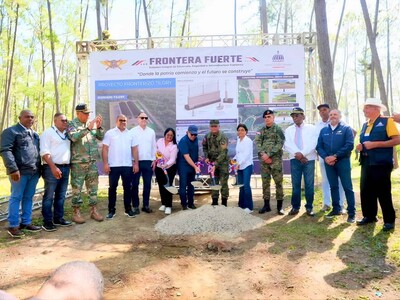
The Dominican government has launched the construction of the Tilorí Binational Market, a significant project situated on the International Road between the Dominican Republic and Haiti. This initiative is a key component of the comprehensive "Frontera Fuerte" (Strong Border) strategy, which focuses on integrated development, security, and infrastructure along the northern border.
The new market will feature dedicated facilities for producers and merchants, alongside improved sanitary conditions and enhanced security measures to regulate commercial activities. The Tilorí market is strategically located near the Haitian community of the same name and approximately 15 kilometers from the Dominican municipality of Restauración in Dajabón province. Its development is intended to bring order and modernization to the cross-border trade that has historically occurred informally in this border zone.
The groundbreaking ceremony was led by the Minister of the Presidency, José Ignacio Paliza, and the Minister of Defense, Carlos Antonio Fernández Onofre. Beyond the market, the "Frontera Fuerte" strategy encompasses the reconstruction of the Guayajayuco road crossing and the establishment of border control points along the International Road. These efforts aim to bolster connectivity, streamline trade, and expand the state's operational and control capabilities in the region. The strategy was initially announced by President Luis Abinader following a meeting on June 9, 2026.
Weekly commercial activity in Tilorí brings together Dominican and Haitian vendors and buyers, with goods from both sides of the border being traded. A report by the UNDP, supported by the European Union, indicates that approximately 79% of the merchandise value is destined for Haitian communities like La Miel, Tilorí, and Cerca La Source, while the remaining 21% stays within the Dominican Republic, primarily in Dajabón and Santiago Rodríguez.
These projects are aimed at improving connectivity, organizing trade, and expanding the state's operational and control capabilities in the area.
DistantNews Editorial
Originally published by Diario Libre in Spanish. Translated, summarized, and contextualized by our editorial team with added local perspective. Read our editorial standards.
More Stories

From Our Blog

What Gets Lost (and Found) When News Is Translated

The Critical Role of Diaspora Media in Global News

What Travellers Should Know About Countries with Restricted Press

A Digital Nomad's Guide to Following Local News

How the Same Story Looks Different in Different Countries
