


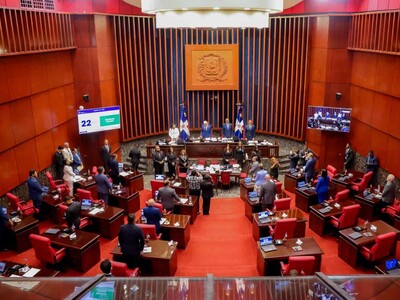
Dominican Republic Senate approves bill to create administrative courts
Translated from Spanish, summarized and contextualized by DistantNews.
At a glance
News
From a news agency
New plan
- The Dominican Republic's Senate has approved a bill to create administrative courts in its first reading.
- The legislation aims to improve citizens' access to justice by bringing these courts closer to the populace.
- The proposed courts will handle legal disputes arising from actions or omissions by public administration bodies.
The Senate of the Dominican Republic has taken a significant step towards enhancing judicial access by approving, in its first reading, a bill to establish administrative courts. This legislative initiative, known as the Law of Contentious-Administrative Jurisdiction, seeks to bring justice closer to the citizens by creating first-instance administrative contentious-administrative courts throughout the provinces.
The bill of Contentious-Administrative Jurisdiction contemplates the creation of first-instance contentious-administrative courts in the provinces, with the purpose of bringing these jurisdictional bodies closer to citizens and facilitating the resolution of processes derived from actions or omissions of the Public Administration.
The primary objective of this bill is to facilitate the resolution of legal processes stemming from the actions or omissions of public administration entities. By decentralizing these judicial functions, the government aims to make legal recourse more accessible and efficient for individuals interacting with state bodies.
The piece must be submitted to a second discussion before concluding its process in the Upper Chamber and passing to the Chamber of Deputies.
Authored by the President of the Senate, Ricardo de los Santos, the proposed law comprises 117 articles. It lays out the norms and procedures necessary to guarantee effective judicial protection for citizens' rights in their dealings with the Public Administration. Article 4 of the bill specifically affirms every person's right to access these judicial bodies.
The proposal consists of 117 articles and establishes norms to guarantee the effective judicial protection of people's rights in their relations with the Public Administration.
Before concluding its passage in the Upper Chamber, the bill must undergo a second reading and discussion. Subsequently, it will be forwarded to the Chamber of Deputies for further deliberation and potential approval. This legislative process underscores a commitment to strengthening the rule of law and ensuring accountability within the public administration.
Article 4 establishes that every person shall have the right to access the bodies.
DistantNews Editorial
Originally published by Diario Libre in Spanish. Translated, summarized, and contextualized by our editorial team with added local perspective. Read our editorial standards.
More Stories



From Our Blog

What Gets Lost (and Found) When News Is Translated

The Critical Role of Diaspora Media in Global News

What Travellers Should Know About Countries with Restricted Press

A Digital Nomad's Guide to Following Local News

How the Same Story Looks Different in Different Countries
