


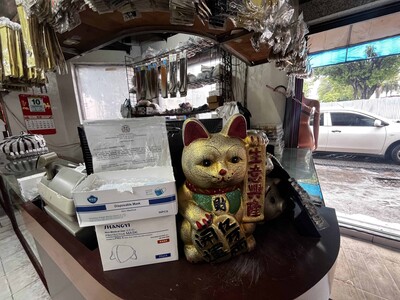
Dominican tax agency reports on Chinese businesses, citing non-compliance
Translated from Spanish and summarized by DistantNews. Read the original for the full story.
At a glance
News
Documents & data
Context piece
- Dominican tax authorities have registered 2,070 Chinese-capital companies between 2016 and 2026, with a significant portion remaining active.
- The National District has the highest concentration of these businesses, indicating a broad presence beyond large retail stores.
- Tax audits reveal common non-compliance issues, including failure to issue fiscal receipts and improper inventory reporting, resulting in substantial fines.
The expansion of large Chinese-owned businesses in the Dominican Republic is increasingly evident not only in commercial spaces but also in fiscal and regulatory records. The Dirección General de Impuestos Internos (DGII), the country's tax agency, has registered 2,070 companies with Chinese capital between 2016 and 2026. Of these, 1,300 are currently active, while 770 are inactive. The data indicates a steady influx, with 265 new registrations in 2025 and 132 so far in 2026.
The National District shows the highest concentration of these businesses, with 639 active and 542 suspended registrations. This suggests a diverse and extensive business structure behind the visible retail establishments, extending beyond major avenues. The presence of these companies touches upon various aspects of the Dominican economy, including tax compliance, customs, immigration, and the concerns of local Dominican merchants.
One of the primary issues identified by the DGII relates to how some businesses report their operations. Non-issuance of fiscal receipts accounts for approximately 26% of the total fines analyzed, a recurring violation year after year. The absence of fiscal printers is another related infraction directly tied to the invoicing process. Together, these two categories represent about a third of the money collected from fines for the examined violations.
Further complicating matters are sanctions related to deficiencies in recording actual operational transactions and inventory values. While a category labeled "other non-compliance" accounts for the largest portion of fines, the DGII does not publicly disclose the specific infractions included due to tax confidentiality regulations. This lack of detailed public information makes it difficult to ascertain the precise proportion of establishments committing these violations and their distribution across different business types and regions.
Beyond routine audits, the DGII has conducted larger-scale fiscalizations. Between 2018 and 2026, 159 taxpayers underwent internal reviews in 261 cases, systematically examining income tax and value-added tax (ITBIS) on goods and services. The determined tax liabilities from these audits exceed 73.5 billion pesos, with significant assessments occurring in 2023 and 2024.
About this summary
Originally published by Diario Libre in Spanish. Translated, summarized, and contextualized automatically by DistantNews, with a note on how the source frames the story. Not individually reviewed before publishing. How this works.
More Stories



From Our Blog

What Gets Lost (and Found) When News Is Translated

The Critical Role of Diaspora Media in Global News

What Travellers Should Know About Countries with Restricted Press

A Digital Nomad's Guide to Following Local News

How the Same Story Looks Different in Different Countries
