

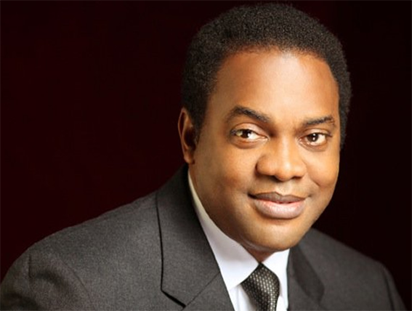
Donald Duke warns of disaster if Nigeria’s trajectory is not changed in four years
Summarized and contextualized by DistantNews.
At a glance
Interview
Named sources
Context piece
- Donald Duke, a presidential candidate, warns Nigeria faces deeper crisis in four years if its current trajectory isn't reversed.
- He cites weak economic growth, insecurity, and poor governance as key challenges.
- Duke urges opposition parties to unite for a viable alternative in the 2027 elections.
Donald Duke, presidential candidate for the Peoples Redemption Party (PRP), has issued a stark warning: Nigeria could plunge into a significantly deeper crisis within the next four years unless its current political and economic course is urgently altered. Duke, a former governor of Cross River State, stated that the worsening conditions in the country compelled his return to frontline politics, asserting that remaining a passive observer was no longer an option.
The direction the country is going requires very urgent intervention. In another four years, if we don’t change the trajectory, disaster, which is already looming, will deepen further.
"The direction the country is going requires very urgent intervention. In another four years, if we don’t change the trajectory, disaster, which is already looming, will deepen further," Duke declared in an exclusive interview with ARISE NEWS. He identified Nigeria's mounting economic hardship, pervasive insecurity, and governance challenges as the primary drivers behind his decision to seek the presidency under the PRP banner.
Duke attributed Nigeria's multifaceted challenges to a confluence of factors, including sluggish economic growth, inadequate governance, and what he described as years of leadership failure. He elaborated that issues like Boko Haram, ISWAP, banditry, and kidnapping are merely symptoms of systemic inadequacy. "A combination of all. The economy is broken; it’s not growing. Call it Boko Haram, call it ISWAP, call it banditry or kidnapping, those are the fallout. Those are the symptoms of inadequacy," he explained.
A combination of all. The economy is broken; it’s not growing. Call it Boko Haram, call it ISWAP, call it banditry or kidnapping, those are the fallout. Those are the symptoms of inadequacy.
Highlighting a perceived prioritization of politics over governance, Duke lamented the resulting institutional weaknesses and erosion of public confidence. He pointed to recent scandals, such as an unauthorized office setup in the Federal Secretariat, as evidence of poor governance. "In the last 20-plus years, there has been very little governance going on, a lot of politics and no governance. The recent scandal where someone sets up an office in the Federal Secretariat that is not an institution of government shows there is poor governance in the system. Nothing speaks louder than that," he added.
In the last 20-plus years, there has been very little governance going on, a lot of politics and no governance. The recent scandal where someone sets up an office in the Federal Secretariat that is not an institution of government shows there is poor governance in the system. Nothing speaks louder than that.
Addressing the economic landscape, Duke questioned the country's management strategies, particularly high interest rates that hinder sustainable growth. "You have poor governance as a derivative of leadership, and you have an economy that is just not growing. How can you grow an economy with interest rates in the upper 30s?" he asked. Looking ahead to the 2027 elections, Duke called for greater unity among opposition parties, warning that a fragmented front would struggle to present a viable alternative to Nigerians. He stressed the need for personal ambitions to yield to national interest, emphasizing that Nigeria is currently "in a bad place" and requires collective leadership to navigate its challenges.
You have poor governance as a derivative of leadership, and you have an economy that is just not growing. How can you grow an economy with interest rates in the upper 30s?
DistantNews Editorial
Originally published by Vanguard. Summarized and contextualized by our editorial team with added local perspective. Read our editorial standards.
More Stories


From Our Blog

How the Same Story Looks Different in Different Countries

What Gets Lost (and Found) When News Is Translated

The Critical Role of Diaspora Media in Global News

What Travellers Should Know About Countries with Restricted Press

A Digital Nomad's Guide to Following Local News
