

Donald Trump claims Iran accepted 'unlimited' nuclear inspections; Tehran furiously denies
Translated from Romanian, summarized and contextualized by DistantNews.
At a glance
News
Named sources
Ongoing story
- U.S. President Donald Trump claimed Iran agreed to "unlimited" nuclear inspections, a statement vehemently denied by Tehran.
- The dispute arises amid a provisional agreement aimed at ending a three-month conflict in the Middle East.
- Iran insists no nuclear program discussions occurred in Switzerland and denies agreeing to IAEA inspector returns, while the U.S. claims a solid basis for a final deal.
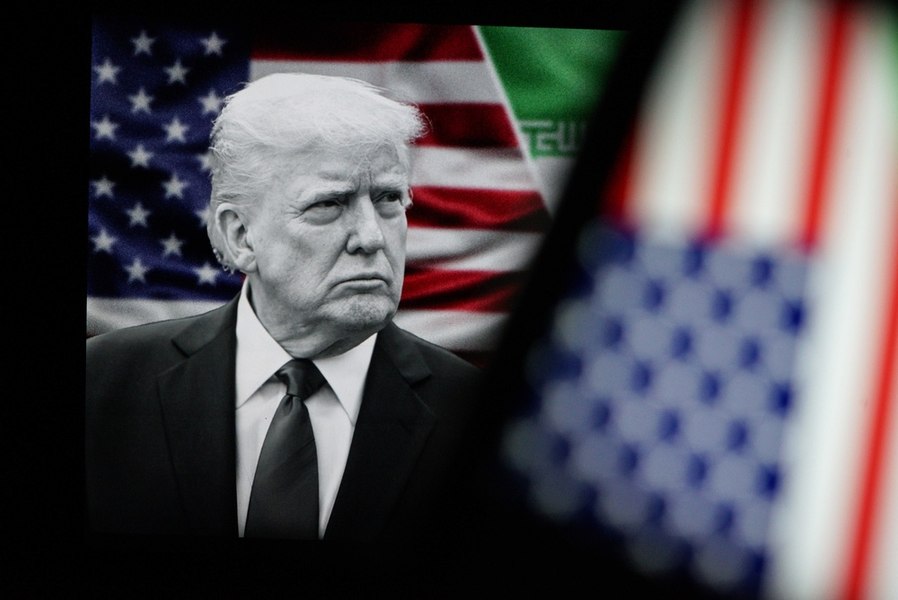
Tensions flared between the United States and Iran following President Donald Trump's assertion that Tehran had accepted "unlimited" nuclear inspections, a claim Iran swiftly and angrily refuted. This disagreement emerged within the context of a provisional agreement intended to de-escalate a conflict that had spanned over three months in the Middle East.
Iran has agreed to the highest levels of nuclear inspection, on an unlimited basis.
Trump stated that Iran had agreed to the "highest levels of nuclear inspection, on an unlimited basis." He also suggested that any unfrozen Iranian assets would be exclusively used for purchasing food and medicine from the U.S., according to Reuters. U.S. Vice President JD Vance echoed this sentiment, describing the discussions held in the Swiss resort of Buergenstock as creating a "solid foundation" for a final agreement and indicating Tehran's acceptance of the return of International Atomic Energy Agency (IAEA) inspectors.
The discussions held in the Swiss resort of Buergenstock created a solid foundation for a final agreement.
Conversely, Tehran firmly rejected the American claims. Esmail Baghaei, spokesperson for Iran's Ministry of Foreign Affairs, stated that no discussions regarding its nuclear program took place in Switzerland and that Iran had not consented to the return of IAEA inspectors. Ali Bahreini, Iran's ambassador to the UN, emphasized that Iran alone decides the use of its unfrozen assets and dismissed any notion of external control over them.
There were no discussions regarding its nuclear program in Switzerland, and Iran did not agree to the return of IAEA inspectors.
The U.S. and Iran had previously agreed on a mechanism to cease hostilities between Israel and Hezbollah in southern Lebanon. A communication channel was opened to secure maritime transport through the Strait of Hormuz, which Iran had previously blocked, and tanker traffic has gradually normalized, though Iran and Oman have indicated potential additional costs for using the strait. Bahrein announced the formation of two working groups: one focused on lifting sanctions and another on nuclear activities, with five elements of the preliminary agreement needing full implementation before nuclear issues could be discussed.
Only Iran decides how to use its unfrozen assets and rejected the idea of external control over them.
DistantNews Editorial
Originally published by Adevărul in Romanian. Translated, summarized, and contextualized by our editorial team with added local perspective. Read our editorial standards.
More Stories

From Our Blog

What Gets Lost (and Found) When News Is Translated

The Critical Role of Diaspora Media in Global News

What Travellers Should Know About Countries with Restricted Press

A Digital Nomad's Guide to Following Local News

How the Same Story Looks Different in Different Countries
