

Donation Collection Act is Outdated
Translated from Malay, summarized and contextualized by DistantNews.
At a glance
News
Named sources
Context piece
- A Malaysian lawyer argues that the 1947 House-to-House and Street Collections Act is outdated.
- Datuk Yaacob Md. Sam states the law is insufficient to regulate modern donation collection, especially by NGOs using online platforms.
- He calls for the act to be strengthened to prevent misuse of public funds, noting that current legal loopholes allow for significant misappropriation.
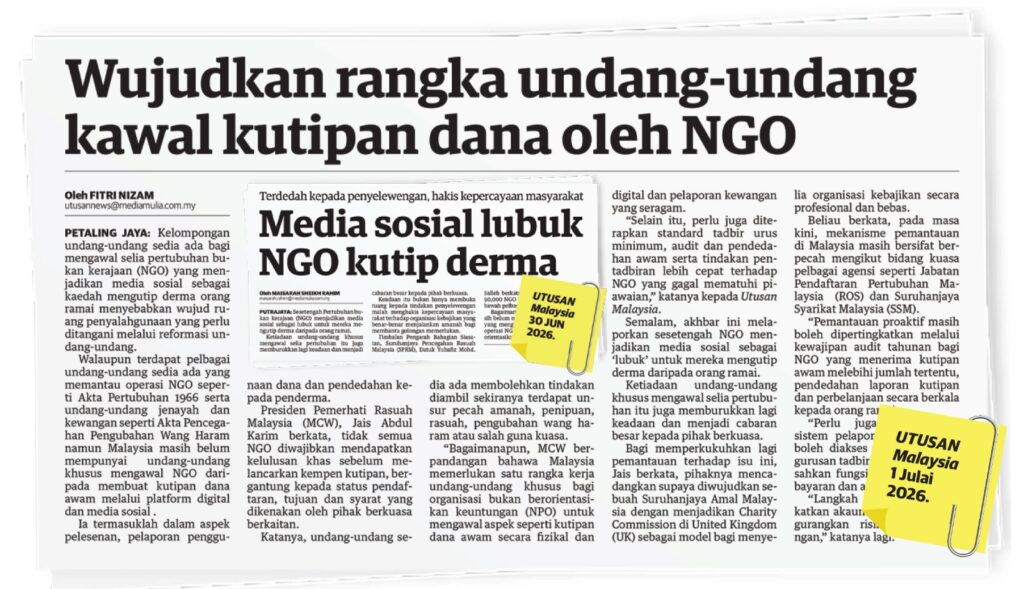
A Malaysian lawyer has declared that the existing law governing public donations, the House-to-House and Street Collections Act of 1947 (Act 200), is obsolete and incapable of addressing contemporary fundraising methods. Datuk Yaacob Md. Sam, a practicing lawyer and former Court of Appeal judge, argues that the rapid advancement of technology has rendered the act ineffective in regulating donations, particularly those collected by non-governmental organizations (NGOs).
The act in question receives very little attention, and its existence is not even known among the authorities themselves.
Yaacob asserts that the act requires significant strengthening, otherwise, the misappropriation of public funds in Malaysia will persist. He points out that the law receives little attention, and even law enforcement officials are often unaware of its existence. This lack of awareness means that prosecutions under Act 200 against organizers collecting funds without proper licenses or authorization are rare.
This situation has been taken advantage of by certain parties to collect donations and public funds, and there is frequent misuse and misappropriation of the collected public funds, reaching hundreds of millions of ringgit.
He explained that certain parties exploit these legal gaps to collect donations through online platforms and social media. Yaacob highlighted that many of these collections lack transparency and proper auditing, creating opportunities for embezzlement of public funds, which he estimates to be in the hundreds of millions of ringgit. While many such cases are reported, perpetrators are often charged with other offenses due to the limitations of Act 200.
Most collections of funds from the public are now carried out by associations and NGOs through online platforms or social media.
The lawyer detailed the act's definitions, including 'collection' as an appeal made through house-to-house visits or in public spaces for money or property. 'Collector' refers to the person making the appeal, 'proceeds' to all money and property received, and 'organizer' to someone causing others to act as collectors. The licensing authority under the act is the police chief for a specific area or the Inspector-General of Police, with the Menteri Besar, Chief Minister, or Minister acting as the relevant authority depending on the collection location.
Most public fund collections are also not transparent and not perfectly audited, thus creating room for misappropriation in the management of public funds by parties taking advantage of loopholes and weaknesses in the law.
DistantNews Editorial
Originally published by Utusan Malaysia in Malay. Translated, summarized, and contextualized by our editorial team with added local perspective. Read our editorial standards.
More Stories



From Our Blog

What Gets Lost (and Found) When News Is Translated

The Critical Role of Diaspora Media in Global News

What Travellers Should Know About Countries with Restricted Press

A Digital Nomad's Guide to Following Local News

How the Same Story Looks Different in Different Countries
