


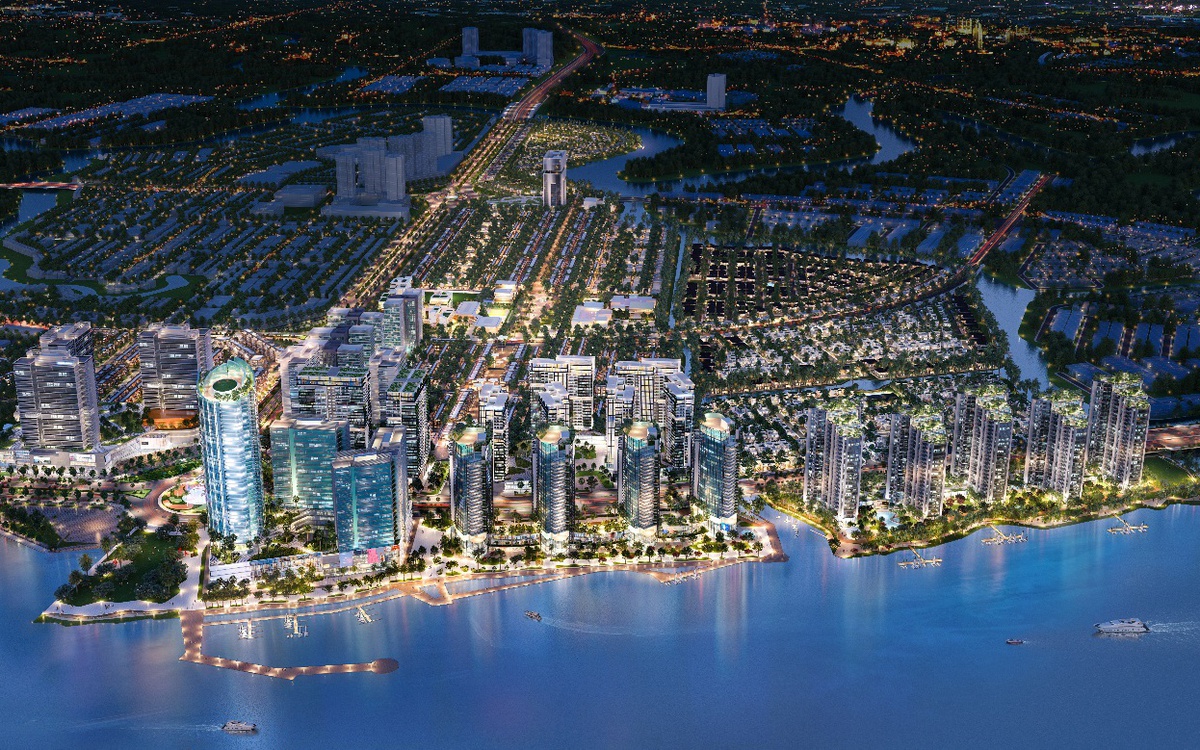
Dong Nai Province - Ho Chi Minh City: Great Opportunities from the 'Twin Cities' Model
Translated from Vietnamese, summarized and contextualized by DistantNews.
At a glance
News
Sources not specified
Context piece
- The "Twin Cities" model, where two adjacent cities integrate economically and infrastructurally, is gaining traction in Vietnam with Ho Chi Minh City and Dong Nai province.
- Ho Chi Minh City will focus on finance, services, and high technology, while Dong Nai will develop as an airport city, logistics hub, and modern industrial center.
- Key infrastructure projects like Long Thanh International Airport and Ring Road 3, along with new bridges, are strengthening the connection between the two urban areas, creating a globally competitive "super-city."
A "Twin Cities" model is emerging in southern Vietnam, fostering a powerful synergy between Ho Chi Minh City and Dong Nai province. This urban planning concept, exemplified by pairings like Minneapolis-Saint Paul in the U.S. and Copenhagen-Malmö in Sweden, involves two neighboring cities with distinct identities but deeply integrated economies, infrastructure, and daily life.
Urban planning expert TS. KTS Hoang Huu Phe explains that the twin city model thrives on balanced growth. Both cities bolster each other's strengths to tackle shared challenges, easing pressure on space, infrastructure, and population. This dynamic allows both urban centers to flourish.
In this southern Vietnamese context, Ho Chi Minh City is positioned as the financial, service, and high-tech "heart." Dong Nai province, undergoing transformation, will become an airport city, a logistics capital, and a modern industrial hub. This clear, complementary division of roles aims to alleviate population and infrastructure strain on Ho Chi Minh City while enabling Dong Nai to attract investment and skilled labor from the major economic center.
The twin city model is formed based on the principle of balanced growth. In which, both cities reinforce each other's strengths in solving common challenges, helping to share pressure on space, infrastructure, and population, while creating conditions for both cities to develop together.
The connection between Dong Nai and Ho Chi Minh City is being solidified by critical infrastructure. Long Thanh International Airport is envisioned as a gateway for the southern economic region. Projects like Ring Road 3 and 4 are dismantling geographical barriers, while an extension of Metro Line 1 will directly link Ho Chi Minh City's center to Dong Nai's urban core. New bridges, including Long Hung (Dong Nai 2), Cat Lai, Nhon Trach, and Phu My 2, will further bridge the two urban areas across the Dong Nai River.
Experts believe the combined force of Ho Chi Minh City and Dong Nai will create a globally competitive "super-city." Dong Nai is gaining autonomy in planning and attracting foreign direct investment, fostering smart city development. This is driving capital and residents eastward, where ample land and greener living spaces are available, establishing the area between the two cities as a new development nucleus.
Ho Chi Minh City plays the role of the 'heart' of finance, services, and high technology, while the newly transformed Dong Nai province will assume the role of an airport city, a logistics capital, and a modern industrial center.
DistantNews Editorial
Originally published by Tuổi Trẻ in Vietnamese. Translated, summarized, and contextualized by our editorial team with added local perspective. Read our editorial standards.
More Stories


From Our Blog

What Gets Lost (and Found) When News Is Translated

The Critical Role of Diaspora Media in Global News

What Travellers Should Know About Countries with Restricted Press

A Digital Nomad's Guide to Following Local News

How the Same Story Looks Different in Different Countries
