


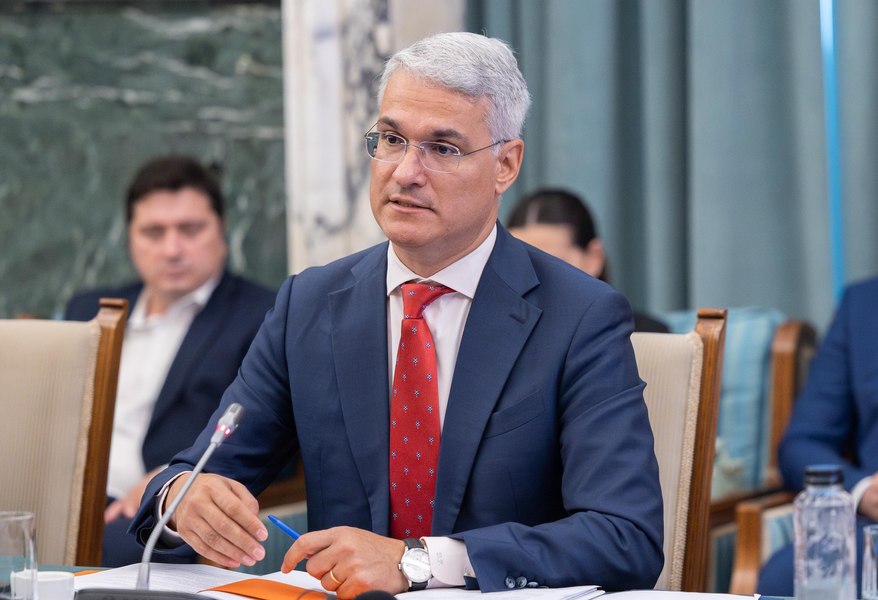
Dragoș Pîslaru: Romania will absorb more than 90% of PNRR grants
Translated from Romanian and summarized by DistantNews. Read the original for the full story.
At a glance
News
Named sources
Ongoing story
- Romania is expected to absorb more than 90% of the grant component of its National Recovery and Resilience Plan, worth about €13.56 billion to €13.57 billion.
- Pîslaru said absorption had reached 78% with the fifth payment request and could exceed 90% after the sixth.
- He identified unfinished reforms, particularly the unified pay law and decarbonization measures, as creating a financial risk of about €860 million to €870 million.
Romania is on course to absorb more than 90% of the grant money available under its National Recovery and Resilience Plan, according to interim Investment and European Projects Minister Dragoș Pîslaru. That would mean attracting roughly €13.56 billion to €13.57 billion in non-repayable funding.
The grant allocation itself has not changed, Pîslaru said. Romania had reached a 78% absorption rate with its fifth payment request, while the sixth request should provide the remaining progress needed to move above 90%. Each payment request includes both grants and loans, he noted.
The risk remains linked to unfinished reforms, and the flagship reform we are missing is clearly the unified pay reform.
The main danger now lies not in the investments but in reforms required under the plan. Pîslaru put the financial risk at around €860 million to €870 million, citing the failure to adopt a unified pay law and issues connected with decarbonization. “The risk remains linked to unfinished reforms, and the flagship reform we are missing is clearly the unified pay reform,” he said.
Two-thirds of the PNRR was carried out between June 23, 2025 and the present.
Pîslaru argued that the investments included in the programme would be completed almost entirely. He also said most of the implementation effort had taken place during the Bolojan government. The first three payment requests covered six investments and 19 reforms, while the last three involved about 113 investments and 48 reforms. “Two-thirds of the PNRR was carried out between June 23, 2025 and the present,” he said.
The interim minister blamed previous governments for delays and rejected the idea that European institutions had caused Romania’s difficulties. “We never had an enemy of the PNRR in Brussels. Our problems were always linked to some parties’ inability to understand what the PNRR is and what an opportunity it represents for Romania in terms of reforms and investments,” Pîslaru said.
We never had an enemy of the PNRR in Brussels. Our problems were always linked to some parties’ inability to understand what the PNRR is and what an opportunity it represents for Romania in terms of reforms and investments.
About this summary
Originally published by Adevărul in Romanian. Translated, summarized, and contextualized automatically by DistantNews, with a note on how the source frames the story. Not individually reviewed before publishing. How this works.
More Stories


From Our Blog

What Gets Lost (and Found) When News Is Translated

The Critical Role of Diaspora Media in Global News

What Travellers Should Know About Countries with Restricted Press

A Digital Nomad's Guide to Following Local News

How the Same Story Looks Different in Different Countries
