


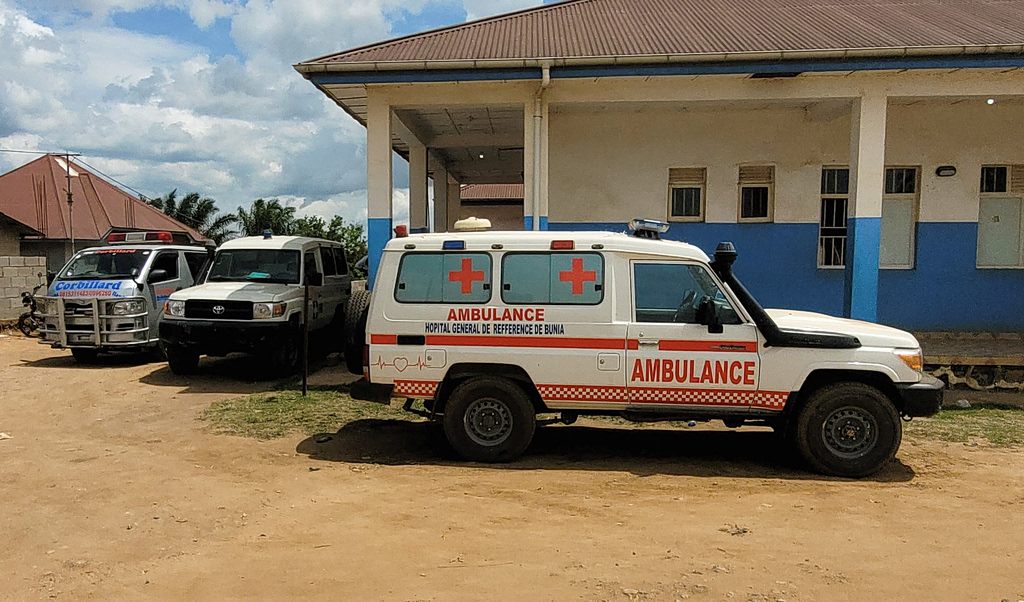
DRC Ebola Outbreak Claims Over 200 Lives; Authorities Concerned About Tracing
Translated from Greek, summarized and contextualized by DistantNews.
At a glance
News
Official statement
Ongoing story
- Over 200 people have died from an Ebola outbreak in the Democratic Republic of Congo since May 15, with 875 confirmed cases.
- The outbreak is attributed to the Bundibugyo strain, which currently lacks a vaccine or targeted treatment.
- Health officials express concern over insufficient contact tracing in DRC due to security issues and limited access, while the situation in Uganda is considered under control.
More than 200 deaths have been recorded in the Democratic Republic of Congo due to an Ebola epidemic, one month after an emergency was declared in the country's northeast. Africa CDC, the health service of the African Union, reported 875 confirmed cases, with 202 fatalities as of May 15, translating to a 23% mortality rate.
The current outbreak of hemorrhagic fever is linked to the Bundibugyo strain, for which no vaccine or targeted treatment is yet available. The epicenter is in the Ituri province of northeastern DRC, where access remains difficult due to poor road conditions and the presence of armed groups. Neighboring Uganda has reported 19 confirmed cases and two deaths.
is concerned because the tracing of patients' contacts in the DRC remains insufficient, due to security problems and limited access in certain zones.
Uesaam Mankoula, the Africa CDC's head of emergency response, stated that the agency is concerned because contact tracing for patients in the DRC remains inadequate. This is attributed to security problems and limited access in certain zones. In contrast, Mankoula described the situation in Uganda as "under control."
The Ebola virus, transmitted through bodily fluids and close contact, has caused over 15,000 deaths in Africa in previous outbreaks. The ongoing epidemic in the DRC highlights the challenges of containing the disease in regions with difficult infrastructure and security concerns.
is under control.
DistantNews Editorial
Originally published by Ta Nea in Greek. Translated, summarized, and contextualized by our editorial team with added local perspective. Read our editorial standards.
More Stories



From Our Blog

What Gets Lost (and Found) When News Is Translated

The Critical Role of Diaspora Media in Global News

What Travellers Should Know About Countries with Restricted Press

A Digital Nomad's Guide to Following Local News

How the Same Story Looks Different in Different Countries
