

DRC President Tshisekedi's national dialogue call sparks protests, questions of power consolidation
Translated from French, summarized and contextualized by DistantNews.
At a glance
Analysis
Sources not specified
Ongoing story
- Opposition in the Democratic Republic of Congo has called for peaceful protests on September 15 after an ultimatum for national dialogue expired.
- President Félix Tshisekedi, while attending Gabon's independence anniversary, reaffirmed his commitment to a national dialogue but excluded those aligned with Rwanda.
- Critics question Tshisekedi's sincerity, suggesting he may be using the dialogue to consolidate power and potentially seek a third term, while excluding key actors like the M23 rebels.
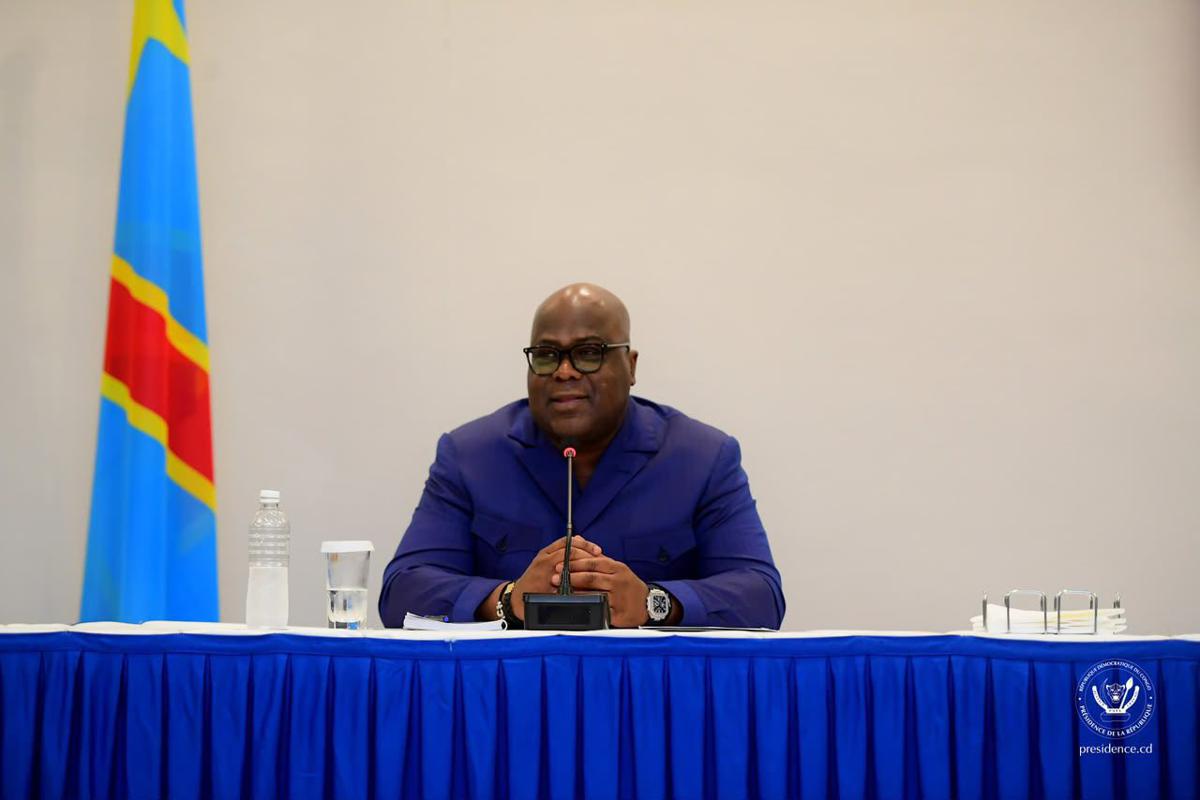
Following the expiration of an August 15 ultimatum demanding the organization of a national dialogue, opposition groups in the Democratic Republic of Congo have called for peaceful nationwide protests on September 15. Feeling cornered, President Félix Tshisekedi, speaking from Libreville where he attended Gabon's independence anniversary celebrations, reiterated his intention to initiate a broad national dialogue.
Details of this dialogue are expected soon, but Tshisekedi has promised a format distinct from previous ones. Notably, he intends to exclude individuals and groups aligned with Rwanda, whom he accuses of backing the M23 rebels. His government has also set red lines, including the non-negotiability of national sovereignty and territorial integrity. However, questions linger about the true intent behind Tshisekedi's push for dialogue, especially as it risks becoming an elusive prospect, a "sea serpent" as described.
Analysts question whether Tshisekedi is genuinely seeking reconciliation or merely attempting to ease political pressure. The article suggests his commitment to the dialogue, as proposed by religious leaders, the opposition, and civil society, may be superficial. His insistence on excluding key figures, particularly those associated with the M23, is seen as counterproductive. The adage "one reconciles with enemies, not friends" is invoked, implying Tshisekedi might be seeking to engage with less challenging factions rather than addressing the root of the conflict.
The piece further speculates that Tshisekedi's strategy might be aimed at retaining power beyond the constitutionally mandated term limits. The unresolved issue of a potential third mandate continues to divide Congolese society. His approach to the national dialogue, particularly when feeling pressured by the opposition coalition C64, is viewed as a strategic maneuver. The article concludes by questioning whether the opposition will be deceived by Tshisekedi's tactics, suggesting he may be negotiating with ulterior motives.
DistantNews Editorial
Originally published by Le Pays in French. Translated, summarized, and contextualized by our editorial team with added local perspective. Read our editorial standards.
More Stories
From Our Blog

What Gets Lost (and Found) When News Is Translated

The Critical Role of Diaspora Media in Global News

What Travellers Should Know About Countries with Restricted Press

A Digital Nomad's Guide to Following Local News

How the Same Story Looks Different in Different Countries
