

Ivory Coast's PPA-CI party reorganizes leadership
Translated from French, summarized and contextualized by DistantNews.
At a glance
News
Sources not specified
New plan
- Former Ivorian President Laurent Gbagbo has reorganized his party, the PPA-CI, by delegating powers to five key lieutenants.
- This move aims to create a "collegial" leadership and inject new dynamism into the party, which has faced internal crises and resignations.
- The reorganization raises questions about Gbagbo's continued leadership and whether it will resolve internal divisions or exacerbate them.
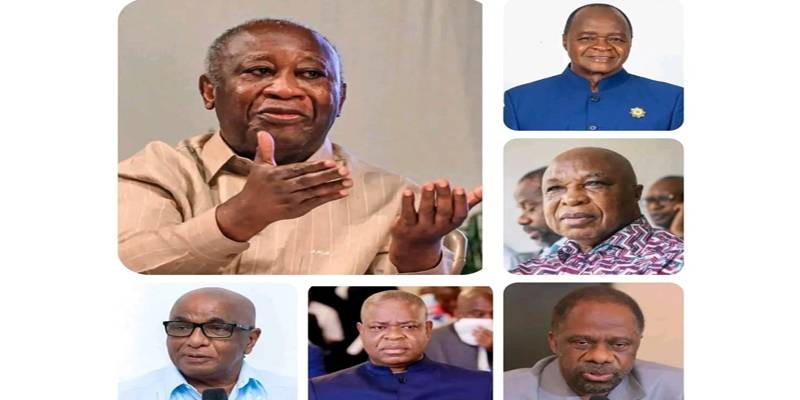
Former Ivorian President Laurent Gbagbo has initiated a significant reorganization within his party, the PPA-CI (Parti des peuples africains-Côte d’Ivoire), by distributing a portion of his powers among five trusted senior members. This strategic move, formalized on August 10, establishes Assoa Adou, Hubert Oulaye, Emmanuel Ackah, and Justin Koné Katinan as first, second, third, and fourth vice-presidents, respectively, each with specific mandates. A fifth figure, Dano Sébastien Djédjé, has been appointed president of the Strategic and Political Council.
The party leadership describes this as a step towards a "collegial" direction, intended to foster a new dynamic and strengthen unified action. However, the move occurs against a backdrop of internal strife. The PPA-CI recently experienced a wave of resignations from cadres and high-ranking officials who departed due to disagreements over the party's functioning, joining a rival political project. This event on July 24 underscores that the party is not experiencing total serenity.
Despite these changes, questions linger about the true extent of Gbagbo's willingness to relinquish control. Even with advancing age and reported health concerns, he appears hesitant to fully step back. Analysts ponder if this reorganization is a strategy to salvage the party's standing, especially given upcoming political and electoral challenges. The delegation of powers fulfills a promise Gbagbo made to entrust responsibilities to trusted cadres, yet the effectiveness of this shift remains uncertain. The potential for multipolar decision-making could either consolidate the party or lead to further internal divisions.
Gbagbo's move is seen as an assertion that he remains the ultimate authority within the PPA-CI, a response to past criticisms of his solitary leadership style. These adjustments are poised to mark a significant moment in the party's history, but they simultaneously prompt critical questions about the current political climate's suitability for such a restructuring and whether it will truly address the underlying issues plaguing the PPA-CI.
DistantNews Editorial
Originally published by Le Pays in French. Translated, summarized, and contextualized by our editorial team with added local perspective. Read our editorial standards.
More Stories
From Our Blog

What Gets Lost (and Found) When News Is Translated

The Critical Role of Diaspora Media in Global News

What Travellers Should Know About Countries with Restricted Press

A Digital Nomad's Guide to Following Local News

How the Same Story Looks Different in Different Countries
