


Drones, AI, and white paint: Europe races to protect infrastructure from heat
Translated from English, summarized and contextualized by DistantNews.
At a glance
News
Sources not specified
Context piece
- Europe is implementing various measures, including drones, AI sensors, and white paint, to protect aging infrastructure from extreme heat.
- Record temperatures are causing railways to buckle, roads to melt, and power grids to strain across the continent.
- Experts warn that infrastructure is unprepared for increasingly frequent extreme weather events, with potential economic impacts on the Eurozone.
As Europe grapples with record-breaking heatwaves, countries are deploying a range of innovative and simple solutions to protect their aging infrastructure. From drones inspecting railway tracks and AI-powered sensors monitoring systems to the surprisingly low-tech application of white paint, the continent is racing to adapt to rising temperatures.
In Norway, the asphalt must withstand both extreme cold and fairly warm temperatures.
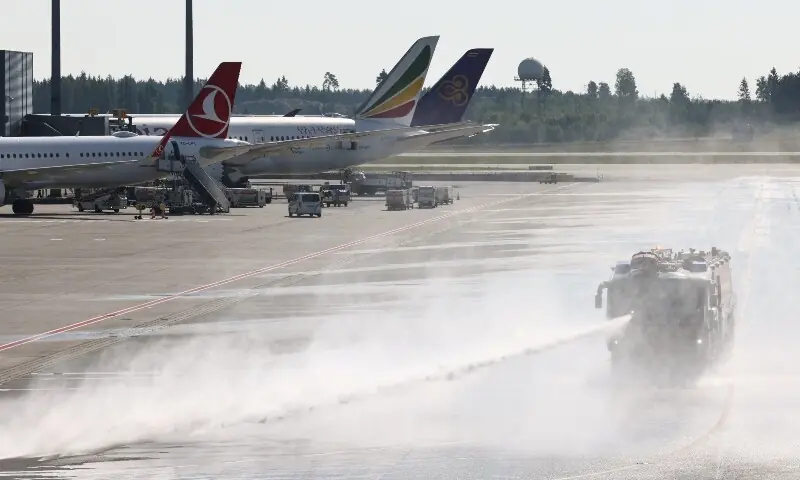
In Norway, workers at Oslo airport sprayed tarmac with water to keep it cool as temperatures soared. This reflects a broader trend across Europe, where infrastructure built for colder climates is now under immense pressure from heat. Airports are even testing new heat-resistant asphalt, while fire brigades use thousands of liters of water on runways to prevent damage from softening.
Our infrastructure is in no way prepared for the extreme weather events that we’re going to see.
Europe's roads and railways, many constructed decades ago, are struggling to cope. Temperatures across Western Europe have been significantly above average, leading to disruptions. Experts warn that infrastructure is "in no way prepared" for the extreme weather events that are becoming more regular. A 2025 report by central banks estimated that severe weather could reduce Eurozone GDP by as much as 4.7% by 2030.
The most critical issue for rail networks is not the heat itself, but the thunderstorms, strong winds and landslides that often follow heatwaves.
Rail networks are particularly vulnerable. An EU report found that over 70% of rail managers are experiencing increasing disruptions due to extreme weather. While heat can cause tracks to expand and signals to fail, the most critical issue for rail networks is often the thunderstorms, strong winds, and landslides that follow heatwaves. Northern European countries, with infrastructure designed for narrower temperature ranges, face particular challenges, with many systems described as "frozen in time."
Italy has already experienced significant disruptions to its railway network, particularly on Alpine routes, as a result of climate-related events.
DistantNews Editorial
Originally published by Dawn in English. Translated, summarized, and contextualized by our editorial team with added local perspective. Read our editorial standards.
More Stories


From Our Blog

What Gets Lost (and Found) When News Is Translated

The Critical Role of Diaspora Media in Global News

What Travellers Should Know About Countries with Restricted Press

A Digital Nomad's Guide to Following Local News

How the Same Story Looks Different in Different Countries
