


Drones take on a new role in Nepal’s disaster response—from delivering food to carrying bodies
Summarized by DistantNews. Read the original for the full story.
At a glance
In-depth
Named sources
Ongoing story
- Nepalese authorities used drones to airlift seven bodies from a flood-hit area in Dhading that rescuers found dangerous and difficult to reach.
- The country’s drone capabilities, initially expanded through international disaster relief after the 2015 earthquake, now support flood response, mountain logistics, hazard mapping and emergency deliveries.
- In Nuwakot, an AI-enabled drone surveyed villagers’ needs for water, food and medicine so operators could arrange deliveries where roads and bridges had been destroyed.
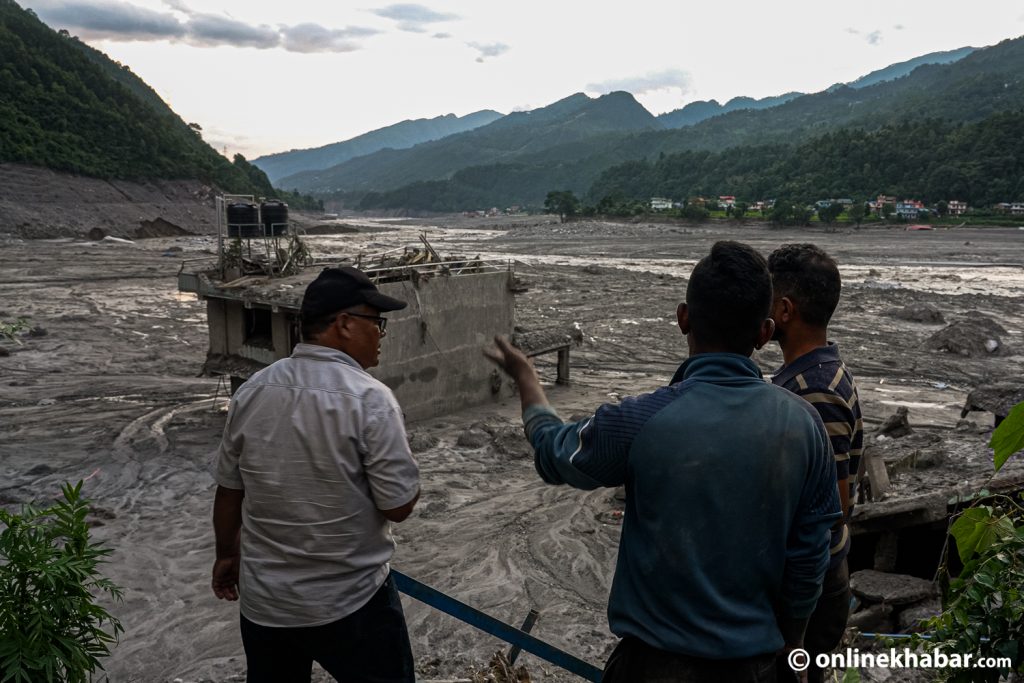
A drone carrying a human body flew over Benighat in Nepal’s Dhading district on Monday, marking a striking new use of technology in the country’s disaster response. Rescuers had struggled to reach the area, devastated by floods the previous week.
Security personnel supervised the operation, which eventually airlifted seven bodies from Benighat-3 to Benighat-5. Drones in Nepal were once mainly associated with international search-and-rescue teams. After the 7.8-magnitude earthquake in 2015 killed thousands and destroyed large parts of the Kathmandu Valley and other areas, international agencies used them to search for survivors, assess damage and support recovery.
Since then, local technology and growing interest among Nepali youths have helped build domestic drone expertise. The aircraft now do far more than aerial photography and mapping. This spring, drones moved oxygen tanks, medicines, ropes and ladders between Everest Base Camp and Camp I across the Khumbu Icefall in six to seven minutes. People can take up to seven hours to make the same journey, and repeated crossings expose Sherpas to shifting ice blocks, deep crevasses and avalanches.
Drones also scout crevasses and map ice walls. Their three-dimensional scans can measure the length and depth of cracks, helping Sherpa guides and climbers identify dangerous areas and assess risks from avalanches and collapsing ice slabs.
The technology is now reaching communities cut off by floods and landslides. In badly affected Devighat-3 in Nuwakot, an AI-enabled drone flew over villagers and used a loudspeaker to ask whether they had water, food or medicine. “Based on the villagers' response, we make an assessment for what they require and send the delivery through drones,” said Milan Pandey, director of Airlift Technology and a drone pilot. Operators can also receive a phone number or address written on a placard or in the mud, allowing them to process requests from stranded residents.
Based on the villagers' response, we make an assessment for what they require and send the delivery through drones.
About this summary
Originally published by Kathmandu Post. Summarized and contextualized automatically by DistantNews, with a note on how the source frames the story. Not individually reviewed before publishing. How this works.
More Stories


From Our Blog

What Gets Lost (and Found) When News Is Translated

The Critical Role of Diaspora Media in Global News

What Travellers Should Know About Countries with Restricted Press

A Digital Nomad's Guide to Following Local News

How the Same Story Looks Different in Different Countries
