


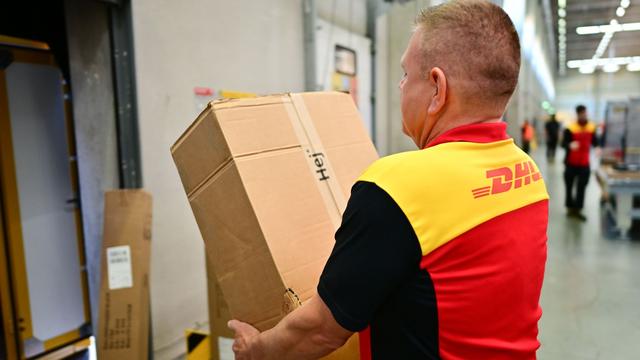
Dumbbells and Cat Litter: DHL Wants Two-Person Delivery for Heavy Packages Industry-Wide
Translated from German, summarized and contextualized by DistantNews.
At a glance
News
Named sources
Context piece
- DHL, the market leader in Germany's parcel industry, is calling for new regulations requiring two delivery personnel for packages heavier than 23 kilograms.
- The company cites the health of its delivery staff, with a third of sick days in its German parcel division attributed to musculoskeletal issues.
- Competitors and the Verdi trade union have expressed reservations, with rivals citing potential staff shortages and environmental concerns, while Verdi believes the proposal does not go far enough.
DHL, Germany's dominant parcel delivery service, is pushing for a new industry-wide regulation that would mandate two delivery personnel for any package exceeding 23 kilograms. Nikola Hagleitner, head of DHL's German letter and parcel business, stated that packages heavier than this threshold should only be delivered by two people, a rule she believes should be legally binding across the entire sector.
Packages that are heavier than 23 kilos should only be allowed to be delivered by two people.
Hagleitner explained that the proposal stems from concerns over the physical health of delivery drivers. Within DHL's German Post & Parcel division, approximately one in three sick days are reportedly related to muscle or skeletal ailments. She noted that over 90 percent of heavy packages, often containing items like fitness equipment, dog food, or cat litter, could be split into two smaller shipments, such as dividing a case of wine or a large bag of dog food into two separate parcels.
However, DHL's competitors are largely unenthusiastic about the proposal. They argue that such a rule would exacerbate existing staff shortages, negatively impact environmental performance due to potentially increased vehicle use, and lead to longer delivery times. The powerful Verdi trade union, while supporting the initiative, feels it doesn't go far enough.
If only one person delivers, it can be bad for the back.
DHL acknowledges that implementing this rule unilaterally would put it at a competitive disadvantage. Hagleitner stated that if DHL were to enforce a two-person delivery rule or charge extra for splitting packages, corporate clients might switch to competitors with less stringent working conditions. "It ultimately helps no one if parcel volumes move to service providers who have worse working conditions than we do and thus lose tariff-bound good jobs," she said, emphasizing that sustainable health protection requires uniform industry standards and strict enforcement.
It ultimately helps no one if parcel volumes move to service providers who have worse working conditions than we do and thus lose tariff-bound good jobs.
Despite only 1.1 percent of DHL's packages weighing between 23 and 31.5 kilograms, Hagleitner stressed the importance of these larger clients, who also ship numerous lighter packages. Competitors, represented by the industry association BPEX (which includes Hermes, GLS, and DPD), strongly oppose lowering the current 31.5-kilogram limit. They argue that 20 or 23 kilograms are arbitrary limits and advocate for the use of professional hand trucks instead. The BPEX warns that mandatory two-person deliveries would drastically worsen the personnel shortage in the sector and could negatively affect the CO2 footprint due to the need for additional vehicles and routes.
Health protection only works in the long term if the same rules apply to the entire industry and are strictly controlled.
DistantNews Editorial
Originally published by Die Zeit in German. Translated, summarized, and contextualized by our editorial team with added local perspective. Read our editorial standards.
More Stories



From Our Blog

What Gets Lost (and Found) When News Is Translated

How the Same Story Looks Different in Different Countries

The Critical Role of Diaspora Media in Global News

What Travellers Should Know About Countries with Restricted Press

A Digital Nomad's Guide to Following Local News
