

/s3/static.nrc.nl/wp-content/uploads/2026/06/04121139/040626VER_2034224614_.jpg)
Dutch report: Care and supervision failed in case of girl fatally stabbed by man in psychosis
Translated from Dutch, summarized and contextualized by DistantNews.
At a glance
News
Official statement
Outcome reported
- A report found that the care and supervision of Hamza L., who fatally stabbed an 11-year-old girl in a psychotic episode, were inadequate.
- The inspections by the Inspectorate of Justice and Security and the Inspectorate of Healthcare and Youth revealed that collaborating organizations lacked the necessary forensic sharpness to assess safety risks.
- The incident highlighted broader issues, including long waiting times for suitable housing with forensic care and an increasing demand for mental healthcare services.
Care and supervision for Hamza L., who fatally stabbed an 11-year-old girl in a psychotic episode last year in Nieuwegein, fell short, according to a joint report by the Inspectorate of Justice and Security (Inspectie JenV) and the Inspectorate of Healthcare and Youth (IGJ).
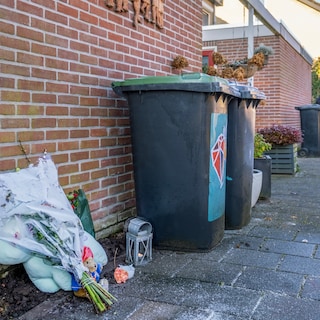
Hamza L. stabbed the then 11-year-old Sohani to death on the street in February 2025 while in a psychotic state. He was recently sentenced by the court to psychiatric treatment under compulsory confinement. The fact that events escalated so severely raised questions about the handling of individuals experiencing mental health crises.
In a broader sense, the inspectorates conclude that the collaborating organizations lacked the forensic sharpness needed to assess safety risks. At various moments, the organizations missed information or information was not available.
Despite being under treatment by healthcare institutions and supervision from probation services, and his case being discussed at safety tables, critical oversights occurred. The inspections concluded that the approach was deficient in multiple areas, noting a lack of "forensic sharpness" among collaborating organizations to assess safety risks. Information was missed or unavailable at various junctures.
the replacement in the absence of care providers was not always properly arranged.
Efforts to place L. in appropriate protected housing failed, leading him to stay with family from May 2024. However, the report noted that "the replacement in the absence of care providers was not always properly arranged." Furthermore, on the day of the fatal stabbing and the day before, L. had encounters with the police. Officers were unaware they needed to consult a monitoring system, and the system itself lacked clear instructions for handling such situations, preventing contact with the crisis service.
While acknowledging the systemic failures, the inspectors also recognized factors beyond the control of professionals and organizations, such as waiting times for suitable forensic care placements. The incident is viewed within the context of rising demand for mental healthcare and an increasing number of reports concerning individuals exhibiting confused behavior.
the inspectorates also see that factors played a role that were outside the sphere of influence of the professionals and organizations involved, such as waiting times for a suitable place to live with forensic care.
DistantNews Editorial
Originally published by NRC Handelsblad in Dutch. Translated, summarized, and contextualized by our editorial team with added local perspective. Read our editorial standards.
More Stories
/s3/static.nrc.nl/wp-content/uploads/2026/03/11103441/110326BIN_2031772002_avest1.jpg)

/s3/static.nrc.nl/wp-content/uploads/2026/05/28150956/280526VER_2033016939_.jpg)
From Our Blog

What Gets Lost (and Found) When News Is Translated

The Critical Role of Diaspora Media in Global News

What Travellers Should Know About Countries with Restricted Press

A Digital Nomad's Guide to Following Local News

How the Same Story Looks Different in Different Countries
