


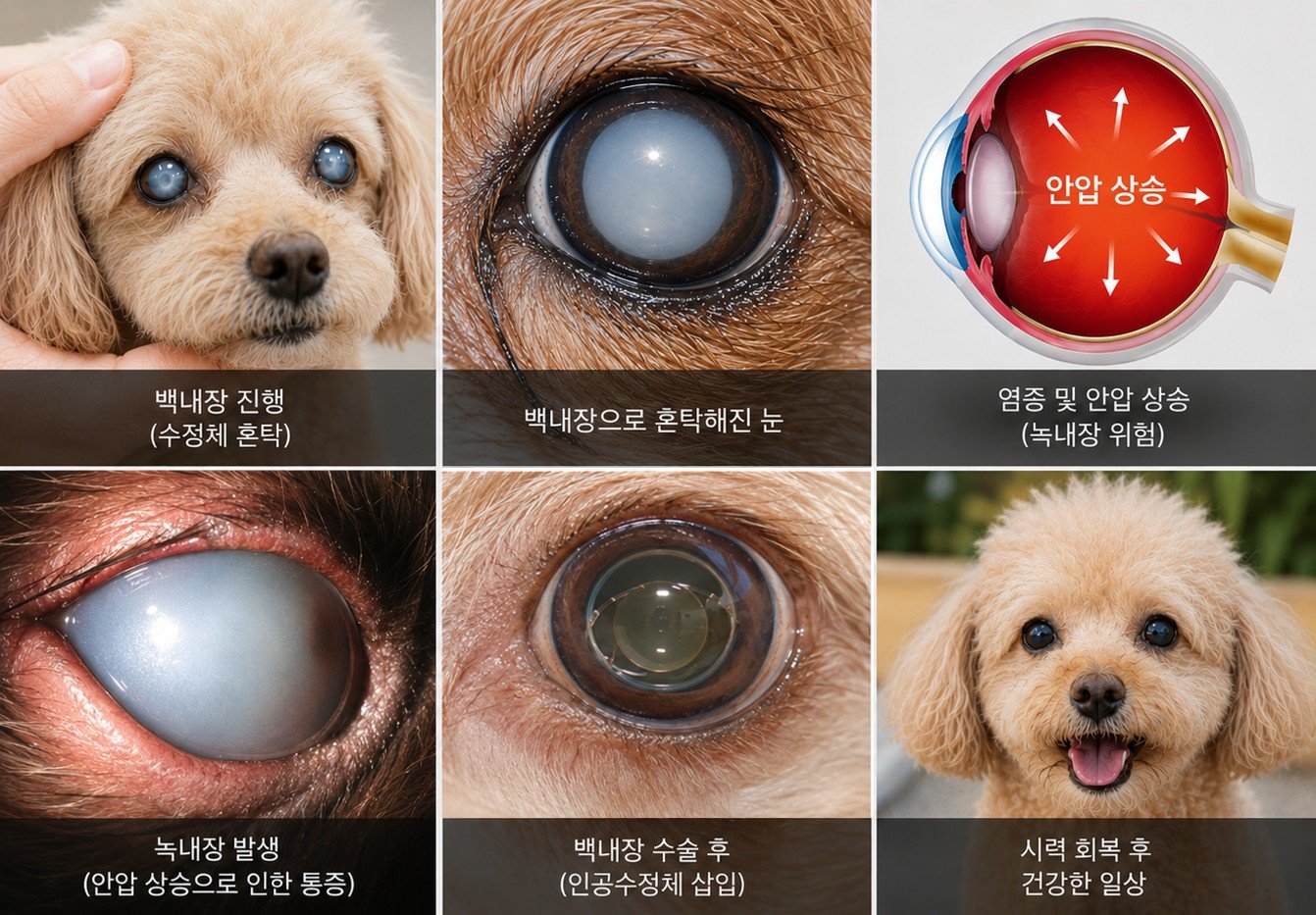
Early Diagnosis Crucial for Canine Cataracts to Prevent Vision Loss, Glaucoma
Translated from Korean, summarized and contextualized by DistantNews.
At a glance
News
Sources not specified
Context piece
- Leaving cataracts untreated in dogs can lead to serious complications like inflammation and glaucoma, potentially causing permanent vision loss.
- Early diagnosis and surgical intervention are crucial, with modern veterinary practices recommending surgery before complications arise.
- It is important to distinguish cataracts from "nuclear sclerosis," a common age-related change in older dogs, through precise veterinary eye examinations.
Owners should be vigilant about their dogs' eye health, as untreated cataracts can lead to severe consequences, including permanent vision loss. The clouding of the eye's lens, known as cataracts, prevents light from reaching the retina, progressively impairing vision. In advanced stages, this condition can trigger secondary issues such as uveitis (inflammation within the eye) and glaucoma, which damages the optic nerve and is difficult to reverse.
Veterinary experts emphasize that the old approach of waiting for cataracts to "mature" before operating is outdated and often leads to missed treatment windows. Modern veterinary ophthalmology advocates for earlier surgical intervention, ideally before significant inflammation or complications develop. The timing of surgery is determined by a comprehensive assessment, considering the cataract's progression, the retina's function, intraocular pressure, inflammation levels, and the dog's overall health.
Distinguishing cataracts from nuclear sclerosis, a harmless hardening and graying of the lens due to aging, is critical. While both conditions can cause the eye to appear cloudy, they have different prognoses and treatments. Accurate diagnosis requires a thorough examination by a veterinary ophthalmologist. The article stresses that cataracts do not resolve on their own and prompt veterinary consultation is essential if any changes in a dog's eyes or vision are observed.
Cataracts are not a condition that improves on its own. If you notice any changes in your pet's eyes or signs of vision impairment, seek an eye examination immediately to determine the appropriate treatment.
DistantNews Editorial
Originally published by Dong-A Ilbo in Korean. Translated, summarized, and contextualized by our editorial team with added local perspective. Read our editorial standards.
More Stories


From Our Blog

What Gets Lost (and Found) When News Is Translated

The Critical Role of Diaspora Media in Global News

What Travellers Should Know About Countries with Restricted Press

A Digital Nomad's Guide to Following Local News

How the Same Story Looks Different in Different Countries
