


Ebola Alert Becomes State Secret in Argentina
Translated from Spanish, summarized and contextualized by DistantNews.
At a glance
News
Official statement
Context piece
- Argentina's state intelligence agency (SIDE) declared measures related to an Ebola outbreak a state secret, bypassing health authorities.
- The announcement concerned three merchant ships with prior stops in Congo, the epicenter of the Ebola outbreak declared a global emergency by the WHO.
- SIDE refused to provide further details, citing secrecy, while the Ministry of Health stated Argentina has the capacity to handle suspected cases.
Argentina's State Intelligence Secretariat (SIDE) unexpectedly classified measures related to an Ebola outbreak as a state secret, a move that bypassed standard public health protocols and caused confusion.
The identification of these movements [based on the ships' itinerary], from information gathered by SIDE, allowed for the timely adoption of necessary preventive measures to protect the population's health.
The cryptic announcement on the SIDE's X account referred to "community" tasks with the Ministry of Health to implement preventive measures. This action was reinforced by an international alert two weeks prior. The measures specifically targeted three merchant ships that had previously docked in the Congo, the epicenter of the Ebola outbreak declared a global emergency by the World Health Organization (WHO).
We are not going to give the specifications of the ships because that would reveal matters covered by secrecy.
A SIDE spokesperson stated that the agency could not provide specifics about the ships, as that information was protected by secrecy. They offered to process further inquiries through a public information access request. The spokesperson added that "all health risks have been eliminated" but declined to elaborate further.
In this instance, all health risks have been eliminated.
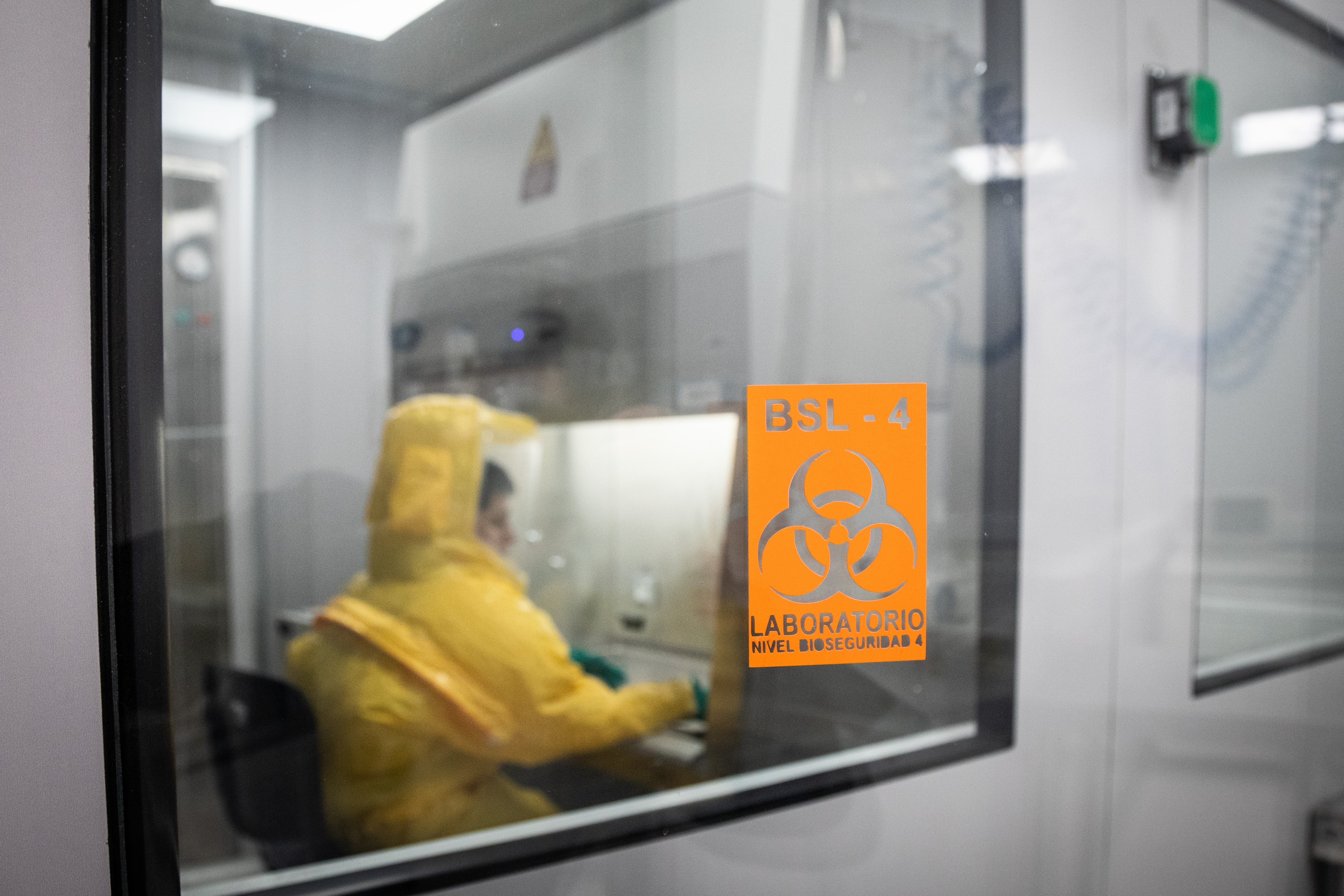
The ongoing outbreak of the Bundibugyo virus in the Democratic Republic of Congo and Uganda is occurring amidst conflicts, humanitarian crises, and political instability, characterized by high mobility and migration. Ebola viruses are considered biological threats requiring maximum biosecurity for containment and sample handling. Argentina's National Administration of Laboratories and Health Institutes (Anlis Malbrán) confirmed its capacity to evaluate suspected cases according to Pan American Health Organization (PAHO) guidelines, with its Center for Biological Containment (Uoccb) possessing a Biosafety Level 4 (BSL-4) laboratory, the first of its kind in Latin America.
Argentina has technical capabilities, infrastructure, personnel, and supplies for the diagnostic evaluation of suspected cases, in accordance with the current recommendations and guidelines of the Pan American Health Organization (PAHO).
DistantNews Editorial
Originally published by La Nación in Spanish. Translated, summarized, and contextualized by our editorial team with added local perspective. Read our editorial standards.
More Stories



From Our Blog

What Gets Lost (and Found) When News Is Translated

The Critical Role of Diaspora Media in Global News

What Travellers Should Know About Countries with Restricted Press

A Digital Nomad's Guide to Following Local News

How the Same Story Looks Different in Different Countries
