


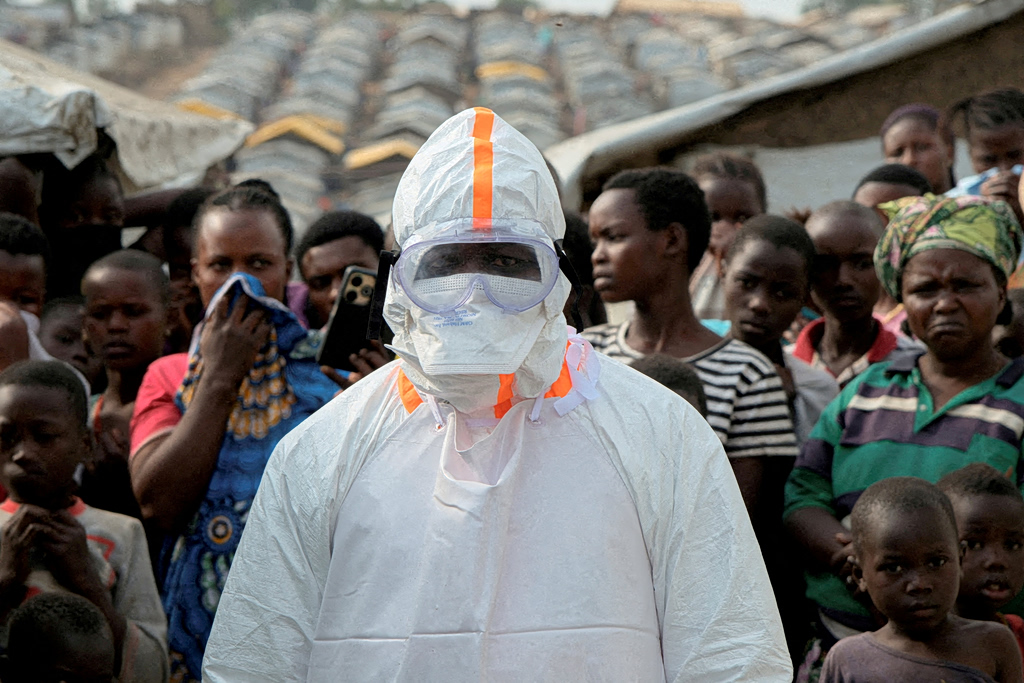
Ebola epidemic in Congo out of control, fears of worst outbreak in history
Translated from Greek, summarized and contextualized by DistantNews.
At a glance
News
Sources not specified
Ongoing story
- The Ebola epidemic in the Democratic Republic of Congo is out of control, with cases spreading to new provinces and fears of the worst outbreak on record.
- Confirmed cases have reached 1,926, with 702 deaths, and the virus has now spread to the Tshopo and Haut-Uele provinces, raising concerns about cross-border transmission.
- Health officials are worried about silent transmission due to milder symptoms, potentially leading to more cases than officially reported.
The Ebola epidemic in the Democratic Republic of Congo is escalating beyond control, sparking fears it could become the worst outbreak in history. New cases have emerged in two additional provinces, while an experimental vaccine is entering trials, offering a glimmer of hope.
According to the Congolese government, there are 1,926 confirmed cases, resulting in 702 deaths. The epidemic, declared on May 15, initially centered in the Ituri province and to a lesser extent in North and South Kivu. The virus has now spread to Tshopo province, where four cases, two fatal, have been recorded, and to Haut-Uele province, with one fatality. Haut-Uele's proximity to South Sudan and the Central African Republic heightens the risk of cross-border transmission.
"Although current investigations indicate that cases in these two provinces are mainly imported from Niania, in the Ituri province, it is necessary and appropriate... to consider these two provinces as epidemic zones," stated the National Institute of Public Health in a July 11 report. The outbreak is attributed to the rare Budibugyo virus, one of four Ebola viruses affecting humans, for which no vaccine exists. The disease begins with flu-like symptoms and diarrhea, progressing to internal and external bleeding, with a mortality rate of 30% to 50%.
Preliminary data suggest the Budibugyo virus may cause milder symptoms, leading some patients to stay home and increasing transmission risk. "The longer patients stay out of the hospital, the more likely they are to transmit the disease," Reuters was told by Chikwe Ihekweazu, WHO Director for Health Emergencies. He noted that initial research indicates the first 400 deaths occurred outside hospitals. WHO models suggest actual cases could be two to four times higher than confirmed figures. "We are facing an epidemic that is spreading at the fastest rate ever recorded" for any Ebola virus, said Dr. Wessam Mankoula of the Africa Centres for Disease Control and Prevention (ACDC).
The worst Ebola epidemic to date occurred in West Africa from 2014-2016, with over 11,300 deaths from 29,000 cases, primarily in Guinea, Liberia, and Sierra Leone. Experts warn the current crisis may surpass those numbers. The WHO reported that the first month of the Congo epidemic saw more confirmed cases than any previous outbreak of the virus. However, a positive development is the University of Oxford's announcement of trials for the first experimental vaccine.
DistantNews Editorial
Originally published by Ta Nea in Greek. Translated, summarized, and contextualized by our editorial team with added local perspective. Read our editorial standards.
More Stories



From Our Blog

What Gets Lost (and Found) When News Is Translated

The Critical Role of Diaspora Media in Global News

What Travellers Should Know About Countries with Restricted Press

A Digital Nomad's Guide to Following Local News

How the Same Story Looks Different in Different Countries
