

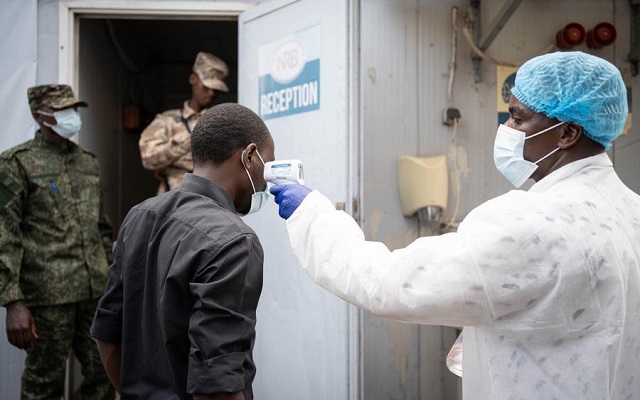

Ebola Outbreak - a Crisis of History, Not Misinformation
Summarized and contextualized by DistantNews.
At a glance
Analysis
Sources not specified
Ongoing story
- The Ebola outbreak in the Democratic Republic of the Congo is framed as a historical crisis, not just a misinformation problem.
- Community distrust stems from a history of exploitation, insecurity, and neglect, making misinformation plausible.
- Overcoming the outbreak requires addressing this distrust by reckoning with its historical roots, not just fact-checking.
- The current outbreak is already the third largest on record, with projections suggesting it could rival the scale of the 2013-2016 West African epidemic.
The ongoing Ebola outbreak in the Democratic Republic of the Congo (DRC) is presented not merely as a public health challenge, but as a deep-seated crisis rooted in a long history of colonialism, exploitation, and neglect. This historical context, the article argues, is crucial for understanding why communities resist response efforts and why misinformation about the virus takes hold.
When an Ebola treatment tent was recently burned down in Mongbwalu, the epicenter of the outbreak, the international response focused on risk communication and correcting false rumors. However, the article contends that this approach overlooks the "undeniably real" reasons such misinformation seems plausible to affected populations. These include a legacy of exploitation, pervasive insecurity, and systemic neglect by both state and international actors.
The Bundibugyo Ebola outbreak, declared on May 15, has already become the third-largest on record, with over 800 cases and nearly 200 deaths. The World Health Organization (WHO) has designated it a public health emergency of international concern (PHEIC). Early projections indicate the outbreak could escalate to the scale of the devastating 2013-2016 West African epidemic, which saw over 28,000 infections and 11,300 deaths.
The piece draws a parallel to the COVID-19 pandemic response on the Navajo Nation in the United States. It highlights how blaming the community for high case rates, while ignoring underlying factors like broken treaties and chronic underfunding of health services, obscured the "well-earned" distrust of outside authorities. Ultimately, the article asserts that effectively controlling the Congo's Ebola outbreak necessitates a reckoning with this historical distrust, moving beyond simple fact-checking to address the communities' rational, historically grounded basis for their skepticism.
DistantNews Editorial
Originally published by AllAfrica Uganda. Summarized and contextualized by our editorial team with added local perspective. Read our editorial standards.
More Stories


From Our Blog

What Gets Lost (and Found) When News Is Translated

The Critical Role of Diaspora Media in Global News

What Travellers Should Know About Countries with Restricted Press

A Digital Nomad's Guide to Following Local News

How the Same Story Looks Different in Different Countries
